


Ketogenic diet may protect one gut region while harming another – Earth.com
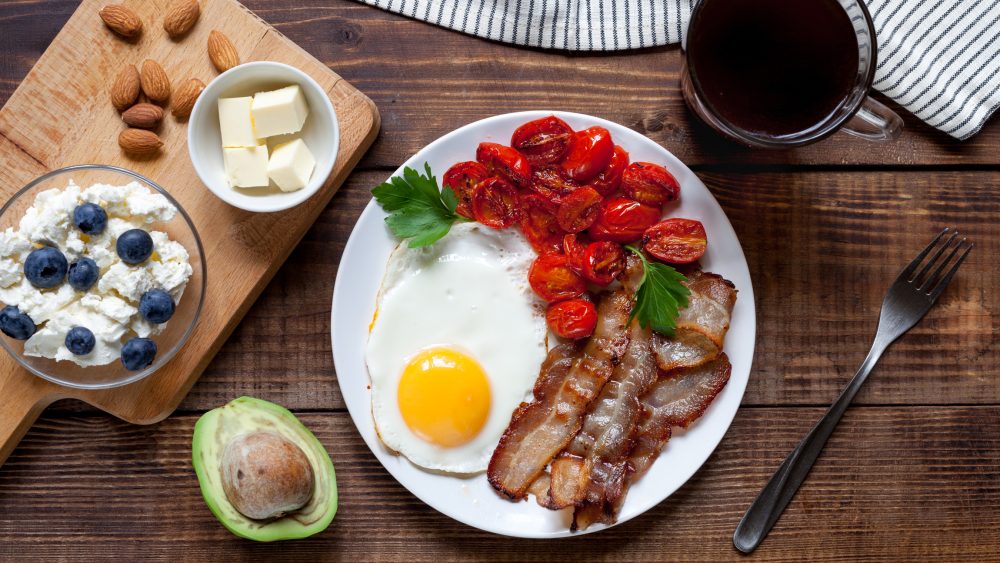
<img src="https://<a href="https://healthylife7.com/health-kabushenga-tips-men-on-life-and-wellness/” title=”Health: Kabushenga tips men on life and wellness”>healthylife7.com/wp-content/uploads/2026/07/image-111.jpg” alt=”Ketogenic diet breakfast with fried egg, bacon, avocado, roasted tomatoes, cottage cheese, almonds, butter, and coffee on a wooden table.”>
07-23-2026
Ketogenic diet may protect one part of the gut while harming another
ByRaquel Brandao
Earth.com staff writer
A ketogenic diet made mice far more likely to grow tumors in the small intestine, a new study has found
The same high-fat, low-carb eating plan that some research has linked to lower colon cancer risk did the opposite just one section of the gut away

The result complicates a popular belief that keto guards the gut against cancer, showing its effects can flip from one tissue to the next
It also raises a caution for people born with a high inherited risk of intestinal tumors, a group that is sometimes directed toward low-carb eating
Where the keto diet backfired
The work comes from the lab of Omer Yilmaz, an associate professor of biology at the Massachusetts Institute of Technology (MIT) who directs its Stem Cell Initiative. He led the current research on mice
His team fed a ketogenic diet to mice bred to carry a broken copy of a gene that normally helps hold intestinal cancer in check
The diet drew about 80% of its energy from fat, eight times the share in the standard chow that the comparison animals ate. Over roughly 150 days, the keto-fed mice grew more small-intestine tumors and died sooner
They never grew obese. Even so, their tumor burden matched or exceeded that of mice fed a fattening, high-calorie diet designed to pack on weight
Asked by Earth.com what people on a keto diet should take from a study conducted on mice, Yilmaz said, “For a healthy person, this isn’t a reason to change course.”
Inside the keto guts, the intestinal lining held a surplus of stem cells – the workhorse cells that rebuild the gut’s surface every few days
In addition, more of the stem cells were busy dividing. In a healthy intestine, that extra firepower speeds repair after injury
The problem shows up when those same cells carry a cancer-primed mutation
“Having more stem cells means that when you injure the small intestine, it can repair itself better, but the downside is that having more active stem cells can lead to tumor formation,” said Yilmaz
Ruling out the ketones
Burning that much fat floods the body with ketone bodies, the acids that gut and liver cells produce when carbohydrates run short
A 2022 study had traced the keto diet’s tumor-fighting effect in the colon to one of them, a molecule known as BHB. So the team expected these molecules to be feeding the small-intestine tumors as well
To test the idea, they shut down ketone production in stages, first in the gut lining and then in the liver. They throttled the supply to a trickle. Then they waited
The tumors kept coming. Raising ketone levels on an ordinary diet changed nothing, and disabling the machinery that burns ketones for fuel left tumor counts flat
Every version of the experiment told the same story, with the ketones behaving like passengers rather than the driver. “Our experiments in genetically engineered mice revealed that these molecules are essentially metabolic bystanders,” said Yilmaz
Fat metabolism does damage
When the researchers catalogued which genes the stem cells had switched on, the answer landed on those involved in fat metabolism
Cells of mice on a keto diet ramped up fatty acid oxidation – the breakdown of fat for energy – along with a family of proteins called PPARs that switch on when a cell is processing a heavy fat load
A single enzyme, CPT1a, guards the gate that lets long fat molecules into the cell’s tiny furnaces. When the team removed it in the gut lining, the ketogenic diet lost most of its tumor-promoting power
The pattern echoes an earlier paper from the same lab, which found a fattening diet steering intestinal cells toward cancer through the very same fuel-burning route. Two different diets converge on one mechanism
It is that mechanism, and not the ketones, that brings the danger. “The real surprise is that tumor acceleration is driven entirely by how stem cells process and burn the heavy influx of dietary fat itself,” said Yilmaz
One gut, two outcomes
The strangest result sat a few inches farther down. In the colon, the same diet did the reverse, holding tumors back instead of feeding them. Again the effect had nothing to do with ketones
A receptor that a competing theory had blamed for keto’s colon benefit turned out to be missing from the tumors altogether, and absent from stem cells. The protection was real, but its cause was not the one the field had assumed
Speaking with Earth.com, Yilmaz said, “You don’t expect a single intervention to be both protective and harmful within a single organ.”
Why one diet breaks so cleanly across two neighboring stretches of gut is still unexplained
“The deeper question is why the same diet has opposite consequences in two adjacent parts of the gut. That is what we are working to understand next,” said Fangtao Chi, a co-lead author of the study
Caution for keto dieters
The people with the most at stake carry familial adenomatous polyposis, an inherited condition that studs the gut with polyps
Many have the colon removed at a young age to head off cancer. That trade buys time rather than safety. They then face climbing odds in the small intestine – benign growths in about nine in ten patients and cancer in roughly one in ten
Both the danger and the colon benefit trace back to fat metabolism rather than the ketones
This suggests that the ketone drinks and supplements sold as a keto shortcut would not reproduce either effect. The fat has to be eaten and burned for these effects to show up
Keto diet can accelerate tumors
The finding also joins a run of results from the group showing that metabolic states prized for healing can turn against the body
A fast broken by heavy refeeding, for instance, pushes the same busy stem cells toward tumors, as the team reported in a recent study
The through-line is that a diet is rarely good or bad for the whole body at once. In reply to Earth.com’s questions, Yilmaz put it plainly: “Keto gets explained through ketones. Our data say the real story is the fat, and what the tissue does with it.”
The findings point to a clearer explanation. A ketogenic diet can accelerate tumors in the small intestine, and it does so through the fat it delivers, not the ketones it makes
For anyone weighing keto against a genuine cancer risk, that turns a one-line rule into a question of where in the body the diet lands
The study is published in Nature
Like what you read? Subscribe to our newsletter for engaging articles, exclusive content, and the latest updates.Check us out on EarthSnap, a free app brought to you by Eric Ralls and Earth.com
—–
