


Expert SpeakHealth Express
Published on Jul 24, 2026
The Global Nutrition Report 2026 and NFHS-6 show India has made notable gains against child undernutrition, but poor diets, rising obesity and inequality demand a shift from food security to nutrition security
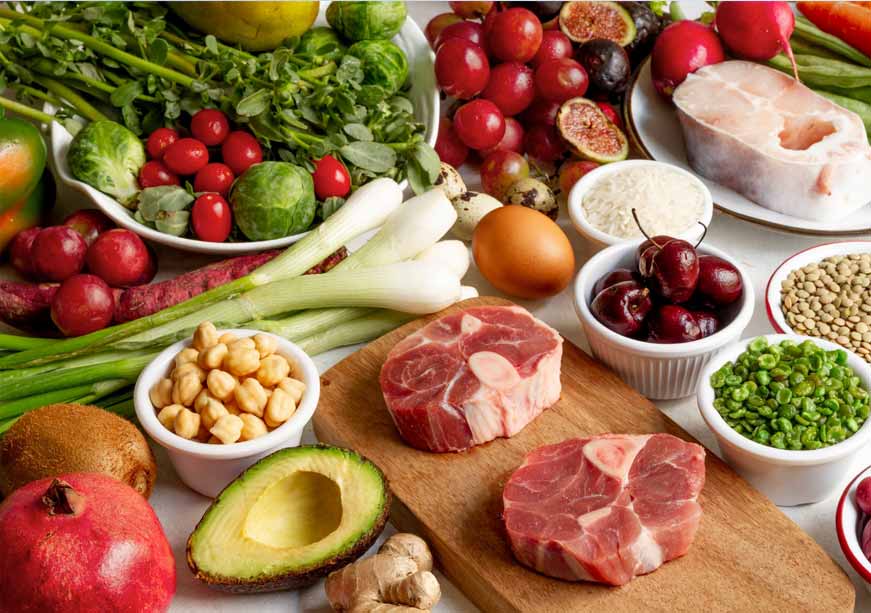
Image Source: Freepik
- NFHS-6 and the Global Nutrition Report 2026 show India has made major gains in reducing child undernutrition, but poor-quality diets and unequal access continue to limit progress. The next phase of policy must prioritise nutrition security over food security.
- NFHS-6 shows India now faces a double burden of persistent child undernutrition alongside rising obesity and diet-related diseases. This requires nutrition policy that improves food environments, diet quality and preventive public health—not just calorie access.
- The Global Nutrition Report 2026 finds India’s nutrition progress remains uneven as inequality and climate change threaten access to healthy diets. Sustaining gains will require integrated policies linking nutrition, agriculture, health and climate resilience.
India’s nutrition journey is one of remarkable progress tempered by persistent and evolving challenges. Over the past decade, sustained investments in maternal and child health, social protection, sanitation, and nutrition-specific interventions have translated into measurable improvements in several key indicators. The release of the Global Nutrition Report (GNR) 2026 alongside the National Family Health Survey (NFHS)-6 (2023–24) provides an opportunity to assess where India stands today. Together, these reports paint a nuanced picture: the country has made significant strides in reducing child undernutrition and improving health service utilisation, yet continues to grapple with poor diet quality, persistent inequities, and a rapidly growing burden of overweight, obesity, and diet-related non-communicable diseases (NCDs). The findings underscore that India has entered a new phase of its nutrition transition, where the challenge is no longer merely ensuring food security but also achieving nutrition security through healthier diets and resilient food systems.
India has entered a new phase of its nutrition transition, where the challenge is no longer merely ensuring food security but also achieving nutrition security through healthier diets and resilient food systems
The GNR 2026 reiterates India’s centrality to the global nutrition agenda. Home to nearly one-sixth of the world’s population, India’s nutrition outcomes significantly influence global progress towards the Sustainable Development Goals (SDGs) and the World Health Assembly nutrition targets. The report recognises that India is on course to achieve the global target for reducing stunting and has made commendable progress in exclusive breastfeeding. However, it also cautions that the absolute burden of malnutrition remains among the largest globally because of India’s population size.
Assessing India’s Nutrition Progress
The NFHS-6 findings validate this progress. Child stunting has declined substantially from 35.5 percent in NFHS-5 to 29.3 percent, reflecting improvements in maternal nutrition, antenatal care, institutional deliveries, immunisation coverage, sanitation, and social welfare programmes. Wasting has also declined modestly, while institutional deliveries now exceed 90 percent nationally and health insurance coverage has expanded considerably. These improvements reflect the cumulative impact of flagship initiatives such as POSHAN Abhiyaan, Mission Poshan 2.0, Ayushman Bharat, the Swachh Bharat Mission, and the strengthening of <a href="https://healthylife7.com/how-daily-habits-and-primary-care-can-protect-your-brain-health-as-you-age/” title=”How daily habits and primary care can protect your brain health as you age”>primary healthcare services.
Nearly one in three Indian children remains stunted, and wasting continues to hover at around 19 percent, among the highest levels globally. Child underweight also remains widespread, signalling that improvements in health services alone are insufficient to eliminate chronic undernutrition. The persistence of these indicators reflects deep-rooted structural determinants, including poverty, food insecurity, inadequate maternal nutrition, poor sanitation in vulnerable communities, and unequal access to quality healthcare.
Beyond Calories: Improving Diet Quality
Perhaps the most concerning message emerging from NFHS-6 is the poor quality of children’s diets. Only about 15 percent of children aged 6–23 months receive a minimum acceptable diet, indicating that complementary feeding practices remain grossly inadequate during the critical first 1,000 days of life. This has profound implications for cognitive development, immunity, school readiness, and future productivity. India’s nutrition challenge has therefore shifted from one of calorie insufficiency to one of dietary quality. While cereal availability has improved through food security programmes, consumption of fruits, vegetables, pulses, dairy, eggs, and other nutrient-rich foods remains inadequate for large sections of the population.
The GNR 2026 echoes this concern by highlighting that healthy diets remain unaffordable for billions globally and that improving diet quality must become the cornerstone of nutrition policy. For India, this means moving beyond a food security paradigm that prioritises staple grains towards a nutrition-sensitive food system capable of delivering diverse, safe and affordable diets. Evidence suggests the need for nutrition-sensitive agricultural diversification that increases the production, availability, and consumption of pulses, millets, fruits, vegetables, and quality protein sources, alongside targeted behaviour change communication to promote healthier diets.
India’s Evolving Nutrition Challenge
At the same time,India is confronting a rapidly expanding burden of overweight, obesity, and diet-related NCDs. The nutrition transition is becoming increasingly evident as urbanisation, changing lifestyles, greater availability of ultra-processed foods, and declining physical activity reshape dietary patterns. NFHS-6 records a rising prevalence of overweight and obesity among adults, accompanied by increasing rates of hypertension and diabetes. This coexistence of persistent undernutrition with rising obesity represents the country’s growing double burden of malnutrition, placing unprecedented pressure on the healthcare system.
The GNR argues that obesity should no longer be viewed as a problem of affluent societies. Instead, it has become a defining feature of low- and middle-income countries experiencing rapid dietary and epidemiological transitions. There is coexistence of undernutrition and overnutrition in Indian households, a manifestation of poor diet quality rather than food abundance. Addressing this challenge will require regulatory measures that improve food environments, including front-of-pack labelling, restrictions on marketing unhealthy foods to children, fiscal policies that encourage healthier diets, and greater promotion of physical activity.
This coexistence of persistent undernutrition with rising obesity represents the country’s growing double burden of malnutrition, placing unprecedented pressure on the healthcare system
A recent analysis has highlighted persistent inequalities in nutrition outcomes. Improvements have not been uniform across states, districts or socioeconomic groups. Children belonging to poorer households, Scheduled Tribes, rural populations and educationally disadvantaged families continue to experience disproportionately higher levels of undernutrition. These disparities reinforce the importance of adopting a life-course and equity-focused approach that addresses the social determinants of health, including women’s education, income security, sanitation, gender equality and access to quality public services.
An emerging dimension of India’s nutrition challenge is the growing influence of climate change on food systems. The GNR 2026 places considerable emphasis on the interlinkages between climate resilience, agriculture, and nutrition. Rising temperatures, erratic rainfall, water scarcity and extreme weather events threaten agricultural productivity and increase the prices of nutrient-rich foods such as fruits, vegetables and pulses. These climate-induced shocks disproportionately affect poor households, reducing dietary diversity and increasing nutrition insecurity. Nutrition policy can therefore no longer be designed independently of agriculture, climate adaptation and environmental sustainability. Building climate-resilient food systems will be essential for protecting nutrition gains over the coming decades.
Towards Nutrition Security
India’s policy response must therefore evolve to match this changing nutrition landscape. While programmes targeting maternal and child undernutrition remain indispensable, equal attention must now be directed towards improving diet quality, preventing obesity, strengthening nutrition-sensitive agriculture, promoting healthy food environments, and integrating nutrition objectives across health, agriculture, education, and social protection sectors. Investments in robust nutrition surveillance, digital monitoring systems, and district-level data will enable more targeted interventions, while stronger convergence across ministries can maximise impact.
For India, the path ahead lies in shifting decisively from food security to nutrition security to ensure that every individual has access not only to sufficient food, but also to diverse, safe, affordable, and sustainable diets that support healthy lives across the life course.
India’s nutrition report card is therefore one of cautious optimism. The country has demonstrated that sustained political commitment and programme implementation can improve maternal and child nutrition outcomes. Yet the persistence of child undernutrition, widespread poor-quality diets, growing obesity, and widening food-system challenges indicate that the next generation of nutrition policy must be more integrated, equitable, and forward-looking. As the GNR 2026 aptly argues, achieving healthy diets for all requires transforming food systems rather than merely expanding food production. For India, the path ahead lies in shifting decisively from food security to nutrition security to ensure that every individual has access not only to sufficient food, but also to diverse, safe, affordable, and sustainable diets that support healthy lives across the life course.
Shoba Suriis a Senior Fellow with the Health Initiative at the Observer Research Foundation
The author acknowledges the use of ChatGPT for language editing and citation search
The views expressed above belong to the author(s). ORF research and analyses now available on Telegram! Click here to access our curated content — blogs, longforms and interviews.

PREVNEXT 
Author
Shoba Suri
Dr. Shoba Suri is a Senior Fellow with ORFs Health Initiative.
Shoba is a nutritionist with experience in community and clinical research. She has worked on nutrition
Read More +
