


The news that over 2 million Australians are living below the so-called “wellbeing poverty” line – with the number of people reporting a very low life satisfaction doubling to 10 per cent over the past decade – was notable for a couple of reasons
There was the faint bell of alarm: if Australia, with its perfect work-life balance, is struggling, then what hope is there for the rest of us? Mainly though, most of us were left wondering what “wellbeing poverty”, a term that seems to be increasingly being bandied around, actually means
Jan-Emmanuel De Neve is a professor of economicsand behavioural science at the University of Oxford’s Saïd Business School and director of the Wellbeing Research Centre
“Wellbeing and happiness are ultimately – there is no way around it – in the eye of the beholder,” says De Neve, who is the co-founder of the World Wellbeing Movement; a charity which, for the past three years, has commissioned an annual UK Wellbeing Report which aims to assess the nation’s level of wellbeing by collating key UK data
And, while there are many objective factors – such as physical and mental health, education, and income – that contribute to an individual’s wellbeing, the metric for assessing it couldn’t be simpler: asking people, on a scale of zero to 10, how satisfied they are with their life these days

This is the question people are asked in the Annual Population Survey conducted by the Office for National Statistics, with respondents answering on a scale from zero (not at all satisfied) to 10 (completely satisfied)
“I might assume that if someone is in good health, is well educated, has a partner and a certain level of income, therefore they must score a seven or eight out of 10,” says De Neve, explaining that the “happiness poverty line” refers to anyone rating their life satisfaction at five or below
“But the reality is that ultimately I need to ask that person – how are you actually feeling? Because there are a whole lot of other things that might be feeding into how they are feeling that I might not be capturing.”
The risk of a lost decade
World events being what they are, perhaps no one will be that surprised to hear that our collective sense of wellbeing is in peril, with roughly 12 per cent of the UK population scoring lower than five. Meanwhile, the “flourishing” cohort – those who rate their wellbeing as eight or above – is 26 per cent compared to 31 per cent in 2019
The most recent Wellbeing Report warns that the 2020s are at risk of becoming a “lost decade”, with an average life satisfaction that has failed to recover to pre-pandemic levels
“The UK saw its steepest-ever drop in life satisfaction after 2020, and this is documented both in international rankings published by the World Happiness Report, and in domestic data published by the ONS and analysed in our report,” says Dr Maria Cotofan, a lecturer in economics and policy at King’s College London and the Wellbeing Report’s lead author “While there’s been a partial recovery – though some regions still lag far behind – the country remains substantially below 2019 peak levels across every nation and region.”
“Before the pandemic, about one in nine people in the UK lived below the happiness poverty line, but this number has now hovered around one in eight since 2022, a meaningful increase. The longer-term picture is one of stagnation.”
What causes wellbeing poverty?
De Neve cites various factors including cost of living, income levels, employment, purchasing power, political polarisation, loneliness, the use of technology and social media and, crucially, social life, all of which make an impact on our wellbeing
But one surprising aspect of wellbeing poverty is that it is not necessarily linked to financial wealth
Although there are clear geographic disparities between regions with higher levels of wellbeing poverty, the wealthiest regions are not necessarily those that rate the highest when it comes to wellbeing
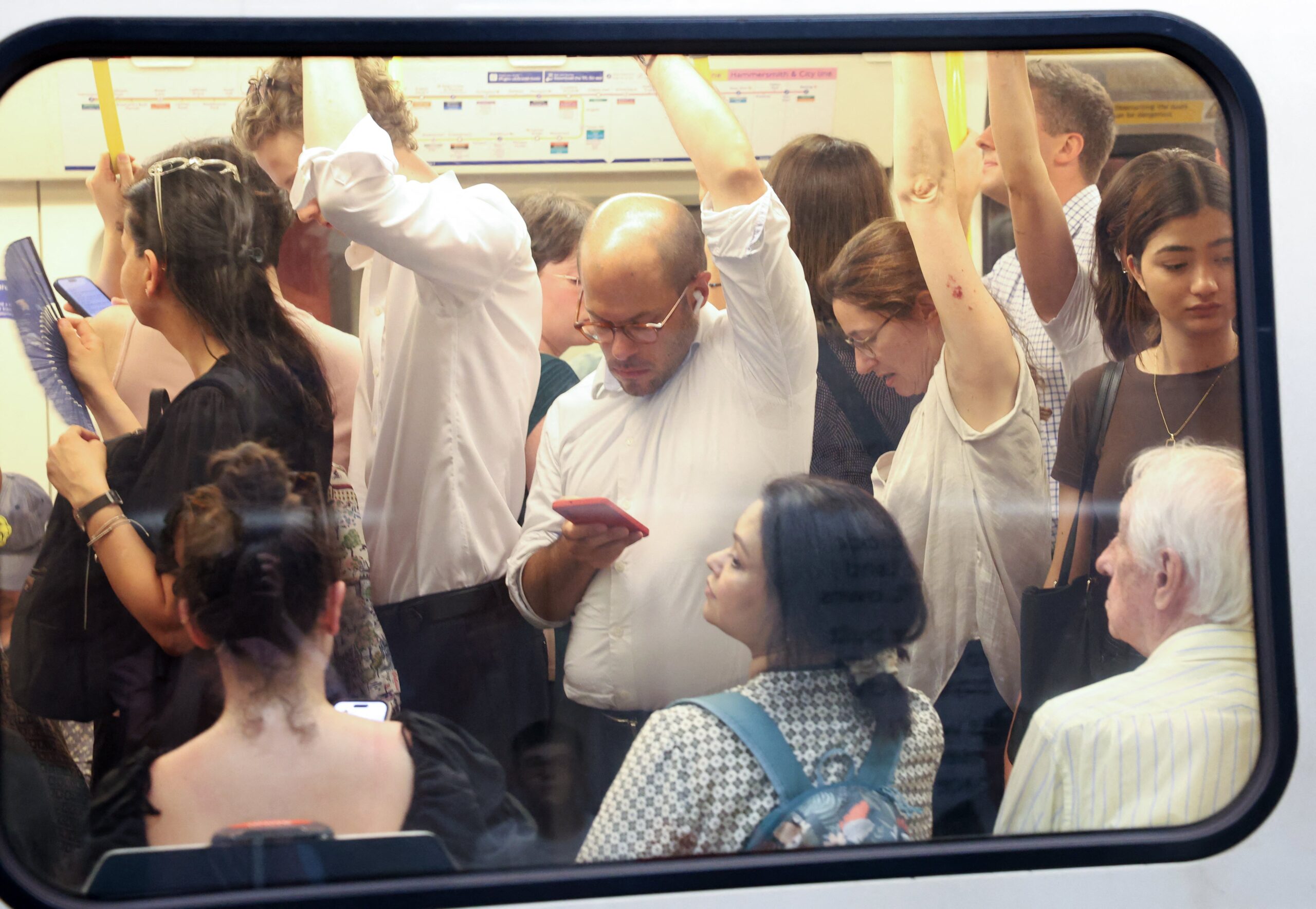
“London, for example, performs quite poorly, while Northern Ireland generally fares the best,” says Dr Cotogan. “There are many studies that explore which factors explain happiness and misery and the evidence points to a large effect of poor mental and physical health, while education, income and unemployment matter somewhat less.”
“When people score below five out of 10 it is not just down to abject poverty – there is more going on,” says De Neve. “Money is a huge factor, but there is more at play. You can feel terrible even if you are not income-poor, because of loneliness, anxiety disorders, psychological distress, depression – all things that can really make you feel as if life is not going well at all. It goes beyond income levels.”
This is something that resonates with Ruth Lambourne, 79, who lives alone in London and suffers from depression and anxiety. “I think it is less recognised that even if you have money you could still be having a hard time,” says Lambourne, who worked as a teacher until she retired at 60, and has two grown-up children. Her partner of 25 years died two years ago
“People always assumed I was busy and happy but it’s not necessarily so,” says Lambourne, who estimates that her wellbeing score before she started volunteering for a local charity a few years ago was four out of 10
The wellbeing generation gap
The other key relevant factor is age: there is an intergenerational divide between old and young
“A lot of the drop in wellbeing scores is driven by people below 30 years of age who as well as being impacted by affordability, technology and political polarisation also have anxiety around the future of work – and AI is not helping,” says De Neve
“What we thought was a universal truth, which is the U-shaped relationship between age and wellbeing starting high, dropping low in midlife, then up again as you age into your 60s and 70, turns out not to be the case any more. What we are finding is that those aged 18-25 are pretty much at the same level as midife crisis today. The younger generation are the ones suffering the most. The notion of security plays a big role here – the fact that the future looks a lot less secure because of economic security and the job market – these things play into the psyche of the younger generation.”
A lot of the drop in wellbeing scores is driven by people below 30 years of age
Jan-Emmanuel De Neve, professor at Saïd Business School
This is certainly the case for Laura Murphy, 26, a pharmacy technician living in Bournemouth. After her degree in English and Film Studies, she moved home and spent a year looking for a job in that field, during which time she says her wellbeing score was three-and-a-half out of 10. She eventually started a trainee pharmacy technician position in 2024
“I had to start an entirely different career to the one I wanted because applying non-stop for over a year was so dejecting,” she says, adding that since being in full time work her score has since increased to seven out of 10, “I honestly think not having enough time in the day to think deeply about the job insecurity and AI does the most for wellbeing but in the grand scheme it’s probably bad for most under 30s.”
As well as working, Murphy cites getting together with friends for affordable activities like quiz nights and fitness as ways that she actively aims to improve her wellbeing
How to boost your wellbeing score
The good news is that there are things that we can do to reduce our sense of wellbeing poverty. Working, stable family relationships, and reducing loneliness are all proven ways to improve mental health. And De Neve flags other, more tangible things that are shown to have an impact
“A hugely underrated dimension of our wellbeing is the quality and richness of our social lives,” he says. “People tend to think forest bathing, yoga, mindfulness, tree hugging or seeing a psychiatrist will help but that is all ‘me myself and I’ and my little problems

“There is so much evidence that pro-social behaviours – like volunteering – feed back into social wellbeing. By removing the focus on the ‘I’ in ill-being and focusing on the ‘we’ in wellbeing you might naturally move from ill-being to wellbeing.”
This has very much been the case for Ruth Lambourne, who’s score increased largely due to her experience of volunteering once a week for seven years at the All Ages project at Round Chapel Old School Rooms in Hackney, where she works in the kitchen
“It really helps to have a role, to be useful, to do something and it’s great to be part of a team,” she says. “It is hard work but it is rewarding partly because of helping people but it’s also about connecting with other people. I get so much from it that I don’t feel that I am helping others – I think I am doing it for myself.”
Another interesting signifier of increased wellbeing is the number of shared meals someone has each week; something which is as predictive as employment status and relative income when it comes to wellbeing. “In the US, youth are twice as likely to be dining alone each day as they were 20 years ago and UK is not far behind,” says De Neve. “There’s a tendency to sit by yourself with your phone in one hand and your fork in the other, rather than engaging with others.”

One benefit, he says, of sharing meals with others is that your worldview is naturally and necessarily tested and moderated. “Having lunch by yourself means your views are not tested by the worldviews of others. Instead, if you are looking at social media where you get into echo chambers with views that are polarising, radicalising and amplified.”
The bigger picture
Perhaps one of the reasons that our sense of life satisfaction is collectively on the wane is because it’s not entirely in our control
“Technology, the affordability crisis – and the more policy-oriented changes will also make an impact,” says De Neve, whose charity serves as secretariat to the All-Party Parliamentary Group on Wellbeing Economics. They are calling for greater government attention to wellbeing data as a key indicator for how the nation is doing, much as figures on the economy are explicitly considered as key outcomes of interest by policy-makers
“Previous governments have focused very much on physical infrastructure like HS2 and train lines and there is something very powerful in building, constructing, but they have underinvested in the social structure of community lives,” he says. “Over and over again in wellbeing science we find that the richness and quality of our social lives explains as much of the variance in how people respond to life satisfaction as that of income.”
Not only that but it makes a difference to how people vote: research shows that an individual’s sense of happiness is closely linked to how they engage with politics
“Wellbeing stagnation can have important consequences, just as economic stagnation does,” says Dr Cotogan. “Low levels of region-level wellbeing are associated with less support for the government and less political participation. This is the case even when controlling for how well these regions are doing economically.”
“In fact, life satisfaction is the best predictor of political outcomes when compared to regional-level income and unemployment.”
