


Your Next Move
Think GLP-1s Are Too Expensive for Your Health Plan? Cutting Them Might Hurt Your Bottom Line
A new study reveals that dropping coverage for weight-loss drugs like Ozempic could backfire—costing companies up to $866 per worker in lost productivity
Jul 27, 2026
Illustration: Inc.; Photos: Adobe Stock; Getty Images
Listen to this ArticleMore info
0:00 / 0:00
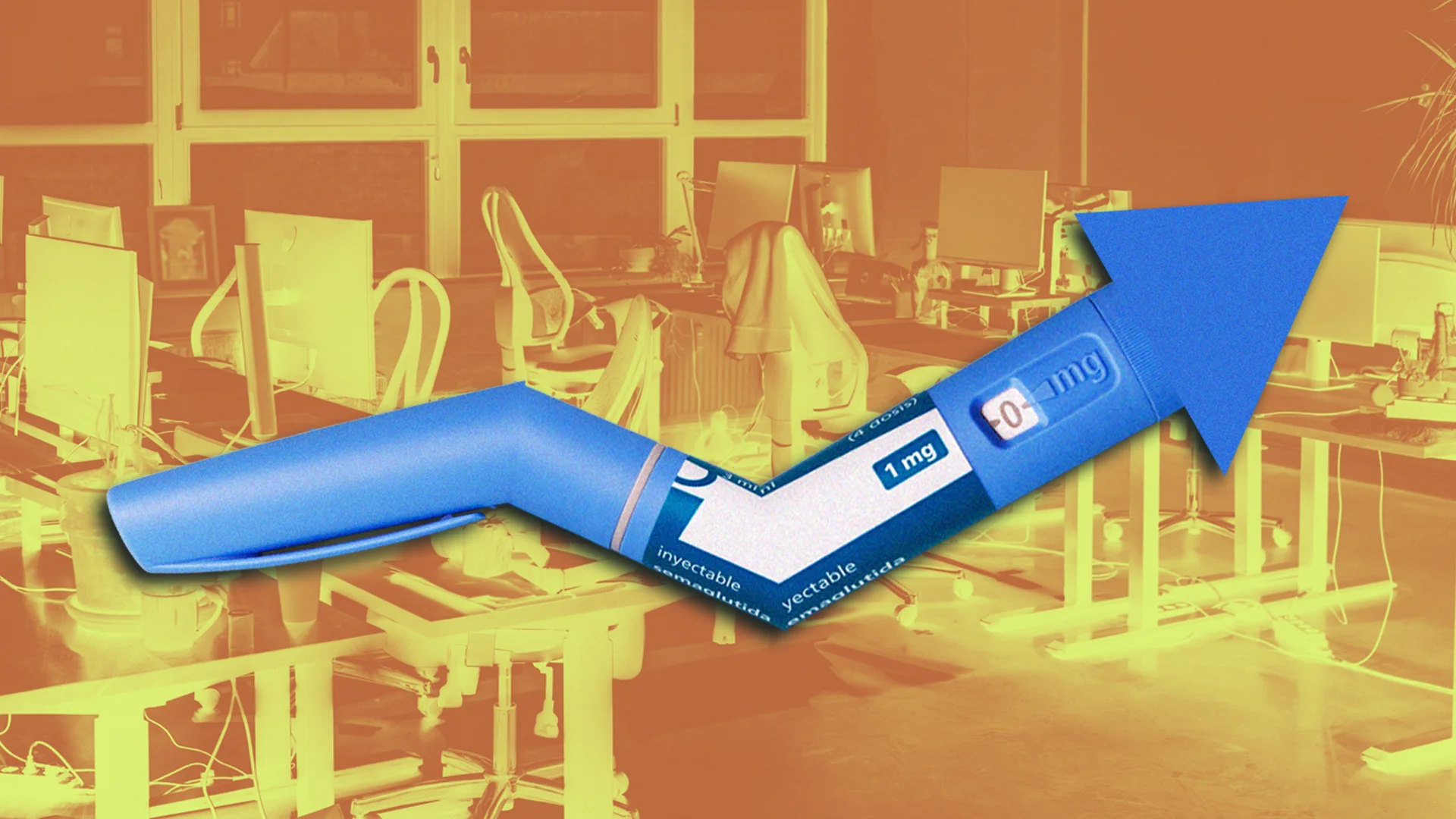
A growing number of employers are moving to rein in the rising costs of providing staff medical insurance, with many deciding to no longer cover pricey GLP-1 drugs that are increasingly popular for losing weight. But while the reasoning behind that move is clear, a new study indicates it could wind up being even more expensive to businesses than continuing to underwrite workers’ prescriptions for medications like Ozempic and Wegovy
That penny-wise-but-pound-foolish consequence of companies striking GLP-1s from medications that their plans cover was discovered by experts at the National Bureau of Economic Research (NBER). They went further than most previous studies, which demonstrated that Mounjaro, Zepbound , and Ozempic and other drugs originally developed for diabetes have also had positive effects on other conditions and health threats—including obesity, heart attacks, and strokes. Instead, their analysis crunched data from Denmark on workers who’d used GLP-1 treatments over long periods, and found their beneficial effects led to those employees taking fewer sick days off, thereby increasing their overall productivity.
“We find that GLP-1 treatment reduces long-term sickness leave by 17.3 percent,” the NBER study said. “This effect grows over time and is accompanied by declines in emergency department encounters and cardiovascular medication use, consistent with sustained treatment exposure and gradual improvements in underlying health.”
A $866 annual per-worker productivity boost
Those consequences mean fewer worker health incidents that generate even higher worker healthcare costs to employers’ insurance plans, while simultaneously increasing employees’ presence, productivity, and value
Featured Video
An Inc.com Featured Presentation
“GLP-1 treatment generates meaningful fiscal spillovers by reducing prolonged sickness absence, valued at 1.3–1.5 percent of annual labor income per employed individual,” the study said, estimating that yearly gain at an average $866 per worker
There are a couple of considerations to plug into any decisions by companies about covering GLP-1 prescriptions under their insurance plans based on the NBER analysis
The first is that rules in Demark provide workers far longer, fully paid periods of sick leave than in the U.S. That means both the costs to businesses of staff being out with chronic conditions are higher. As such, the savings made by cutting that time—and by having employees on the job more—are also greater than American employers would enjoy.The second factor is that like most European healthcare systems, Denmark’s government underwrites a great deal of treatment and expenses its citizens—including employees—receive.
