


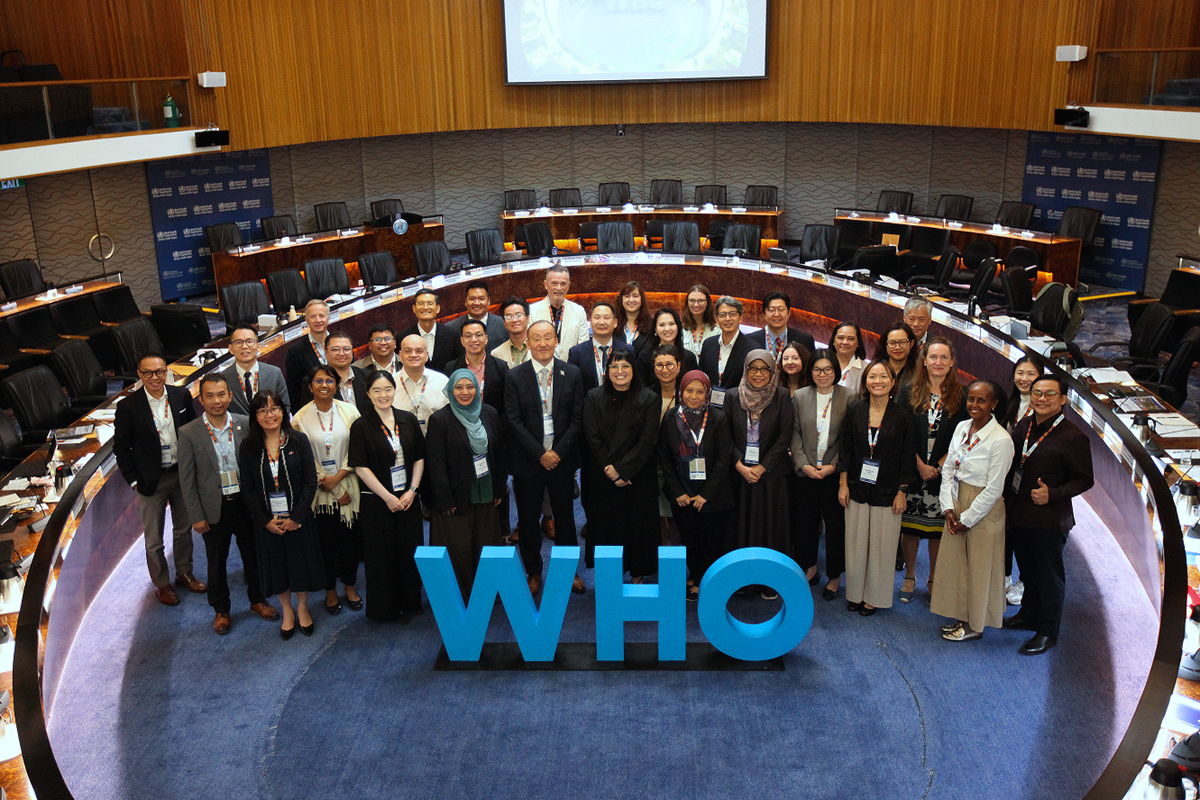
The WHO Regional Office for the Western Pacific convened an expert consultation on 22-23 July in Manila, Philippines on Shaping the Future of Research and Development (R&D) Ecosystems for Public Health, bringing together more than 30 experts from research institutions, government R&D agencies, ministries of health, funding institutions, and development partners
Across the Western Pacific, advances in science and innovation have created new opportunities to address major public health challenges. However, despite the growth in research activities across many settings, much of the evidence generated is not translated into products, policies and innovations that respond to the national health system needs. The consultation examined where progress stalls along the research-to-impact continuum and how regional coordination could help countries translate research into improved population health.
“Strengthening research alone is not enough. We need stronger research and development ecosystems that connect priority-setting, financing, governance, product development, implementation and equitable access. Our ambition is to ensure that research and innovation deliver real improvements in health for the people of our Region” said Dr Kidong Park, Director of Programme Management for the WHO Regional Office for the Western Pacific, in his opening remarks.
On the first day, keynote presentations on the historical evolution of global health R&D systems and the development of herbal medicines in the Philippines set the scene for the meeting. Participants then mapped R&D actors and capabilities across the Region using a shared framework spanning ecosystem domains and stages of the R&D lifecycle, from research prioritisation to post-launch optimisation. Through simulated cases on drug-resistant tuberculosis regimens, dengue vaccines and antimicrobial resistance diagnostics, participants identified where R&D translation stalls and which bottlenecks are best addressed at national, regional, or global levels.
The second day focused on understanding the current situation of R&D financing, governance, and implementation in the Region. Experts representing different types of funding institutions shared their priorities and mechanisms and discussed opportunities for better collaboration. Subsequent sessions explored how researcher-developer matching platforms, proactive health technology assessment and post-implementation research could amplify the impact of the available resources on population health. The consultation concluded with charting the way forward to achieve the health technologies and innovations needed by the communities across the Western Pacific over the next decade.
Key outcomes of the consultation highlighted the need for:
- Mapping of R&D actors and capabilities across the domains and lifecycle stages throughout the Region;
- Strengthening institutional capacity to mobilise and implement resources that support the development and implementation of health innovations in communities;
- Enhanced collaboration among funders and partners to align activities with regional and national priorities; and
- Regional coordination mechanisms that provide oversight across R&D domains and stages in the Western Pacific.
The consultation highlighted the significant strengths that already exist across the Region while underscoring the need for stronger coordination to ensure that research investments translate into equitable health impact. The findings will inform WHO’s future work to support Member States in strengthening research and development ecosystems for public health
The consultation was supported by the Gates Foundation
