


July 29 — As health care systems across many countries in Asia-Pacific Region continue to face growing challenges, strengthening health literacy has become increasingly important in enabling individuals to make informed decisions about their health
In celebration of International Self-Care Day, APSMI (the Asia-Pacific Self-Medication Industry) has highlighted the importance of public education, responsible self-medication, and multi-sectoral collaboration as key pillars for strengthening health care systems across the Asia-Pacific region
Self-care is defined as the ability of individuals, families, and communities to promote health, prevent disease, maintain well-being, and manage health conditions, with or without the support of health care professionals
When supported by adequate health literacy, self-care enables individuals to appropriately manage minor health conditions as a first line of care while recognising when professional medical consultation is necessary
The World Health Organization (WHO) recognises self-care interventions as part of how the world reaches health for all and advances universal health coverage, the goal of everyone accessing care without financial hardship
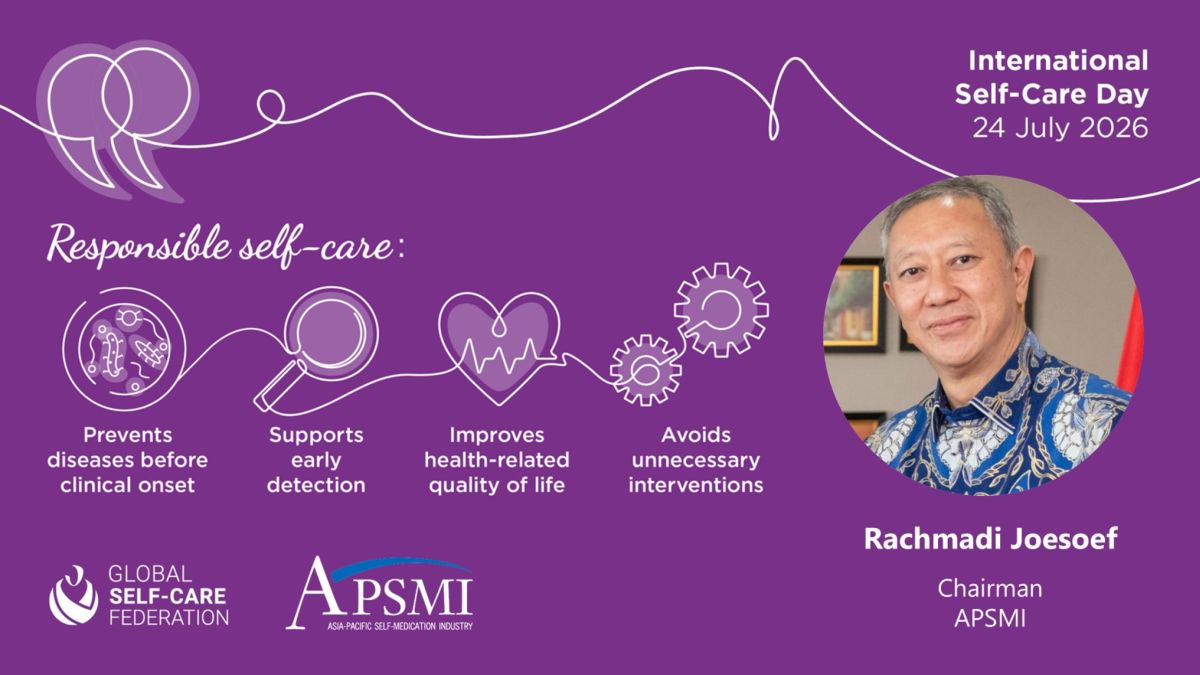
“Growing evidence demonstrates that responsible self-care delivers significant benefits not only for individuals but also for health care systems and economies,” said Rachmadi Joesoef, chairman of the Asia-Pacific Self-Medication Industry (APSMI)
According to the Socio-Economic Research 2026 report by the Global Self-Care Federation (GSCF), responsible self-care:
- Contributes approximately US144 billion in annual savings to global health care systems.
- Saves around 2.2 billion physician hours.
- Generates an additional 43.6 billion productive days.
- Improves overall quality of life.
“It is further estimated that with policies supporting improved health literacy, access to quality-assured over-the-counter medicines, and enabling regulatory frameworks, the social and economic benefits of self-care could increase as much as 50 per cent by 2040,” he added
“When fully integrated, self-care delivers a profound return on investment: it empowers individuals, supports communities, and stands as the best buy for financially strained health care systems globally,” said Greg Perry, director-general, Global Self Care Federation (GSCF)
Every minor case handled at home is a serious case seen sooner. Self-care protects scarce health care workers capacity by empowering individuals to manage their own minor ailments, letting doctors focus on complex cases and freeing more re
However, APSMI emphasises that self-medication does not mean taking medicines indiscriminately. Responsible self-care requires adequate knowledge, including the ability to select appropriate over-the-counter medicines, understand product labels and package information, follow directions for use, and recognise signs and symptoms that require consultation with health care professionals
“Responsible self-care begins with health literacy. When people have the knowledge and confidence to appropriately manage minor health conditions, they not only improve their own health outcomes but also help health care systems focus re
“Strengthening health literacy is a shared responsibility that requires close collaboration among regulators, health care professionals, industry, academia, and communities,” said Joesoef
The call also marks the lead-up to the APSMI Self-CARER Bali Summit 2026, a regional forum that will bring together regulators, policymakers, Global and Regional health care experts, and industry leaders from across Asia-Pacific to discuss strengthening the self-care ecosystem through evidence-based guidelines, improved health literacy, and greater access to safe, high-quality self-care products
As the regional association representing the self-medication industry across Asia-Pacific, APSMI continues to strengthen collaboration with regulators and other stakeholders to promote evidence-based policies that support safe and responsible self-care
These efforts are carried out through public education initiatives, policy dialogue, and cross-sector partnerships aimed at improving health literacy while expanding access to quality self-care products
Advancing health literacy will also be one of the key discussion topics at the APSMI Bali Summit 2026, which will be held from October 29 to November 1, 2026. The forum will provide an opportunity for participants to exchange experiences and best practices in developing policies that integrate self-care into health care systems and support progress towards Universal Health Coverage (UHC)
