



SSM Health physician leads autism study published by the AMA
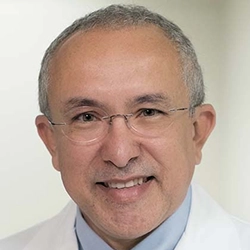
Are autism rates really surging across the board, or are we finally learning how to see the individuals we’ve historically missed?
A new study, led by SSM Health physician Dr. Erick Messias, who is a professor and chair of the Department of Psychiatry and Behavioral Neuroscience at the Saint Louis University School of Medicine, answers those questions and has been published by the American Medical Association.
“Autism Spectrum Disorder Incidence by Age and Sex in a US Health Care System, 2016 to 2024” is in the latest issue of JAMA Network Open
Here are some key takeaways from the research that are changing how scientists think about neurodevelopmental trends:
1. The “Surge” is About Improved Recognition, Not a Uniform Rise
“While overall autism diagnoses have climbed, our data shows this is not a uniform population-level increase,” said Dr. Messias
Among males, diagnosis rates remained stable or declined across all age groups (children, adolescents, and adults) from 2016 to 2024
For females, incidence rose after 2020. “We observed a 19% annual percentage increase (APC) among females overall, driven by catch-up identification,” Dr. Messias said
This trend was sharpest in adolescent girls (APC of 22.3% from 2020–2024) and young girls (APC of 17.4% since 2020)
2. The Cost of Late Identification
Dr. Messias’ team found that females were diagnosed, on average, 3.4 years later than males (mean age of 15.7 years for females vs 12.3 years for males)
“Late diagnosis means years of missed support, accommodations, and self-understanding during crucial developmental transitions,” Dr. Messias said
3. The Power of Big Data in the SLU & SSM Health Academic-Clinical Partnership
This study represents a milestone for the collaborative research environment at Saint Louis University School of Medicine and SSM Health. This partnership is a blueprint for how academic medical centers and healthcare systems can collaborate to transform raw clinical data into actionable evidence that promotes health equity
This paper is the result of an extraordinary interdisciplinary effort. Dr. Messias called it “a privilege” to work alongside colleagues across SSM Health and SLU’s Departments of Psychiatry and Human Neuroscience, Neurology, and Family and Community Medicine, as well as the SLU Advanced HEAlth Data (AHEAD) Institute
Co-authors of the study were Dr. Emily Casanova (Department of Neurology, SLU); Regina Huang, MS (AHEAD Institute, SLU); Siri Battula, BS (University of Missouri-Kansas City); Dr. Rachel Loftin, PhD (Prosper Health); Dr. McKenna Walsh, PhD (Department of Family and Community Medicine, SLU); and Dr. Daniel Lin, MD PhD (Department of Psychiatry and Human Neuroscience, SLU)
