


By Mauro Proença — Jul 29, 2026
Ultra-processed foods have become one of nutrition science’s biggest villains, blamed for everything from obesity to heart disease. But as researchers dig deeper, a more complicated picture is emerging: while diets high in ultra-processed foods are consistently linked to poorer health, the evidence is far less certain that industrial processing itself is the cause. Here’s what the latest research says, and why the debate over the NOVA classification is reshaping how scientists think about modern diets.
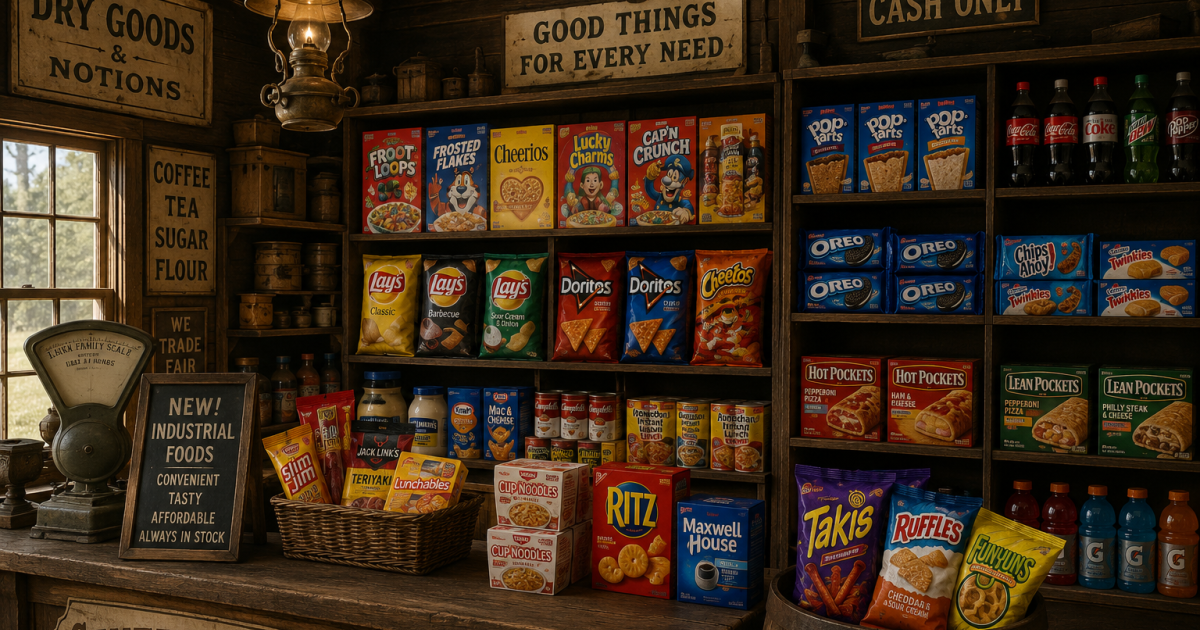
Image: ACSH
“Natural,” “minimally processed,” “real food” — these labels encode the popular idea of healthy eating. In 2016, researchers at the University of São Paulo, led by physician and epidemiologist Carlos Monteiro, proposed the more systematic approach: the NOVA classification, which sorts foods by the extent and purpose of industrial processing rather than by nutritional profile
- Unprocessed or minimally processed foods — plant or animal parts taken directly from nature or altered only minimally, with no added salt, sugar, oil, or fat.
- Processed culinary ingredients — substances used mainly to prepare meals, like oil, sugar, and salt.
- Processed foods — group-one foods with culinary ingredients added to extend shelf life or change flavor.
- Ultra-processed foods (UPF) — industrial formulations, typically with five or more ingredients, built from substances rarely used in home cooking and additives meant to alter flavor, texture, and appearance, designed to replace minimally processed foods.
A decade on, the classification is widely used, increasingly contested, and the fight over it has gotten personal
The Epidemiological Case and Its Limits
The headline evidence looks strong. A 2025 meta-analysis pooling 18 prospective cohorts with over a million participants with roughly 173,000 deaths found that high UPF consumers faced a 15% higher risk of all-cause mortality, with each 10% rise in UPF share adding a 10% increase in mortality risk. But every study was observational, leaving room for socioeconomic status and other lifestyle factors to confound the relationship even after adjustment.
However, the deeper issue is that “ultra-processed” isn’t a defined uniform category, so any association depends heavily on a changing definition. That’s the crux of the whole debate
Is the Definition Even Coherent?
Nutrition scientist Kevin Klatt has pointed out that NOVA doesn’t always track actual industrial transformation. Edamame pasta, made through pulverization and extrusion, could still count as “minimally processed” simply because edamame is its only listed ingredient. A sugar-free gelatin sits in the same NOVA group as a cookie loaded with sugar and saturated fat. Homemade bread with butter and sugar might escape the label; industrial bread with a trace of emulsifier might not. Sometimes processing decides the category; sometimes it’s ingredient count or a specific additive.
None of this invalidates the broader literature. The issue is not whether one food causes disease, but whether everything grouped under “ultra-processed” shares the traits that explain the associations researchers keep finding
Are the Criticisms Valid?
A critical review in Proceedings of the Nutrition Society argues NOVA works reasonably well in the relatively homogeneous Latin American food systems where it was built, but strains in other markets — especially with products combining heavy processing and solid nutrition, i.e., Australian cereals rich in whole grains get filed as ultra-processed largely because of extrusion. Two popcorns with near-identical nutrition can land in different categories over natural flavorings alone, and gluten, obtained by simply washing starch out of wheat dough, is treated as having no independent culinary use despite serving as a protein source in several traditions. Sometimes processing determines the category; other times, ingredient count or the presence of additives does. The result is a system that groups foods with very different compositions into one processing bucket for the sake of tractable epidemiology and policy – a convenient tool for scientific research but too simplified to reflect a food’s healthy value completely.
Further splitting UPFs into subcategories exposes what that convenience costs. A 2024 meta-analysis in Advances in Nutrition confirmed associations between total UPF intake and diabetes, hypertension, and obesity, but the size of each association varied depending on how diet was measured. A US cohort of more than 206,000 people found that sugary drinks and processed meat were associated with clear cardiovascular risk. At the same time, cereals, baked goods, and yogurt showed neutral or protective associations. A prospective cohort analysis of the European Prospective Investigation into Cancer and Nutrition (EPIC) found the same pattern for diabetes.
None of this proves some UPFs are protective. Yogurt eaters likely differ from soda drinkers in other ways. Still, if categories within NOVA-4 diverge this much, processing alone may not explain the pattern. Early microbiome research points in the same direction. Different UPF subtypes may affect gut bacteria in different ways, meaning membership in NOVA-4 does not guarantee a shared biological mechanism
There’s a media bias to reckon with, too. An umbrella review linking UPFs to 32 health outcomes drew heavy press attention, but the authors judged only four associations convincing: type 2 diabetes, cardiovascular mortality, common mental disorders, and anxiety. Even Kevin Hall’s celebrated 2019 trial, often cited as the strongest experimental proof, used diets that differed in fiber, texture, and palatability, not just processing. It shows the diets produced different outcomes, not which feature caused them.
The policy stakes are real, too. NOVA-4 foods supply much of the US’s dietary fiber, so that blanket avoidance could raise diet costs for lower-income households. That’s one more reason regulation struggles with a concept this fuzzy
A Fight Over a Name
That tension between legitimate criticism and criticism serving “special” interests came to a head with the Novo Nordisk Foundation, which is funding a project led by Susanne Bügel of the University of Copenhagen to develop a classification that incorporates nutritional value and the food matrix alongside processing. The team argues that NOVA can misclassify foods and relies too heavily on observational evidence
Parts of the food industry welcomed the idea. Monteiro did not. He had previously debated publicly with Arne Astrup, the Foundation’s Senior Director of its Healthy Weight Center, and declined to join the research group, warning in an open letter that any name resembling “NOVA 2.0” would falsely suggest continuity with his system. The Foundation didn’t respond directly. Instead, in February 2025, it announced plans to build “a more refined version of the so-called NOVA classification.” That prompted Monteiro to repeat his objection, now backed by 90 researchers, citing the Foundation’s ties to a company that profits from obesity and diabetes drugs. The pressure partly worked; Bügel’s team agreed to drop references to NOVA and “ultra-processed food” from its materials, but kept the funding and the project’s underlying goal.
Was the objection to a rival classification system, or to it borrowing NOVA’s name? If the former, nothing has changed. Scrutinizing Astrup’s ties to the funder is reasonable, but treating NOVA as immune to revision cuts against a basic scientific norm: models must remain open to testing. Bügel’s work, clearly labeled as distinct from NOVA, deserves to be judged on its results, not blocked over who’s funding it
Living With Uncertainty
A different framing comes from an article, which asks not whether NOVA is perfect, but whether its remaining uncertainty is large enough to overturn the conclusions the evidence already supports. Nutrition science, author Dicken notes, is rarely airtight. The UK’s Scientific Advisory Committee on Nutrition acknowledges fuzziness around “dietary fiber,” yet that concept remains useful. NOVA was never built to measure nutritional quality. Instead, it targets a broader pattern of industrial formulation, using proxies like cosmetic additives because researchers rarely have direct access to manufacturing data. Dicken concludes that NOVA and the traditional nutrient-based approach should be treated as complementary rather than competing.
Monteiro’s own team, writing in The Lancet, strikes a similar tone. The authors concede legitimate criticism while noting that 92 of 104 prospective studies found an association between UPF intake and chronic disease risk, and 12 of 15 meta-analytic outcomes reached significance.
Hall’s 2019 study remains the reference experiment. Diets matched for calories, macronutrients, sugar, sodium, and fiber but differing in processing still produced greater spontaneous intake and weight gain on the ultra-processed arm. But the diets also differed in texture and palatability, so the study can’t isolate which trait mattered. A newer crossover RCT complicates the picture. Participants lost more weight on the minimally processed diet, but also lost weight and improved metabolic markers on the ultra-processed diet, as both diets followed dietary guidelines. The takeaway isn’t that UPFs are harmless. Rather, isolating “processing” from nutrient composition and food matrix is genuinely difficult, and its effects may not be as uniform as headlines suggest.
A 2026 Science perspective, “Ultra-Processed Foods and Obesity: Interpreting the Evidence,” reviewed five crossover trials often cited as proof that processing itself is harmful and identified several overlooked confounders:
- Texture and eating rate — Softer foods, whether UPF or not, are eaten faster and in larger quantities. Firmer meals slowed eating and reduced intake.
- Energy density — A concealed 0.45 kcal/g difference shifted intake by 600–800 kcal/day in one trial. Across the studies, UPF diets were 0.33–1.0 kcal/g more energy-dense, plausibly explaining much of the effect.
- Fiber and sodium — Non-UPF diets contained much more fiber, which could explain most of the weight difference. When fiber and sodium were matched, the calories needed to maintain weight became nearly identical.
- Protein leverage — People may eat until they reach a protein target, so lower-protein diets can promote overeating. Protein supplied just 9.5% of calories in the UPF diets versus about 24% in the NOVA-3 diets.
The review also flags a design problem. These trials compare diets built almost entirely from UPF calories against diets nearly free of them, even though the people most affected typically get 50–70% of their calories from UPFs in real life. None of this exonerates UPFs. It suggests the category may be too broad to point to a single mechanism, and that future trials should hold fiber, energy density, and macronutrients constant while varying only processing-specific traits
Conclusion
I remain convinced that diets heavy in ultra-processed foods track with rising obesity and chronic disease rates. What I doubt is that ultra-processing itself is the culprit, rather than the traits that usually ride along with it: low cost, convenience, palatability, and, often, a lot of sugar, sodium, saturated fat, and calories
That means the fix won’t come from any single concept or classification system. Cutting UPF intake still matters, but so do nutrition education, better access to healthier options, and policies that make the healthier choice the easier one
At the same time, because NOVA has shaped so much research and public policy, it should not be treated as beyond criticism. One unintended consequence of its success is the impression that “less processed” automatically means “healthier.” That is not the message NOVA’s authors intend. Still, it leaves room for an equally simplistic counterargument: that “natural” foods such as butter, beef tallow, or fatty cuts of meat are inherently superior simply because they are less processed, overlooking decades of evidence on the health effects of excessive saturated fat intake.
NOVA’s greatest contribution may simply be to place industrial processing at the center of discussions about modern diets. Whether that contribution endures will depend on the framework remaining open to revision as the evidence evolves
Tags:
Category
Food & Nutrition
Mauro Proença
Recent articles by this author:
Beyond Nova: how to interpret the evidence on ultra-processed foods
For ADHD, studied does not mean proven
The Celebrity Effect: When and why we trust fame more than evidence
The Invisible Injury: How medicine is changing how concussions are recognized in soccer
The Casino in Your Pocket: How Sports Betting Became a Global Public Health Crisis
All articles by this author
