


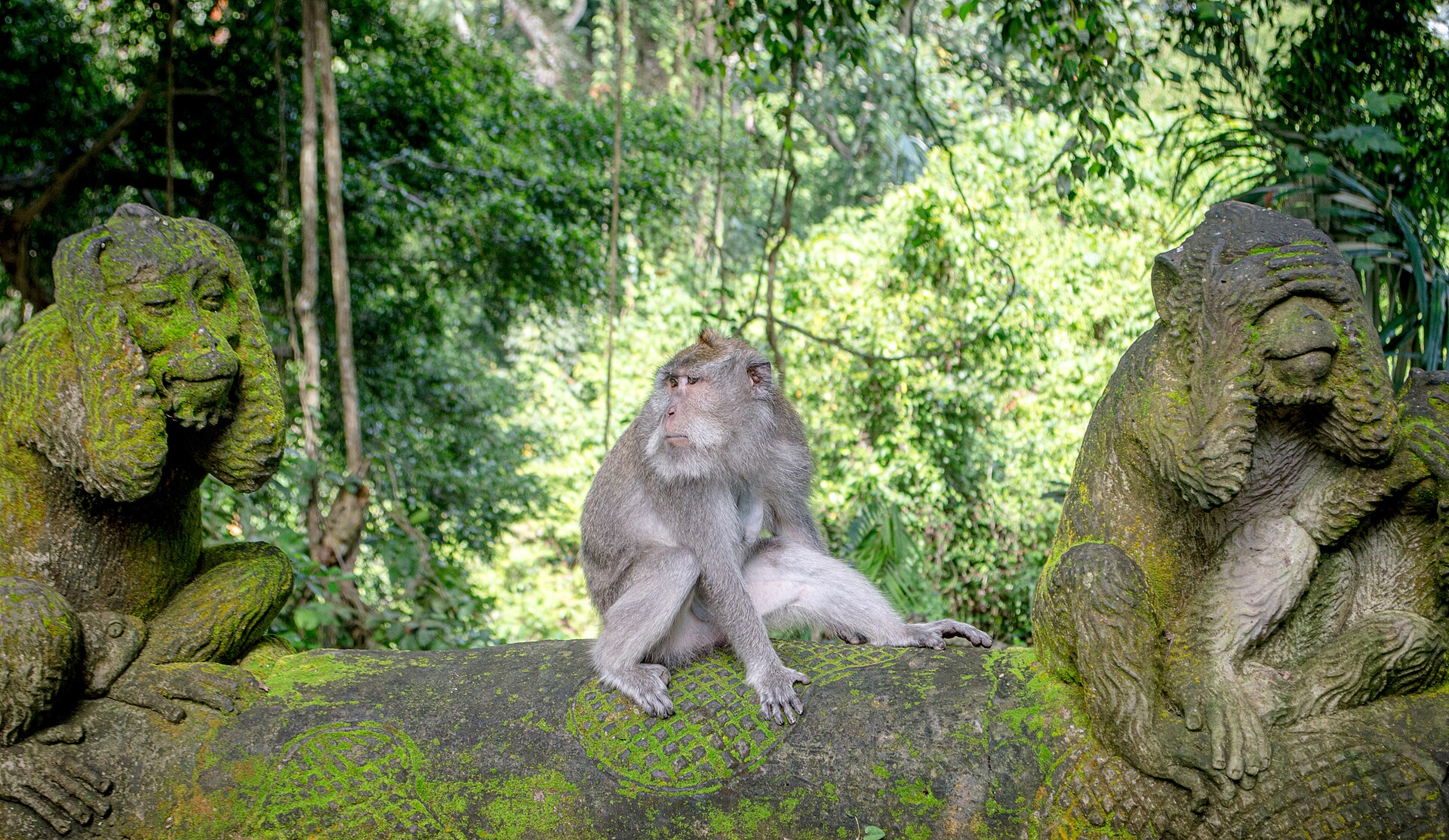
Long-tailed macaques, monkeys native to Southeast Asia, have been listed as endangered on the IUCN Red List since 2022 after their populations declined by at least 50% over 30 years. Yet, the U.S. Fish and Wildlife Service (FWS) has twice now declined to consider protecting the species under the domestic Endangered Species Act. The most recent decision was announced on July 14, 2026. Such a listing would have restricted the primate’s import for biomedical research, one of the biggest threats to its population.
Mongabay asked FWS for comment but did not receive a response by publication
Long-tailed macaques (Macaca fascicularis) can live in a wide variety of habitats, from riverbanks and mangroves to rainforests and, even, cities. Despite their adaptability, populations of the medium-sized primates have declined sharply due to habitat loss, climate change, hunting and trade, primarily for biomedical research, according to theIUCN,the global wildlife conservation authority
A2025study found that macaques poached from the wild are likely supplementing the breeding farms in Cambodia, Laos and Vietnam that supply laboratories abroad
Lisa Jones-Engel, chief scientific advisor for primate experimentation with People for the Ethical Treatment of Animals (PETA), said trapping macaques for medical testing is the biggest factor in their population decline
“Because habitat change, climate change — these animals are so fabulously adaptable, they could roll with that,” Jones-Engel told Mongabay in a video call
She said entire troops of long-tailed macaques are captured from the wild, including infants and breeding females, and sold to breeding facilities already housing tens of thousands of macaques
The U.S. imports upwards of 30,000 long-tailed macaques each year for biomedical research, making it the largest importer in the world. PETA petitioned the FWS in 2023 and again in 2025 to list long-tailed macaques on the domestic endangered species list to help curb demand for wild-caught monkeys
Both times the federal agency declined. In its most recent finding, the FWS said, “the petition does not provide substantial scientific or commercial information indicating that listing the long-tailed macaque as a threatened or an endangered species may be warranted.”
In 2024, Martha Williams, the then FWS director, testified before the House Committee on Natural Resources about a state indictment that alleged that some long-tailed macaques imported into the U.S. for biomedical research were “illegally taken from multiple sources, including national parks and protected areas in Cambodia.” The indictment also alleged the animals were illegally laundered through Cambodian breeding facilities as captive-bred animals then exported under falsified CITES permits, the global wildlife trade agreement.
Jones-Engel said the monkey’s endangered status on the IUCN Red List and FWS’s own testimony of illegality in the trade should have triggered a full Endangered Species Act review. “Instead, FWS relied heavily on the idea that long-tailed macaques are adaptable and can persist in human-modified environments,” she said. “That framing misses the point.”
Banner image:A long-tailed macaque in Bali, Indonesia. Image byPhilip Nalangan
