


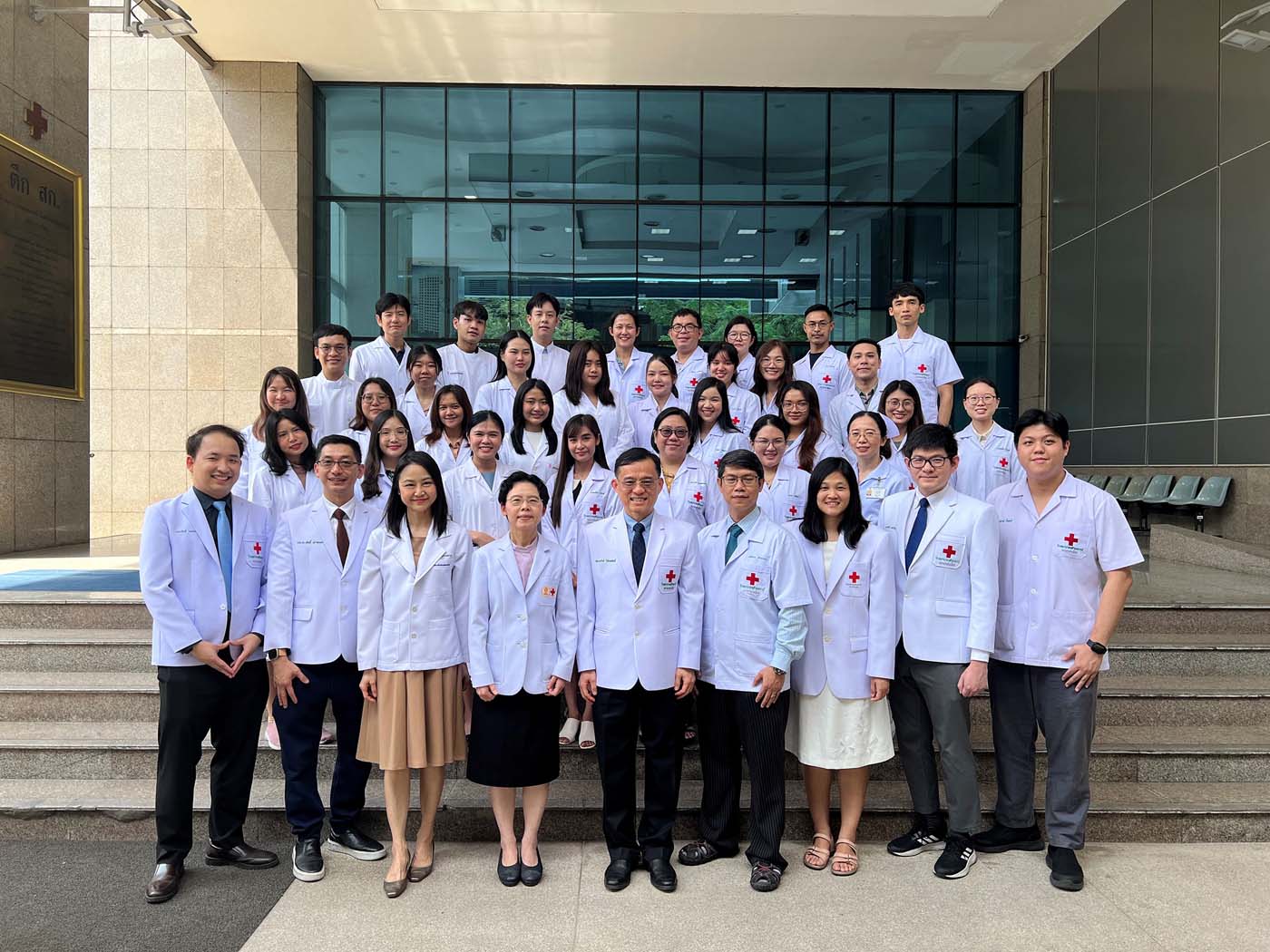
When most people think about places advancing rare disease diagnostics, sequencing, and treatments, big U.S. centers like Rady Children’s Institute for Genomic Medicine or Boston Children’s Hospital come to mind. But clinician scientists Vorasuk Shotelersuk, MD, and Shahida Moosa, MD, PhD, are showing what rare disease genomics can look like when it is driven from the clinic outward in both Thailand and South Africa, respectively
Shotelersuk is a professor of pediatrics at the Faculty of Medicine at Chulalongkorn University in Bangkok, and director of the Center of Excellence for Medical Genomics and the Excellence Center for Genomics and Precision Medicine. A medical geneticist and one of the main architects of Thailand’s rare and undiagnosed disease network, he has embedded genome sequencing into national care pathways through the Genomics Thailand initiative. His efforts have cut diagnostic times for children with rare disease in Thailand from years to weeks.
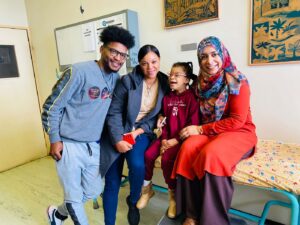
Moosa is a professor of medical genetics at Stellenbosch University’s Faculty of Medicine and Health Sciences, based at the Tygerberg campus in Cape Town. She is also the head of medical genetics at Tygerberg Hospital and leads a research group in rare disease genomics at the university. She leads Africa’s first undiagnosed disease program, using different genomic technologies to deliver answers for long overlooked patients in the region while bringing African genomic data into global databases.
Both Shotelersuk and Moosa are working hard with relatively limited rere disease families in their respective countries. Helen Albert, senior editor at Inside Precision Medicine, took the opportunity to speak to both Shotelersuk and Moosa about their work at the recent European Society of Human Genetics conference in Sweden
Q: How did you get into doing what you do today?
Vorasuk Shotelersuk: I got my MD from Chulalongkorn University in Bangkok and then finished my pediatric residency training also in Thailand. Then I went to train in genetics at the NIH (National Institutes of Health) in the U.S. and did the American Board of Clinical Genetics exam before going back to work in Thailand, where I have been since 1999
At that time, there was no clinical genetics unit or geneticists at my hospital, so I asked for all the things to set up a genetics clinic, asked for space for running a diagnostics lab, asked for research grants to do research and accept master’s degree students, and then later on PhD students. That led to setting up a genetics team and research unit, and then all the way to starting the Center of Excellence for Medical Genomics at King Chulalongkorn Memorial Hospital. It was all basically built from nothing.
Q: How have things developed in your field since you came back to Thailand?
Shotelersuk:It’s a lot better in my view. Now we have training programs from the clinical side. We have a genetics fellowship training program and a genetic counselor training program. A lot of the young generation are interested in MSc or PhD studies in genetics
Before I went back, there were 5–10 trained clinical geneticists for the 70 million people in Thailand. Now there are more than 30, and we have [the] capacity to train them in our own country
We have a genomics diagnostic lab and service, training, and research in a lot of basic institutions, and also a national project, Genomics Thailand. The policymakers see that this is an important technology that Thailand should invest in, and we are building up manpower, workforce, infrastructure, and the ecosystem. I think it’s going very well
Q: What is Genomics Thailand and how was that set up?
Shotelersuk:Before Genomics Thailand, each institution had its own genomics service and research, but it created problems because everything was siloed. At the national level, we foresaw that to overcome this bottleneck, we needed a national program
We grouped together, convinced the policymakers, they agreed, and then we started Genomics Thailand formally in 2020. We had to decide how to utilize and maximize our red or decentralized
It’s managed by the Health Systems Research Institute. It is not a population genomics program, which just recruits healthy individuals and builds up a database. We are not doing that because we have limited repatients for the database, so it’s like practicing clinical genomics at a population scale
We will divide 50,000 samples into five areas. The rare disease area is the biggest area because there is a lot of demand there and also for cancer genomics, as well as noncommunicable diseases, infectious diseases, and pharmacogenomics
Alongside this, we can provide molecular diagnoses to help our patients. When they get a diagnosis, many times they can have a specific treatment. We can provide precise genetic counseling to the families and at least try to prevent the next child from having the same serious disease. That’s a short-term benefit, but also we have the infrastructure and an ecosystem to create a big database to allow us to do research
Q: You’ve obviously been a key figure in driving clinical genetics and genomics in Thailand. There must have been some challenges along the way. Can you give some examples of things you had to overcome?
Shotelersuk:In 1999, no one knew what medical genetics was. Or they knew, but they didn’t recognize the importance or the impact of what we can do. They didn’t see the importance of this field. There were also no re I saw patients all the time at the beginning, and when I got tired, I sat in a nurse’s station at the hospital
Six months after that, I achieved a goal to get an office. It was basically a small room. Then I asked for research grants. I thought maybe I’d get one grant, but I was very fortunate to get all five grants I applied for and was able to start doing research
Every time the scientists I work with get tired or have no inspiration, they accompany me to see patients in the clinic and that inspires them. They know that their work is meaningful to someone’s life and that keeps us going
Q: How did you scale up from that to setting up a national genomics program?
Shotelersuk:At the country level, it was recognized that we were ahead of other institutions, and I had a chance to be one of the lead members of the Genomics Thailand initiative
At that time, we were fortunate to have three ministers, the Minister of Higher Education, the Minister of Science, and the Minister of Public Health, who were previously academics. They were presidents of leading universities in Thailand. They understood the importance of using science to help improve public health. They got together every Tuesday morning for at least two years with us to make a plan for how we were going to make Genomics Thailand a reality. Then in 2020, the cabinet approved the Genomics Thailand initiative.
Q: Have you managed to use what you found to help people in the clinics already?
Shotelersuk:Yes, for the patients that are admitted to the intensive care unit (ICU), either NICU, which is neonatal ICU, pediatric ICU, or adult ICU, we can change the management for at least half of them. That’s a huge number. Previously, when I was a pediatric resident, we didn’t know what caused their symptoms, so we did every test, and then they died without us knowing the cause. Now we do the genomic studies in parallel, and then after five days we get the answer and can often save their lives.
Q: How easy has it been to build up sequencing capacity for your team and Genomics Thailand?
Shotelersuk:It’s difficult because often the company headquarters are either in the U.S. or in Europe, so the cost keeps increasing. Sometimes it’s double or triple the cost that we would pay in the West. It is a disadvantage for lower-and middle-income countries; we have lower income, but we have to pay more. But because we have a big project, there is an economy of scale. Sometimes we can negotiate to lower the cost to a similar price to the one they charge people in the U.S. and Europe
Q: How are you helping to educate non-expert doctors and nurses in Thailand about genetics?
Shotelersuk:I think we do that in many strategic ways. We are also clinicians—for the medical area that we are primary physicians in, the patients are already in our hands. There is a second tier: medical specialties that know genetics is important, they come to us and say, “Can you help us do this and that?” Then there is a third group, and it depends on the physician. If they don’t see the importance of what we are doing, our strategy is to leave them for now due to time constraints. But the third group is getting smaller and smaller every day.
Q: Are you working to make sure that you can actually provide precision medicine for everybody in Thailand in the future?
Shotelersuk:In Thailand, everyone has insurance … everyone is covered by something. Our aim is that any test that is worth the money should be covered by insurance. But like any new test, they need to go through the Health Technology Assessment (HTA). After we gather enough information, we reach out to them, and now they reach out to us too
After the HTA is done, if something is worth the money, then we go to the Universal Health Coverage Committee. Right now, tests for BRCA and HLA-B*15:02 for carbamazepine are covered by Universal Health Coverage, for example
We keep communicating. The authorities understand us more, and we understand them. Hopefully, one day we won’t have to do an HTA for each medical indication, because when we move to the rarer and rarer conditions, that will be tough
Now we are trying to convince them about newborn sequencing. Sequence once but analyze repeatedly. Some arguments are saying that it’s more expensive because of the storage. Is it cheaper or more expensive to sequence once, keep the information in the data center, and then reanalyze? I’m on the side of collecting them all, not sequencing and throw away and then sequencing again, but storage is very expensive
Q: I know there’s been a lot of discussion about the big genomic databases being very European-focused. Are you trying to work with international researchers to share information you have collected to help rectify this?
Shotelersuk:Yes, we are in many international networks [because] in rare disease there are so many international networks. For example, the Undiagnosed Disease Network International
For the database, we keep the data, but if someone would like to access it, they can send us their algorithm. We then run it on our high-performance computers and send just the analyzed data to them. This is the way we plan to collaborate; we are not going to send the raw data
Q: Looking forward, what are you hoping to see in the next 5–10 years in the genomics and precision medicine space in Thailand?
Shotelersuk:In the future, I think everyone is going to have their genome sequenced. The way to maximize the resource is to do it in newborns so they can use the genome data throughout their lives. We have started to get the ecosystem up and running, and we can expand it later. It’s taken us a long time to convince people. Thailand doesn’t have something similar to the U.S. Genomics Information Nondiscrimination Act (GINA) at the moment, so some parents are afraid that if their children have a mutation that’s going to cause a genetic disease later, how are they going to deal with private insurance? This is not an issue in public hospitals because they are covered by one of the three main insurers. But in private hospitals, they are afraid of this. So in parallel, we have a group of geneticists and lawmakers working on getting something similar to GINA set up in Thailand.
I foresee that one day everyone in the world, when they are born, will have their genomes sequenced. It’s like everyone has six billion cards. If you don’t know your cards, you just close your eyes and play. But if you know what cards you have, who’s going to have a higher chance of winning?
Q: Tell me, what got you into medical genetics in the first place?
Shahida Moosa: I always thought I would be a pediatrician, and then I realized at some point that there’s a subsection of patients that I was even more interested in. Those ended up being the medically complex ones where every single test came back negative, and the patient and the families were left with big question marks. A lot of them ended up having genetic conditions
The very first genetic diagnosis that I made was a baby with Cri-du-chat syndrome. The baby had a cat-like cry, and it reminded me of something that I’d read about. I did the karyotype as the most junior person on the team. The professor was a keen dysmorphologist, and he used to take extra time just to teach me something
I was lucky because at that time you needed to be a pediatrician or an obstetrician or an internal medicine specialist, and then you would do a two-year fellowship in genetics to become a geneticist. In 2007, while I was trying to figure out if I would do pediatrics or not, the system changed in South Africa. Medical genetics became a primary specialty, and I was one of the first three trainees that they took into the new program
I graduated at the end of 2012. The clinical experience was phenomenal, but what I was lacking was the lab aspect of medical genetics. The rest of the world was already moving to next-generation sequencing, doing exome sequencing, and that was just a dream. I thought, “I need to get more training in this so that I can serve my patients better.” And so I went to Cologne in Germany to do a PhD
Q: What did you do when you finished your PhD?
Moosa: I was looking for a clinical job, but [was] not really ready to go back to the clinic. There was a choice of two labs in the U.S., and I was lucky enough to get a postdoc position at Boston Children’s Hospital, which was an amazing place. It was the most vibrant part of my scientific life up to that point. I got to teach at Harvard Medical School and to have some clinical experience, even though it was not direct. The initial plan was to stay there for five years, but two and a half years into the postdoc, there were two positions for medical geneticists made available in South Africa, which never happens. I wanted to spend a bit more time in Boston, but here were two permanent positions—faculty positions—and I couldn’t turn down the opportunity. I thought that I would have to wait at least seven years until somebody retired for there to be an available position. So I went to my boss, and I said, “I’m going home,” and just before the COVID-19 pandemic I moved back to South Africa.
Q: That must have been an interesting time to go back!
Moosa:It was indeed. I just remember being extra busy during COVID because I was doing what I was doing, but I was also helping with the coronavirus efforts. So it was a really, really busy and scary time
Our clinics were not shut down. They carried on. There were fewer patients, but the inpatient service was crazy as well. The logistics of closing certain gates, locking certain doors, and just moving around the hospital became a nightmare. Trying to get to the ICU, which is on the ninth floor, meant walking up ten floors because the lifts were not working!
Q: I believe South Africa has built up good genomic capacity over the last few years. Have you been able to capitalize on that in your work?
Moosa:COVID was a really horrible time, but there were some silver linings to the dark cloud. We were able to get sequencing machines into the country. For example, at the South African Medical Research Council Genomics Platform, which is on our campus, they have every single machine that you can think of … for every organism, including humans
We’ve built up a really good relationship with them. The data is good, the team there is good, they’re really communicative, and we trust them. That’s where we’ve been doing our exomes, our genomes. There are also two long-read service providers in the country. Last year, we did some long reads with Oxford Nanopore. And just this week we got our first PacBio dataset. So we’re trying out everything
Q: Are the prices for accessing the machinery and equipment also coming down?
Moosa:Not for many of my colleagues on the continent, but our situation has improved a lot, and prices have come down … there’s definitely more access
My way of working around that was to build up collaborations. We are part of CoRE-Genomics for Health in Africa. It’s an African-European cluster of research excellence, focusing on familial cancers, infectious and rare diseases
Rwanda is part of it and will be able to send us samples to process, just to make it easier for them while they’re building up their own capacity. I think it makes more sense to keep samples and data on the continent rather than sending them abroad. Also, it’s often much cheaper to ship something to South Africa than it would be to ship it to the U.K. or the U.S., for example
Q: What big projects are you working on at the moment?
Moosa:The Undiagnosed Disease Programme is a big initiative for us. We started five years ago, and we’ve just hit the 2,000-mark of patients we have sequenced. Initially it was just children, but we’ve moved now into adult medicine as well. We always had a good collaboration with adult neurology, but now we also work with adult cardiology, nephrology, and more recently other specialties within adult medicine like orthopedics. They’re really keen, so we’re working together nicely.y
Q: Are you modeling your rare disease program on the experiences you’ve had in Boston? Are you trying to create something similar?
Moosa:Yes. I learned a lot but had to adapt a lot for our kind of context. To begin with, people were well-meaning but quite negative about things here. But we’ve been able to show them over the last few years that it’s working. Even exome sequencing in our hands is cost-effective and really has a lot of clinical utility. Moving to genome sequencing solves a lot of our other problems, too. … It’s been a real rollercoaster over the last few years, but being able to have an umbrella undiagnosed disease program that can catch all of those patients has been really useful for the families.
Q: Can you give a couple of examples of how this kind of program differs between South Africa and Boston?
Moosa:The consent process was interesting to work through and try to perfect. Whenever I tell colleagues overseas that we opt in for secondary findings or incidentals, they find it strange. For the last count I did, less than 10% of our families opted in for anything not related to the presenting person’s current problem. And it’s the exact opposite elsewhere. For example, 99% of people in Germany would opt to receive incidental findings
Not having a word for gene in many of our languages was interesting. It was a challenge, but not insurmountable. We come up with a lot of different kinds of stories to communicate the science! During COVID, there was a lot of talk about RNA and sequencing and so on. People have heard the words, but not in the context of how that relates to the child that is presenting with extra fingers or extra toes and those types of things. But we find a way to communicate, and I truly believe that my patients and their families can give informed consent.
There’s a special group of people here that are real advocates for us and our work. The reason I can’t do trio exome or trio genome sequencing most of the time is because very often, we don’t have access to the dads. Often the mom is also not the primary caregiver of the child. It’s usually [the] granny that’s looking after the affected child, and the granny network is amazing. They are the real advocates because they bring the children to hospital, they take them to the clinic, they’re the ones who need to go and enroll them into schools and those types of things. So, the granny network is working really well for us!
Q: What kind of challenges do you have to overcome bringing this kind of complex medicine and science
to patients?
Moosa:I have an active collaboration with the very north of the country. It’s very interesting. I used to go there on outreach when I was a resident trainee. There’s a pocket of people in that area who consider consanguinity to be normal
It’s a really interesting population, and I have a soft spot for that part of the country. My very first idea of why genetics was interesting to me was a family that I’d met there with an undiagnosed skeletal dysplasia. I met the mom and the baby, and then I met the grandmother, and all three generations were affected. They had a cultural understanding about why they were all short. They understood this as being a curse that was placed on the great-grandmother during her pregnancy with the grandmother, and that’s why the grandmother was born short. And that curse has just been passed on to every girl in the next generation.
I found something interesting on their genetic testing, and I went back, and they actually invited me to the village and the church, and we had an afternoon of talking about it and praying about it. The grandmother still believes in the curse and that’s a perfectly fine explanation. But the mom and the daughter now have a good understanding of genetics. They are also really great advocates for our work in the community
Q: Can you tell me more about the South African 110,000 Human Genome Programme?
Moosa:South Africa is embarking on our 110,000 genomes project. We had a kickoff meeting last week. I will be submitting some samples to the first 10,000 [genomes] pilot study. We are looking forward to seeing how that’s going to work. It’s going to be a great red … a global community as well
At the moment, there are ten principal investors that are involved in the first 10,000 genomes. They come from a range of backgrounds. There are people that do pure population genetics; then there are those that are looking at a specific condition like kidney disease. I will be submitting some of our undiagnosed rare disease patients as part of the greater cohort
Q: Do you think this project will help address the problem of not having enough genetic databases with African participants?
Moosa:That’s our greatest problem. It impacts so many things in my day-to-day life, not having a robust, reliable database for me to refer to. I think this is going to be a good step in the right direction. We’ve seen already, with the 2,000 or so exomes and genomes that we have in-house, how that is already helpful to us on a daily basis. But having access to diversity in the 100,000s would be really, really excellent
It’s going to be so beneficial to everyone. Especially for our patients, it’s kind of hitting two birds with one stone. We hope that we’ll get the diagnosis for them, but we’re also contributing to their diversity and the understanding of what’s happening to them on a basic genomic level. So I am looking forward to that a lot
Q: With your rare disease work, I know you’ve managed to diagnose a lot of people, but are you also managing to get some treatments to patients?
Moosa:Yes, we obviously don’t have access to the really expensive stuff, like the treatments for spinal muscular atrophy [that] are way beyond what we can afford. We have some access to enzyme replacement therapy, especially on a compassionate basis. The road to compassionate release of the enzymes can take up to 18 months, and often it’s too late for them. I’ve been through that process three times, and it’s been really devastating
But there have been successes as well. There are other things that we can do. There’s a family, for example, that I’m thinking of where the eldest child has cerebral palsy. I had to convince one of the neurology fellows to do this work because everybody thinks cerebral palsy is just due to an insult that happened perinatally, which it is in the majority of cases. But I looked in the literature, and I saw that in 30% of cases they find a genetic answer. We did a very small study, and my student was able to diagnose 35% of them with a genetic, well-described pathogenic or likely pathogenic variant. Amongst them are treatable conditions. So we were able to start supplementation with a treatment for the next sibling in that family. It’s really cheap, around 400 rand ($24) for a three-month supply … and they’re going to be fine. Even though we couldn’t help the initial sibling, the information we got from them could help the rest of the family.
There are other treatments too. There’s a condition called Mabry syndrome—hyperphosphatasia with intellectual disability. Type 4 is common in our region of South Africa. A gene called PGAP3 is [involved], and people have seen that using folic acid is beneficial for the affected children, especially when they have intractable seizures
Just anecdotally, we have eight patients, I think, taking folic acid. According to the seizure diaries that the moms keep, there is a visible difference in symptoms. It’s a transformative therapy, even though it’s cheap and seemingly not high-tech, because the fewer fits that the child has, the easier it is for the mom to leave them to go to work, and then the child can seek education and jobs later on. The socioeconomic status of the family is transformed. And the patient’s quality of life improves as well.
Q: Have you managed to access molecular therapies like ASOs (antisense oligonucleotides)?
Moosa:Not yet. It’s part of the mid-to long-term goals that we have. For all our N = 1 patients that we think an ASO might be beneficial for, we want to try and see who to triage and who to prioritize, and then find a partner that can help us with that. The other thing that I would love to do is to get involved in clinical trials. I’d love to be able to set up the infrastructure to be able to support that
Q: Are you part of capacity-building in your region in terms of research and genetic medicine?
Moosa:Yes, we’re trying. It’s a systemic problem because I’ve trained two dozen graduate students and we don’t have the infrastructure to absorb them yet. So, they find jobs in industry or they move elsewhere
I think we have enough evidence now to show that medical genetics works. It does make financial sense to do genomics, but we also need the workforce to support that
That’s the next step. Nothing’s going to change unless policy changes. And for policy to change, we need to get buy-in from the right stakeholders
Q: Is there more of a pharma and biotech industry sector in South Africa now?
Moosa:It is happening. Not as much as we would like. But yes, it definitely is changing. I think a lot of that has to do with the fact that we can do a lot of stuff in-house now. It allows us to create a real sector. Before, you would have to go overseas to do something, and then coming back is hard. You have to integrate again and then start something new, and nobody wants to support you. If you’re creating the evidence here and creating the startup in South Africa, there’s a lot more support and it’s a lot easier.
Q: What do you hope to see in your sector in South Africa and the rest of the continent in the next few years?
Moosa:I’m a big dreamer. So when I see things that are achievable in similar contexts, like in Thailand, it says to me that I should definitely dream, and dream big, and just start somewhere. I hope that in the next five years I’ll have a lot more to tell you and that we’ve at least granted access to the technology, if not to treatments, to the rest of sub-Saharan Africa
That’s the dream. To have trained enough people and built enough power to be able to drive genomic medicine and precision medicine forward on the continent
Helen Albert is senior editor atInside Precision Medicineand a freelance science journalist. Prior to going freelance, she was editor-in-chief atLabiotech. She was editor ofThe Biochemistmagazine and blog, but also worked as a senior reporter at Springer Nature’smedwireNewsfor a number of years, as well as freelancing for various international publications. She has written forNew Scientist,Chemistry World,Biodesigned,The BMJ,Forbes,Science Business,Cosmosmagazine, andGEN. Helen has academic degrees in genetics and anthropology, and also spent some time early in her career working at the Sanger Institute in Cambridge before deciding to move into journalism.
News & FeaturesCOVID-19DiagnosisGenomicsMedical geneticsPrecision medicineRare diseases
