


School vaccine requirements do more than prevent disease – Earth.com
08-02-2026
Why school vaccine requirements may matter more than ever
ByLuis Arrais
Earth.com staff writer
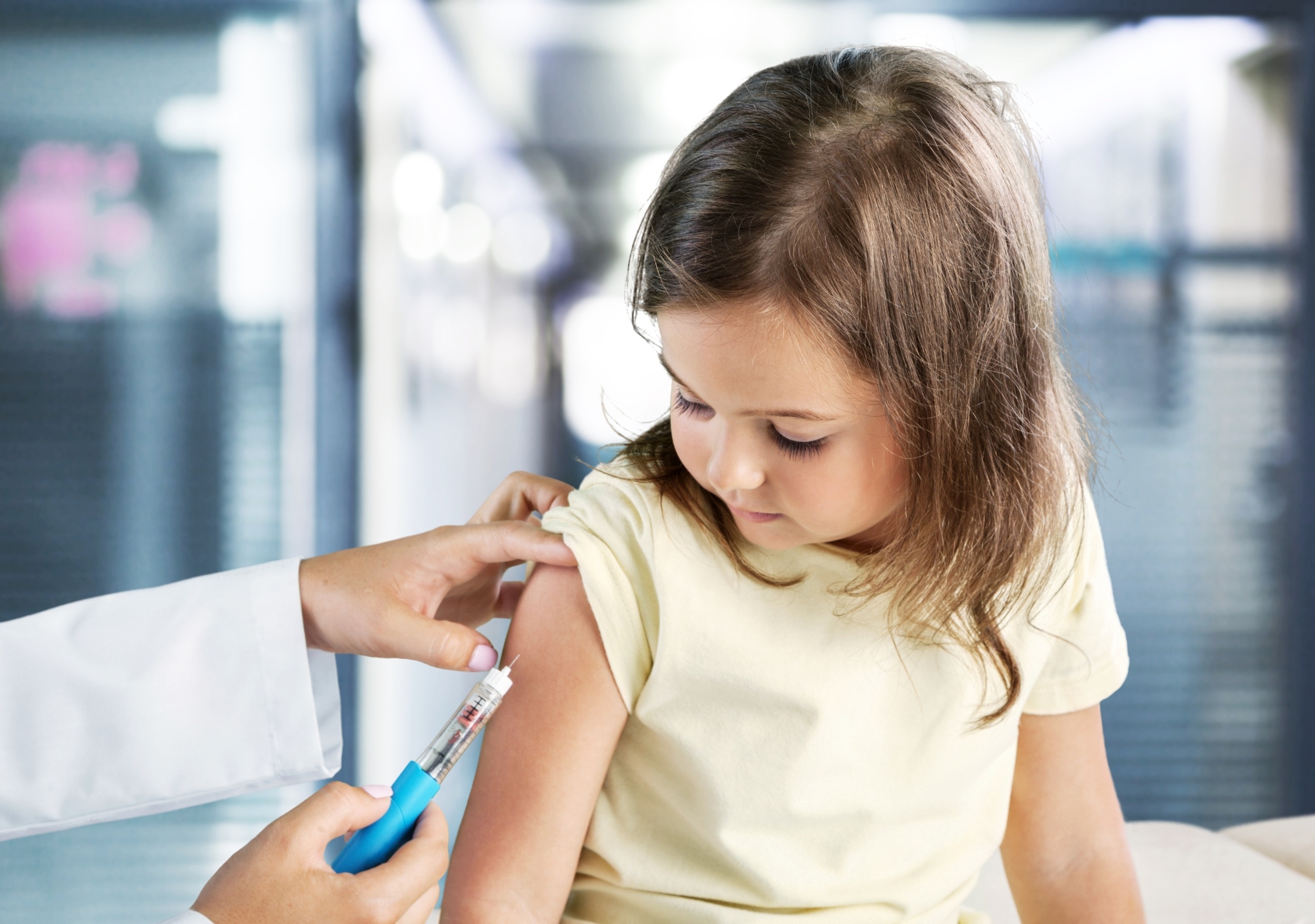
Every August, millions of US parents dig out an immunization card, book a clinic visit and hand a form to the school office. School vaccine requirements are quiet by design
That quiet is now being tested. More than 200 vaccine-related bills have recently surfaced in state legislatures, and several of them touch school entry rules

A new viewpoint in JAMA Health Forum argues that the country is close to bargaining away one of the few pieces of public health machinery that still reaches nearly every child
Support is shifting
The author is Y. Tony Yang of the Center for Health Policy and Media Engagement at George Washington University. He studies how vaccine law is written and how the public reacts to it
Broad support for school rules is still intact. A KFF poll found that 83% of adults, including 75% of Republican voters, back requirements for some vaccines with health and religious exceptions
The softer ground is underneath. In Gallup polling, the share of Americans calling childhood vaccination extremely or very important fell from 94% in 2001 to 69% in 2024
One in five adults now say vaccines are more dangerous than the diseases they prevent
Federal guidance has moved too. This year’s schedule changes left many parents unsure which shots their children still need
How exemption rules differ
The word mandate flattens a landscape that is not uniform. Every state requires certain vaccines for school entry, and every state allows medical exemptions on clinical grounds
Nonmedical exemptions are the variable part. They rest on religious or personal objections and allow refusal even when a child is medically able to be vaccinated
States handle them very differently. Some ask for parent education modules, documentation or annual renewal. Others make an exemption easy to obtain
California, Connecticut, Maine and New York allow only medical exemptions, according to the NCSL
That paperwork is not a clerical detail. It decides whether vaccination is the path of least resistance or one more errand a family can postpone
What school vaccine requirements do
The usual framing pits public health against individual liberty, as though the point were to force the hand of unwilling parents. Yang argues that this account is incomplete
Requirements do carry legal weight, since they are conditions for joining a shared institution. But they also organize time, forms, deadlines and access, and they turn a recommendation into a routine
That may matter less for the firmly opposed than for a much larger group: families who are busy, behind on shots, moving between insurers or clinicians, or simply worn down by ordinary friction
The evidence fits that reading. Repealing nonmedical exemptions has been linked to higher kindergarten vaccination rates, with little substitution toward medical exemptions
That shift was about 0.4 percentage points in a recent national analysis that Yang co-authored. California’s elimination of nonmedical exemptions under senate bill 277 points the same way
None of this shows that legal pressure is irrelevant. It suggests that school vaccine requirements work partly through defaults and deadlines, not only through penalties
Not one kind of parent
Opposition is not a single thing, and Yang warns that treating it as one invites bad policy. Some parents act on safety fears or on misinformation about what vaccines do
Others distrust public institutions, or hold religious and ideological views about parental authority. A third group is not opposed to vaccination at all
Those families are stuck on appointment availability, transportation, lost records, forms or time away from work
If roughly a quarter of parents seeking exemptions cite logistics rather than ideology, then access is part of the policy rather than a side issue
Strict enforcement without better access, Yang argues, works less like prevention and more like a penalty on households with the least flexible schedules and the weakest links to care
Keeping classrooms open
Two doses of measles vaccine are about 97% effective at preventing infection, according to the CDC. Individual protection, though, is only part of what a requirement buys
An outbreak disrupts school for everyone. Exclusion rules pull unvaccinated classmates out of the building, health departments stretch thin, and infants too young to be vaccinated are exposed
The costs are measurable. Containing the New York City measles outbreak of 2018 to 2019 ran to an estimated $8.4 million, and response is always more expensive than prevention
The threat is not hypothetical. US cases have climbed again, and measles has re-established itself in several countries that had eliminated it
Catching what else is missed
The second argument is the one that gives the viewpoint its title. When families come in to satisfy a school requirement, a clinician has them in the room
Records can be reviewed, missed doses caught, and other preventive care offered
In one study of adolescents, school entry rules for tetanus or meningococcal vaccines were linked to higher HPV coverage, even where that shot was not required
The mechanism is convenience rather than coercion. Once a family is already at the clinic, the cost of delivering the next recommended service drops toward nothing
Those same visits can surface vision problems, developmental delays, lead exposure, food insecurity or a run of missed well-child checks
In a fragmented health system, Yang argues, that appointment is an unusually valuable point of contact
Designing for legitimacy
The conclusion is not that requirements should be loosened or abandoned. It is that they should be built to hold up
On the enforcement side, that means tightening nonmedical exemptions where appropriate, standardizing medical ones, and asking for periodic renewal and clinician documentation
On the access side, it means school-located vaccination, pharmacy partnerships, evening and weekend clinics, interoperable immunization records, transportation help and reasonable grace periods
Yang also presses on the vocabulary. “Mandate” invites a culture-war script, while “school immunization requirement” describes what the policy actually is
The rules should be “defended as mundane, because their mundanity is their strength,” he wrote
Limits of the argument
This is a viewpoint, not a study. It reports no new data, and it makes a case rather than testing one, so it should be read as an argument built on evidence others collected
That evidence has its own limits. The exemption-repeal findings are observational, drawn from state policy changes rather than randomized comparisons
A state that repeals an exemption may also differ from one that keeps it in ways no analysis can fully control. The California work covers a single state
The HPV result comes from one adolescent study rather than a body of replications. Yang co-authored one of the analyses he cites, and he reports no conflicts of interest
The polling is also a snapshot. Support for school rules is high today, but the same surveys are what show it moving
Why the mundane matters
The question Yang leaves is not whether the country can afford school vaccine requirements
It is whether it can afford to lose one of the few public health systems that still runs at scale and with broad consent
Policies that prevent outbreaks, keep children in classrooms and create a routine touchpoint with care are easy to overlook precisely because they work
They are also, as the viewpoint concludes, much harder to replace than to dismantle
The study is published in the journal JAMA Health Forum
Like what you read? Subscribe to our newsletter for engaging articles, exclusive content, and the latest updates
Check us out on EarthSnap, a free app brought to you by Eric Ralls and Earth.com
—–
