


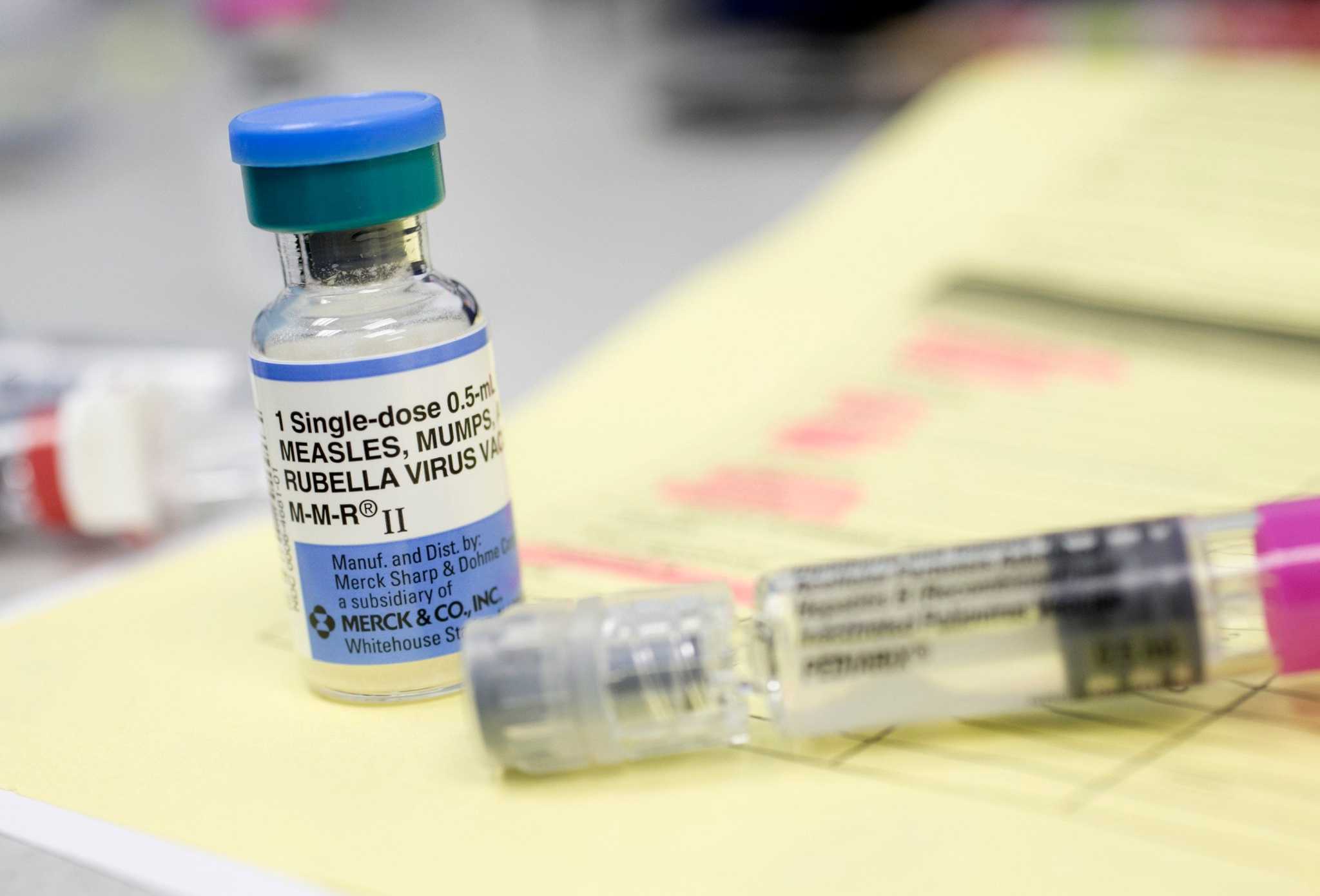
As Texas families prepare for the new school year, parents might be checking vaccination records, scheduling doctor’s appointments or weighing whether to seek an exemption. Health officials say it’s also a good time to understand which vaccines are required, where to get affordable shots and why childhood immunizations remain important as diseases such as measles and whooping cough have resurfaced.
Skipping vaccines “leaves a child susceptible to illnesses that can be quite severe and lead to hospitalization and death,” said Dr. Natalie Tarrant, an Austin pediatrician with Texas Children’s Pediatrics. “That’s our goal: To make them healthy with no long-term complications.”
Article continues below this ad
People have forgotten about the dangers of these diseases because vaccines have been so successful, she said. While diseases like measles, polio, pertussis (whooping cough), and mumps continue to have outbreaks after almost being eradicated because vaccination levels have gone down, most people haven’t seen someone with active polio or measles recently.
Tarrant said while she’s never seen a case of measles in her career because of the success of vaccinations, “I know enough about measles to be afraid of measles.”
Almost all of these vaccine-preventable diseases can cause death or affect a child’s future quality of life:
- Diphtheria: Damage to the heart, kidneys and nerves.
- Tetanus: Lockjaw and stiff muscles that make eating difficult and inability to move
- Pertussis: Death in babies
- Varicella (chicken pox): Shingles later in life with a very painful rash that can affect the nervous system
- Mumps: Swelling of the testicles causing infertility, painful swollen jaw making eating difficult, brain inflammation, hearing loss
- Measles: Brain swelling years later and inability to fight infections
- Rubella: Birth defects in babies, learning disabilities, bleeding problems, brain swelling and hearing loss
- Hepatitis: Liver failure and liver cancer
- Meningococcal: Hearing and vision loss, limb and finger amputation and intellectual disabilities
- HPV: Cervical and head and neck cancers
Article continues below this ad
“These are serious diseases,” said Stephanie Helfman, an epidemiologist with Austin Public Health. “We do not want our children to experience that.”
Vaccines aren’t just about you
Vaccines also protect people who cannot be vaccinated, such as children undergoing cancer treatments or newborns who are too young to be vaccinated. The goal for “herd immunity” is to have at least 95% vaccination coverage within a community for each disease to prevent an outbreak, according to the Centers for Disease Control and Prevention
You can look up your county, school district or private school’s vaccination rates at dshs.texas.gov/immunizations/data/school
Article continues below this ad
OPINION: CDC vaccine changes sow confusion — and risk — for Texas kids
What vaccines are required to go to school?
Your child’s vaccine record gets checked when entering kindergarten and again in seventh grade. Then, if they go off to college, the record might get checked again depending on the state and the school’s requirements.
The Texas vaccination requirements are different from the American Academy of Pediatrics’ recommended vaccine schedule, which most pediatricians use. The state’s list represents the minimum requirements.
Article continues below this ad
- Four or five doses of diphtheria/tetanus/pertussis, depending on which version of the vaccine they received
- Three or four doses of polio
- Two doses of measles, mumps and rubella (German measles)
- Three doses of hepatitis B
- Two doses of varicella (chicken pox)
- Two doses of hepatitis A
By seventh grade, they must have all of the above, plus:
- A recent diphtheria, tetanus and pertussis vaccine within the past five years
- A meningoccocal vaccine covering four types of meningitis-causing bacteria
Article continues below this ad
By eighth grade and through high school, all of the above, plus:
- A recent diphtheria, tetanus and pertussis vaccine in the previous 10 years
College in Texas:
- Proof of receiving a meningococcal vaccination or a booster in the past five years and at least 10 days before the semester starts, the student is 22 or older, enrolled in online courses or qualifies for another limited exemption
Article continues below this ad
Where can I get affordable vaccines?
If you don’t have insurance or cannot afford copays or deductibles, Austin Public Health offers vaccines on a sliding scale. “We never turn anyone away,” Helfman said
Schedule an appointment by calling 512-972-5520 or online at austintexas.gov/health/programs/immunizations. Information about mobile clinics also is available there. Some of those mobile clinics will be set up at local schools, Helfman said
CommUnityCare also has back-to-school vaccine clinics scheduled for the first week of August at various locations. Make an appointment at cuctx.org/b2s26
Article continues below this ad
Can I get an exemption to required vaccines?
Yes. In fact, some kids with certain medical conditions, including cancer treatments, cannot get vaccinated. That medical exception, signed by your doctor, is good for one year, but can be good for longer if the doctor writes that it is a lifelong condition
For people who want a religious or reasons-of-conscience exemption, they can get a two-year exemption by filling out an affidavit and getting it notarized. However, if there is an outbreak of a vaccine-preventable illness, these children will not be allowed to go to school during that time
Don’t forget these vaccines
Doctors also recommend other vaccines that are not required to enroll in school, but can help prevent disease outbreaks and prevent worse disease outcomes or hospitalizations.
Article continues below this ad
- Two doses of the HPV vaccine between ages 9 and 11
- A second dose of the meningococcal vaccine at age 16
- A meningoccocal B vaccine at age 16
- Yearly flu and COVID-19 vaccines
Some children with certain medical conditions also might need a different vaccination schedule, or an additional dose of a vaccine, or avoid “live” vaccines.
How can you find out what vaccines you or your child have had?
Your primary care doctor should have that list if you no longer have your personal copy of your shot record. Often, your online health portal might have some of the information as well
Article continues below this ad
Many practices also report vaccinations to the Texas Department of State Health Services’ Texas Immunization Registry (ImmTrac2). Even if your doctor hasn’t been with your child since birth, they can look up the child’s vaccinations in ImmTrac2. You can also request a copy of your immunization record by filling out a form with the registry
If no vaccine record can be found, doctors can start vaccinations or do a blood draw to check your child’s titer levels for certain diseases, which indicate either a vaccine or an exposure. The American Academy of Pediatrics has a catch-up schedule for kids who have not been vaccinated or are uncertain of past vaccinations
Do vaccines have harmful side effects?
Vaccines are well-tolerated, said Dr. Shaili Singh, a pediatrician at Austin Regional Clinic in Pflugerville
Article continues below this ad
The most common side effect is pain or redness at the site of the injection. Some kids might get a rash or muscle aches. They might have a mild headache or a low-grade fever, which can be treated with acetaminophen or ibuprofen
Normal side effects happen because “we are teaching the body how to read this infectious disease,” said Dr. Tara Greendyk, the director of child and adolescent health at CommUnityCare. The body is having a slight reaction, but then if the child encounters the actual disease, the body understands it and is prepared to fight it. “That takes a little work on the part of the body.”
“Serious allergic reactions are relatively rare,” Greendyk said. In her 20 years as a physician, she “can count on one hand” the number of times a patient had a serious reaction
Article continues below this ad
