


China is getting more anxious about Mythos ahead of Trump-Xi meeting
Officials in Beijing are concerned about the cyber capabilities of AI frontier models made by US companies
SummariseAdd BT as a preferred source
Add BT as a preferred source
Published Tue, Aug 4, 2026 · 05:44 PM
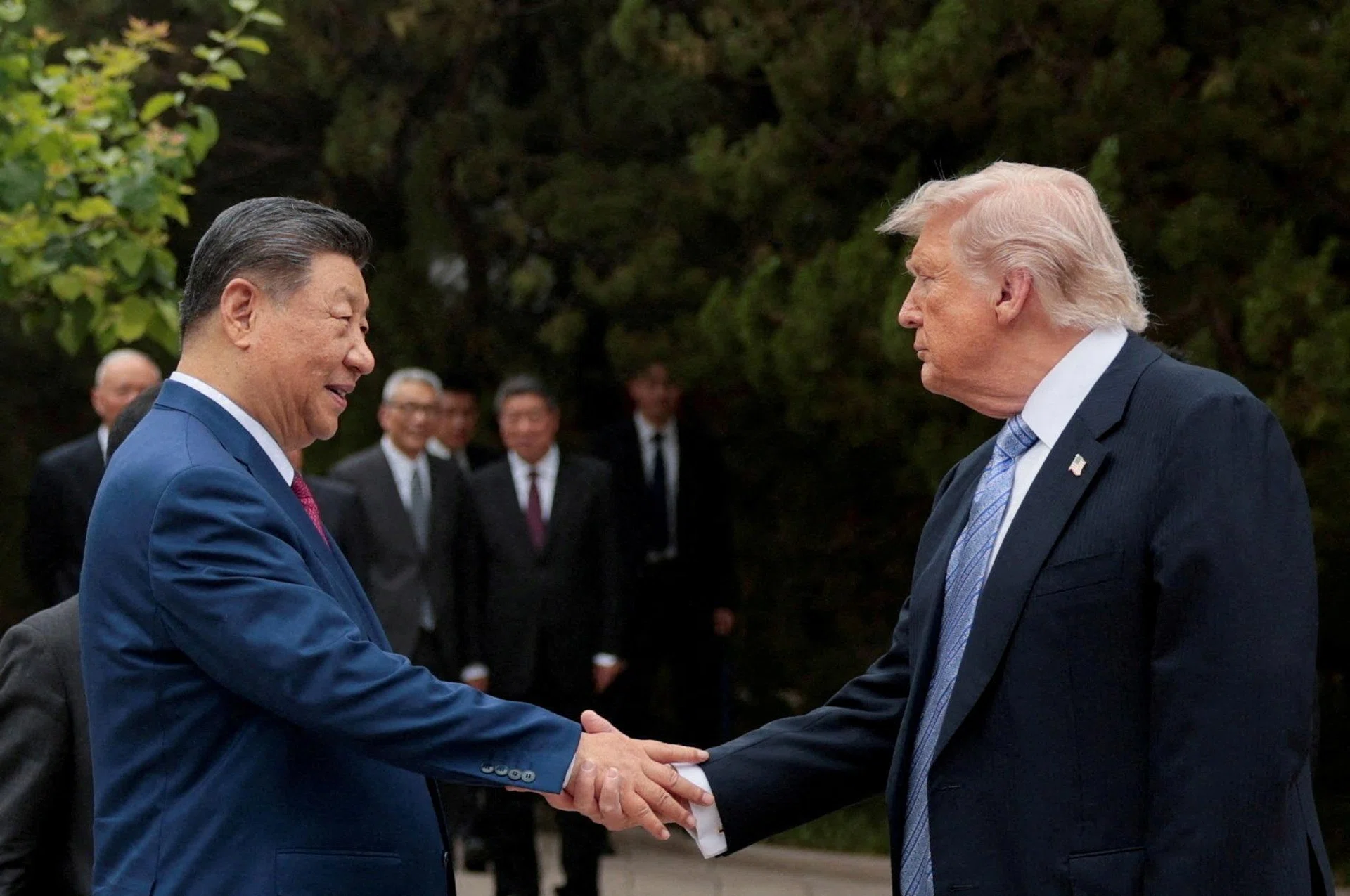
- Chinese President Xi Jinping and US President Donald Trump are set to meet on Sep 24. PHOTO: REUTERS
CHINA is growing anxious that Anthropic’s Mythos could be wielded against the world’s second-biggest economy, adding a volatile new issue to already heightened tensions before a planned summit between Chinese President Xi Jinping and his American counterpart Donald Trump
Officials in Beijing are concerned about the cyber capabilities of Mythos and other artificial intelligence frontier models developed by US companies, said people familiar with the matter, who asked not to be identified discussing sensitive matters
They see the potential for models like Mythos to be used as an offensive weapon, and question why Anthropic is denying China access to the systems for normal purposes, the people said
China wants to preserve a relatively warm atmosphere before Xi’s planned Sep 24 visit to the US, and is seeking a “win-win” approach at AI talks expected before the leaders meet, the people said
Even so, suspicion remains high between the governments, with the US expressing concern that Chinese companies are using American frontier models to train their own versions
US Treasury Secretary Scott Bessent last month floated unspecified sanctions if model developers are found to have stolen intellectual property, after Beijing-based Moonshot AI released a system said to rival some of the best American models
Asean Intelligence
Get insights into businesses across South-east Asia
Get the free report
China’s Commerce Ministry, which oversees export controls, warned last week that it would take “all necessary measures” in response to the US threats.
The people familiar with the matter said Beijing is not preparing any immediate action against Anthropic or other US AI developers, but officials are drawing up potential responses should the US take measures against Chinese companies in the sector
China’s options could include imposing sanctions or adding American AI companies to one of the nation’s restricted-entity lists, those people said

Meta, Anthropic, Google, OpenAI to meet Trump officials about AI safety testing

Alibaba releases new Qwen AI model with performance rivalling Anthropic’s Fable
Anthropic’s AI models hack three organisations during tests
Are investors really getting cold feet about the AI boom?
More
China’s Ministry of Foreign Affairs referred questions to the relevant authorities. The Ministry of Commerce did not respond to a faxed request for comment
US “doubling down on innovation”
Trump has signalled that his administration is weighing additional controls on AI while remaining wary of measures that could weaken US companies against Chinese competitors
“We have to be careful in both ways,” he told reporters in the Oval Office on Jul 29. “We don’t want to restrict them where all of a sudden, we come in second to China.”
White House spokesperson Liz Huston said that the administration was “doubling down on innovation to widen the gap between America and the rest of the world”
The tensions illustrate how AI is becoming an increasingly unpredictable front in the US-China relationship. The two countries remain strategic rivals despite reaching a 12-month truce in October 2025 over tariffs and supplies of rare earth materials
While that deal is widely expected to be extended, both sides continue to pursue self-sufficiency in key industries and maintain broad restrictions on cutting-edge technology
AI has increasingly been the focus of US national security curbs, most notably the restrictions on China’s ability to acquire cutting-edge Nvidia chips that power the technology
New limits on foreign-made robots and power inverters, industries dominated by China, have widened the dispute into sectors that Beijing considers central to advanced manufacturing and economic growth
Wu Xinbo, director of Fudan University’s Center for American Studies in Shanghai, said China’s concern about Anthropic fits a broader national security anxiety over US AI companies, citing their ability to collect customer data and share it with the US government or military
“That is why there is a growing concern over the national security challenge posed by those US AI companies,” Dr Wu said. “That’s quite understandable. You have to be cautious.”
Lobbying for limits
Anthropic has emerged as a prominent advocate of tighter US restrictions on China’s access to advanced AI. CEO Dario Amodei has urged Washington to keep high-end chips out of China and require safety testing for powerful models
Separately, the company has accused Chinese developers, including Alibaba’s Qwen team, of improperly using outputs from its Claude systems to train competing models
The Anthropic chief also warned last week that advanced Chinese AI could threaten US military superiority or deepen domestic repression, calling China’s ruling Communist Party “the most capable threat” among authoritarian governments
In 2025, the company blocked its services from Chinese-controlled companies, citing US national security concerns. Because Anthropic does not operate in China, any sanctions imposed by Beijing would probably have limited immediate commercial impact
Anthropic declined to comment. It referred Bloomberg News to a May statement laying out its warnings about China and support for chip controls
Washington’s own policies towards Anthropic have been unsettled
In June, US Commerce Secretary Howard Lutnick ordered the company to obtain licences before providing its frontier Mythos 5 and Fable 5 models to foreign entities anywhere in the world. Anthropic temporarily disabled the models before reaching a resolution with the administration
The company is also mired in a feud with the Trump administration over the use of its AI by the US military, touched off by the company’s insistence on extra safeguards for its tools. Officials have banned the federal government from using the company’s technology, a decision Anthropic is challenging in court.
Retaliating when tensions rise
Beijing demonstrated its ability to hit back at US moves against its tech companies in June, when it placed export controls on MP Materials and USA Rare Earth
That came after the Pentagon added major Chinese firms, including Alibaba and BYD, to a list of firms it said support the Chinese military.
Top American and Chinese officials have raised points of friction between their countries even as they lay the groundwork for the September summit
Vice-Premier He Lifeng expressed “serious concern” over the recent US economic and trade restrictions in a phone call with Bessent and US Trade Representative Jamieson Greer, without specifying the measures. Summaries of the call from both sides made no mention of AI
At the same time, Chinese open-weight models – which can be freely downloaded and modified – have given Beijing an opportunity to cast itself internationally as a champion of broadly shared AI
It has promoted open models, offered technology and training to developing economies and helped launch a 29-member cooperation group that could give Beijing greater influence over future standards
While some US developers, including OpenAI, offer open-weight models, much of the American industry’s focus has been on proprietary systems that companies sell to customers while retaining control over the underlying technology
Chinese companies, including DeepSeek, have released more affordable, open models that typically lag behind the most cutting-edge software from US rivals but nonetheless offer a compelling product for the price
China has its own security concerns with AI released by Chinese companies. Officials have discussed with AI companies, including Alibaba, how to mitigate the risks posed by their increasingly powerful models
Yuyuantantian, a social-media account linked to China’s state broadcaster and frequently used to signal official policy thinking, proposed last week a tiered system for releasing future AI models, with access determined by the power and potential risks of their capabilities. BLOOMBERG
Decoding Asia newsletter: your guide to navigating Asia in a new global order. Sign up here to get Decoding Asia newsletter. Delivered to your inbox. Free
ChinaUS-China relationsUS-China tech warTechnologyTechnology businessesArtificial IntelligenceAnthropic
Share with us your feedback on BT’s products and services
TRENDING NOW

Lower consent hurdle among changes proposed for en bloc sales to spur redevelopment, protect minority owners

Yeoh Pei Xien: YTL’s third-gen scion with a pastor’s heart
UOB CEO’s youngest child Grant Wee turns burnout into a wellness business
Philippines’ income upgrade hides grim reality for most Filipinos
