


Editor’s Note: This is an excerpt from WBUR’s weekly health newsletter, CommonHealth. If you like what you read and want it in your inbox, sign up here.
Black men in Boston die, on average, about 10 years earlier than other city residents
That statistic comes from a February report by the city’s Public Health Commission. It found that Black residents overall have the lowest life expectancy of any racial or ethnic group. But the gap was largest for Black men, who lived on average about 72 years, compared to 80 years for Black women and roughly 81 years for other males in Boston. (The average for all Boston residents was 82.2 years, the report found.)
Nationally, men tend to have lower life expectancy than women. A report last year from the federal Centers for Disease Control and Prevention found that, as of 2023, American men could expect to live about five fewer years than women
The disparities stem from a range of factors, health experts say, including poverty, racism and ideas about masculinity that stop some men from visiting the doctor
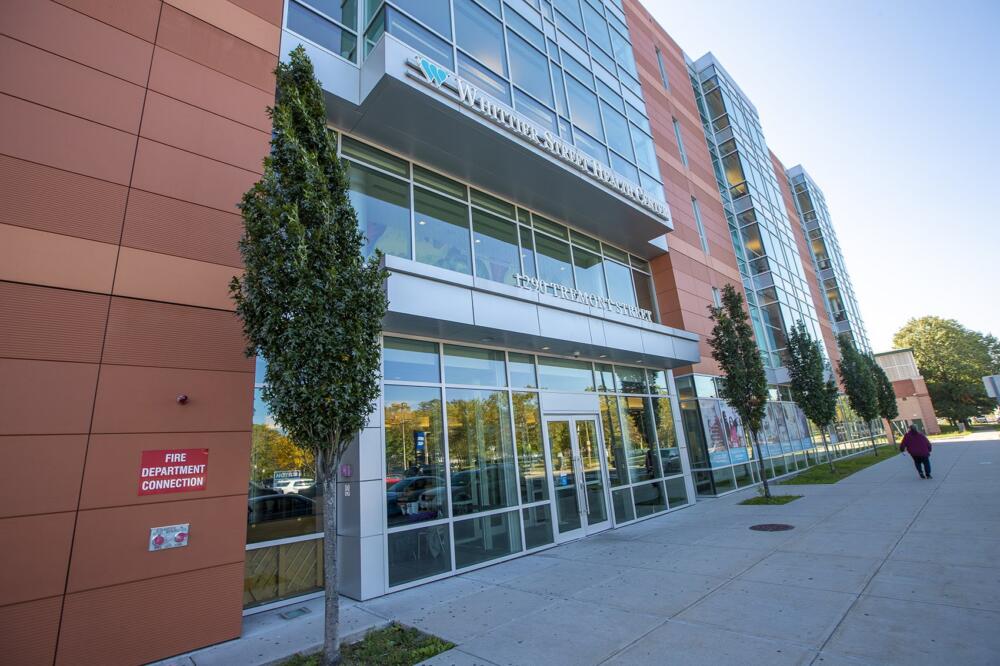
“We believe that we are Superman, but we are not Superman,” said Bob Edwards, community relations manager for the Whittier Street Health Center in Boston’s Roxbury neighborhood. “We have to realize that in taking care of ourselves, then we can take care of our loved ones.”
Whittier Street runs a men’s health clinic and hosts an annual summit to focus attention on men’s health issues. Boston officials recently got more involved in the effort, too. In June, city leaders pledged to spend $1 million a year to help close the gap in Black men’s life expectancy
Going mobile
As part of its outreach to men, Whittier Street expanded a mobile health van initiative in 2021. Dr. Stephen Wright, the center’s medical director, said the vans allow staff to see people who don’t get regular checkups or may lack the means to go to a clinic. Often partnering with churches and schools, the vans provide vaccinations, dental and eye exams, blood work and more. Whittier Street’s CEO Frederica Williams said they serve an average of 1,000 patients each year
“Whether it’s going to Nubian Square, whether it’s going to schools so we can get children engaged, whether it’s going to public housing developments, we remove those barriers, meet people where they are,” Williams told me
Between operating the mobile vans, running the men’s health clinic and other initiatives, the center has increased its male patient population from 9% over two decades ago, to 49% today
“While we are also focused on gender equity around women,” Williams said, “we also don’t want to leave the boys behind.”
The work ahead
After the release of the February report, Boston officials pledged to spend $1 million this year to increase cancer screenings and fund organizations that work to improve Black men’s health. Cancer is the second leading cause of death among the city’s Black men, specifically prostate and colon cancers, according to Boston’s commissioner of public health, Dr. Bisola Ojikutu
“I’m not naive, I know $1 million is not going to get us to the point where we can deal with all the upstream issues,” Ojikutu said at Whittier Street’s 26th annual Men’s Health Summit. “This is about community investment, community reinvestment.”
Wright, the medical director, said more funding is also needed for outreach like the vans
“Boy, if we can have a fleet of mobile vans to go out there and to be on every corner, that would make a huge difference,” Wright said
He’d also like to see more doctors and nurses of color, so more patients can find medical staff who look like them
“One of the first things I hear from patients of color, they will say, ‘Oh, it’s so good to see a doctor of color, oh my goodness I’ve been waiting,’” he explained. “They’re with someone who understands their culture, who speaks their language, that type of thing.”
When it comes to men, Wright said many need reminders not to push their own health aside, and to pay attention to what their bodies are saying. He added that he knows each moment he spends with his patients is crucial
“I’m trying to maximize everything I can in that 15-minute visit, sometimes 30 minutes if it’s a physical exam,” he told me. “I try to maximize everything I can because that might be the last time that person comes in for another five or 10 years.”
