


Advertisement
A few years ago when I was visiting my mother’s house and going through boxes of things from my childhood, I came across a planner I’d had in high school
Scattered throughout the pages, pasted next to reminders of assignments and appointments at my orthodontist written in glitter pen were photos of a celebrity who, during that particular year in the mid-2000s, was constantly on the cover of tabloid magazines due to her weight
I leafed through the pages of the diary, looking for an image that was still imprinted in my brain almost two decades later: two photos of the same celebrity in a bikini, taken months apart, published side-by-side with arrows pointing to specific parts of her body with accompanying text explaining how her frame had changed and which areas the weight had dropped from
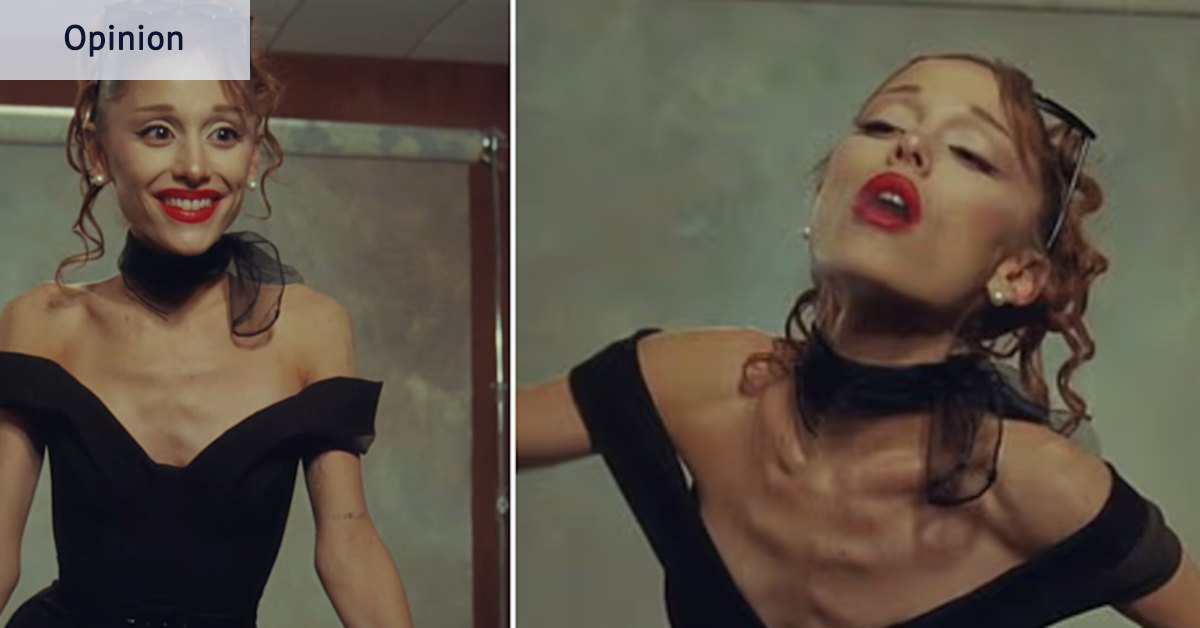
When pop star Ariana Grande’s representatives issued a statement this week announcing she would step back from public life at the end of her current tour due to “endless, ongoing public scrutiny”, it came after months of speculation about her <a href="https://healthylife7.com/another-health-crisis-is-being-mismanaged-on-trumps-watch/” title=”Another health crisis is being mismanaged on Trump’s watch”>health, and a growing concern about the risk her appearance poses to her millions of young and impressionable fans
Advertisement
Immediately, I thought about the picture in my high school planner and how, as an impressionable teenager, I had ripped it from a magazine and treated it as an educational republications have largely faded into obscurity is a good thing. But then I opened Instagram, only to be faced with an algorithmic cornucopia of next-generation body debates identical to those once written on the pages of those magazines
In the years when those publications began to shutter and the body positivity movement gained meaningful traction, it seemed possible for a while that the worst of the tabloid era was over and that a line in the sand had finally been drawn when it came to dissecting women’s bodies
But it didn’t go away at all. Instead, the practice simply moved online and a cottage industry of medical professionals-turned-influencers cropped up. Under the guise of sharing insights so that people wanting to alter their physical appearance can make informed decisions, they speculate on how many units of Botox and filler injections a celebrity has had, their potential plastic surgeries, the likelihood of weight loss drugs like GLP-1s being used, and whether they display signs of an eating disorder.
The content they create, that breaks down a person’s “before and after” looks, is not designed for a young audience. Rather, it’s created for and targeted specifically to women who came of age in the tabloid era and can now afford to spend thousands of dollars on body “modifications”
Advertisement
The same women who have spent years trying to unlearn or recover from the incessant messaging around what women and their bodies should look like
According to the Butterfly Foundation, the number of older women calling the national body image helpline for eating disorder support has been increasing steadily in recent years. A study published last month showed that where it was once predominantly younger women who felt the pressure of diet culture and thinness, this burden is now having a substantial impact on older women as well
Even now, as someone who is essentially agnostic about my appearance, and has argued that people’s bodies should no longer be a topic of discussion, I found an all-too-familiar morbid curiosity creep back in when I looked at photos of Grande, and as an endless stream of videos discussing and dissecting her weight made their way onto my social media feeds
Grande, who is 33, landed her big break on a Nickelodeon TV show when she was 17. She released her debut album when she was 20. Twenty-two people were killed in a bombing attack at one of her concerts at Manchester Arena, England when she was just 24. When her former partner, musician Mac Miller, died of an accidental drug overdose the following year, many of his fans blamed her
Advertisement
Over the past five years, she has married and divorced, filmed two Wickedmovies and undertaken global press tours for both, released two studio albums (one of which she is in the midst of touring), and been accused of ruining a marriage. At this point, it would be strange if she wasn’t struggling
After the statement was issued, a friend who is by all conventional metrics beautiful, healthy and successful said that even though she knew Grande’s appearance was “bad”, she found herself on a website that issues Ozempic prescriptions without having to see a doctor in person and wondering if she could afford the $500-a-month cost
Though no one other than Grande and possibly a small circle of people around her know the specifics of her health, and it’s entirely legitimate for people to be worried about the potential impact an unhealthy celebrity could have on children, it’s not just young people at risk here. For Millennials, it’s an unwelcome return to an era where discussions about weight were inescapable, and women were pushed onto an impossible tightrope they never agreed to walk in the first place
Support is available from theButterfly National Helplineon 1800 334 673
Advertisement
Katy Hall is a senior editor and regular columnist
The Opinion newsletter is a weekly wrap of views that will challenge, champion and inform your own.Sign up here
More:
Katy Hall is deputy state topic editor. She was previously the deputy opinion editor for The Age.
Advertisement
Advertisement
