


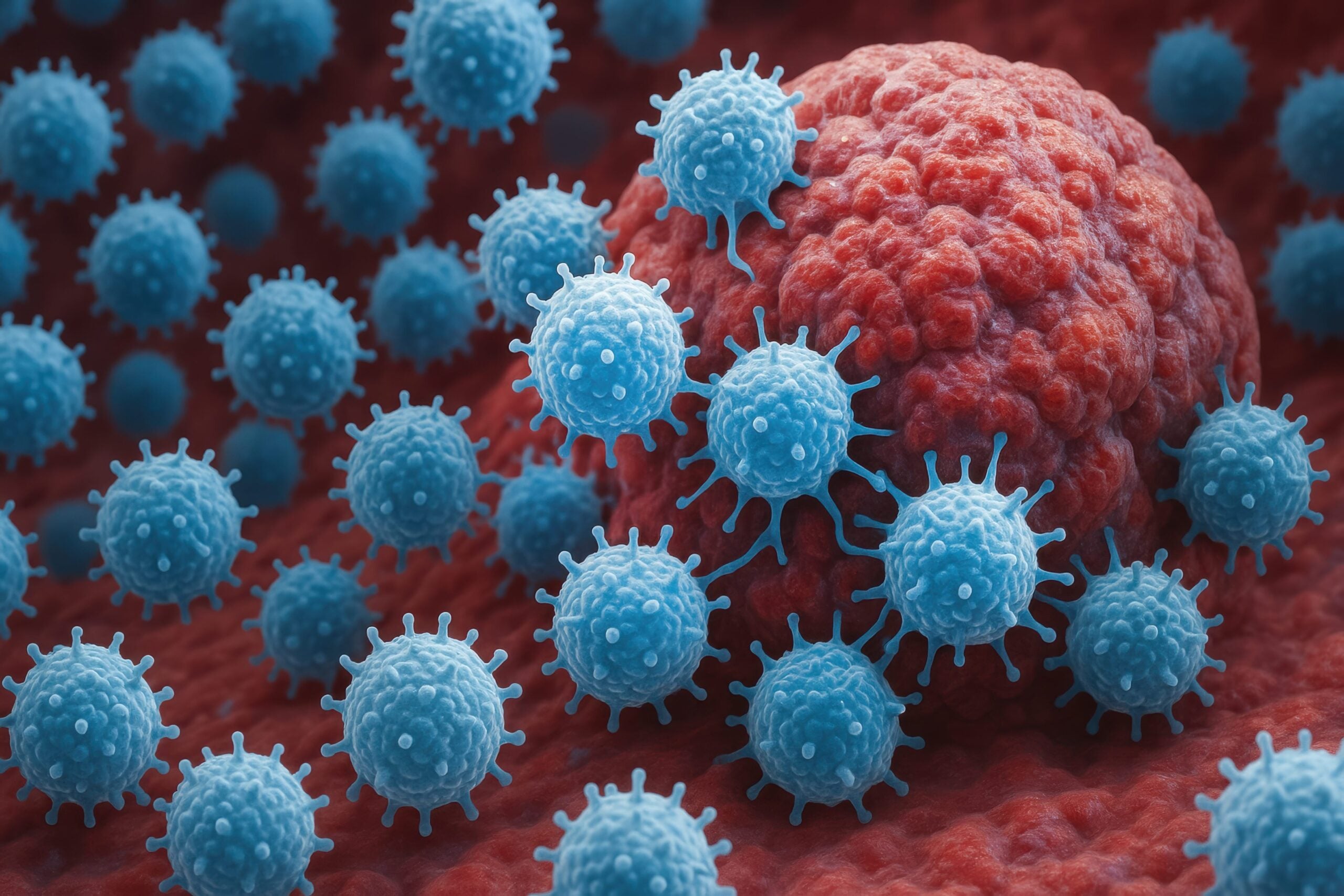
Pancreatic tumors can resist immunotherapy by recruiting nearby immune cells to help protect them, according to researchers at The University of Texas at Austin. The findings, published in Nature Communications, also point to a potential new strategy for overcoming resistance and improving cellular therapies
Pancreatic ductal adenocarcinoma, the most common type of pancreatic cancer, is projected to become the second leading cause of cancer death in the United States by 2030. CAR T-cell therapy, which re-engineers a patient’s own T cells to hunt tumors, has transformed treatment for several blood cancers but has repeatedly stalled against solid tumors such as pancreatic cancer, where early responses fade and tumors return
Using mouse models that grow tumors in the pancreas itself, the team tracked a rare population of “quiescent” cells — cancer cells that stop dividing and lie in wait. After CAR T-cell treatment, these cells became about three times as common, and they behaved like cancer stem cells, seeding new tumors far more efficiently than ordinary tumor cells
“Dormant cells make up a minor population of cancer cells within the tumor, which makes them difficult to study. We had to engineer a way to spot them at all,” said first author Bryan McClellan, Ph.D., who conducted the research as a postdoctoral fellow at Dell <a href="https://healthylife7.com/assam-rifles-holds-medical-camp-in-nagaland/” title=”Assam Rifles holds medical camp in Nagaland”>Medical School. “Once we could identify and isolate them, the surprise was that they weren’t inherently tougher to kill. Put them in a dish with CAR T cells, and they were just as vulnerable as other tumor cells. They were surviving in the tumor by changing their surroundings.”
Researchers found that dormant tumor cells protected themselves by recruiting other immune cells. The cells released a protein called EREG that activated nearby macrophages, immune cells that help coordinate the body’s immune response. Those macrophages then suppressed CAR T cells, reducing the therapy’s effectiveness. When macrophages were removed, the protective effect disappeared
Blocking EREG changed outcomes substantially in mice. Median survival increased from about five weeks to more than four months, and tumors were eradicated in half of the treated animals. This approach also helped prevent relapses
Researchers also saw similar results when they used an antibody to block EREG instead of preventing tumor cells from producing it. Because antibodies can be developed as medicines, the findings suggest the approach could have potential for patients
“For years, the field has treated the tumor microenvironment as scenery, something the cancer sits in,” said William Matsui, M.D., the study’s senior author and former executive vice dean for research at Dell Medical School. “What we’re seeing is that a small number of tumor cells are actively building it. If you can interrupt that construction, the therapy you already have starts working better.”
The researchers found the same pattern in human tissue. Across 23 patient tumor samples, EREG was concentrated in dormant cancer cells, and tumors rich in those cells contained fewer cancer-killing T cells. In a separate national tumor database, patients with high EREG expression had a five-year survival rate of zero, compared with 33% among patients with low expression
Researchers note that therapies designed to block EREG were well tolerated in separate human clinical trials for low back pain, suggesting the approach could be tested in pancreatic cancer
Because EREG appears to shield tumors from immune attack rather than drive their growth, they suggest it could serve two roles: as a target to improve cellular therapies already in clinical testing for pancreatic cancer, and as a biomarker to identify tumors that are keeping immune cells out
“This study illustrates how understanding the fundamental biology of disease can lead to entirely new therapeutic opportunities,” said Claudia Lucchinetti, M.D., senior vice president for medical affairs at UT Austin and dean of Dell Medical School. “Realizing the full potential of discoveries like this requires research, clinical trials, and patient care to be intentionally connected. That is the model we are building at UT Dell Medical Center—one that brings together the University’s research strengths with clinical expertise to accelerate innovation and improve outcomes for patients.”
UT Dell Medical Center, opening in 2030, will be a destination for world-class healthcare for people with complex and serious conditions, including cancer, with integrated care provided by The University of Texas MD Anderson Cancer Center
The study was supported by the Robert E. Askew, Sr., M.D. Chair in Oncology Endowment at Dell Medical School and conducted with UT Austin research facilities including the Microscopy and Flow Cytometry Facility, the Advanced Protein Therapeutics Core Facility, the Genomic Sequencing and Analysis Facility and the Biomedical Imaging Center
McClellan and Matsui are now in the Department of Stem Cell Transplantation and Cellular Therapy at UT MD Anderson
