


- Understanding Grief
- Take our Depression Test
- Find counselling to heal from grief
Key points
- Natural landscapes help humans heal
- Place attachment describes the emotional bonds that humans develop with particular environments.
- Climate change introduces anticipatory grief into our love of wild places in nature.
- The outdoors is where many of us go when life becomes too much. But this may expose us to climate anxiety.
When I learned that a wildfire was moving toward the treehouse that my sister and I had built together as children, I felt a pit in my stomach. My sister died unexpectedly not long after we built it, and over the years, the treehouse became one of the few tangible pieces of our childhood together that remained. We had nailed wooden ladder rungs up the trunk. The snack shelves we built while arguing about which snacks to buy at the market. And we added a mailbox where we left each other letters, excitedly raising the little red flag to alert the other of what was waiting inside.
And then, many years later, a wildfire was moving toward it. I imagined the treehouse engulfed in flames and felt sick, like the wind had been knocked out of me. It was only later that I found language for what I was experiencing: I was grieving a place
When a Landscape Becomes Part of You
Psychology has a language for why the potential loss of a treehouse—or a forest, mountain, or trail—can affect us so deeply. Place attachment describes the emotional bonds that humans develop with particular environments. Places accumulate memories: The trail you returned to when your life was falling apart. The mountain climb that showed you what your body could do. The lake that you and your children return to every summer. These places are not just interchangeable scenery; they become part of the stories of our lives. And seeing them threatened, or dramatically damaged, can bring about strong grief. Ecopsychologist Theodore Roszak argued for a psychology spacious enough to recognize our relationship with the Earth—a psyche, in essence, as big as the planet. If the landscapes we love become part of our psychological lives, perhaps it isn’t surprising to grieve when they burn. The wound isn’t entirely outside of us.
There Is a Name for Grieving a Place
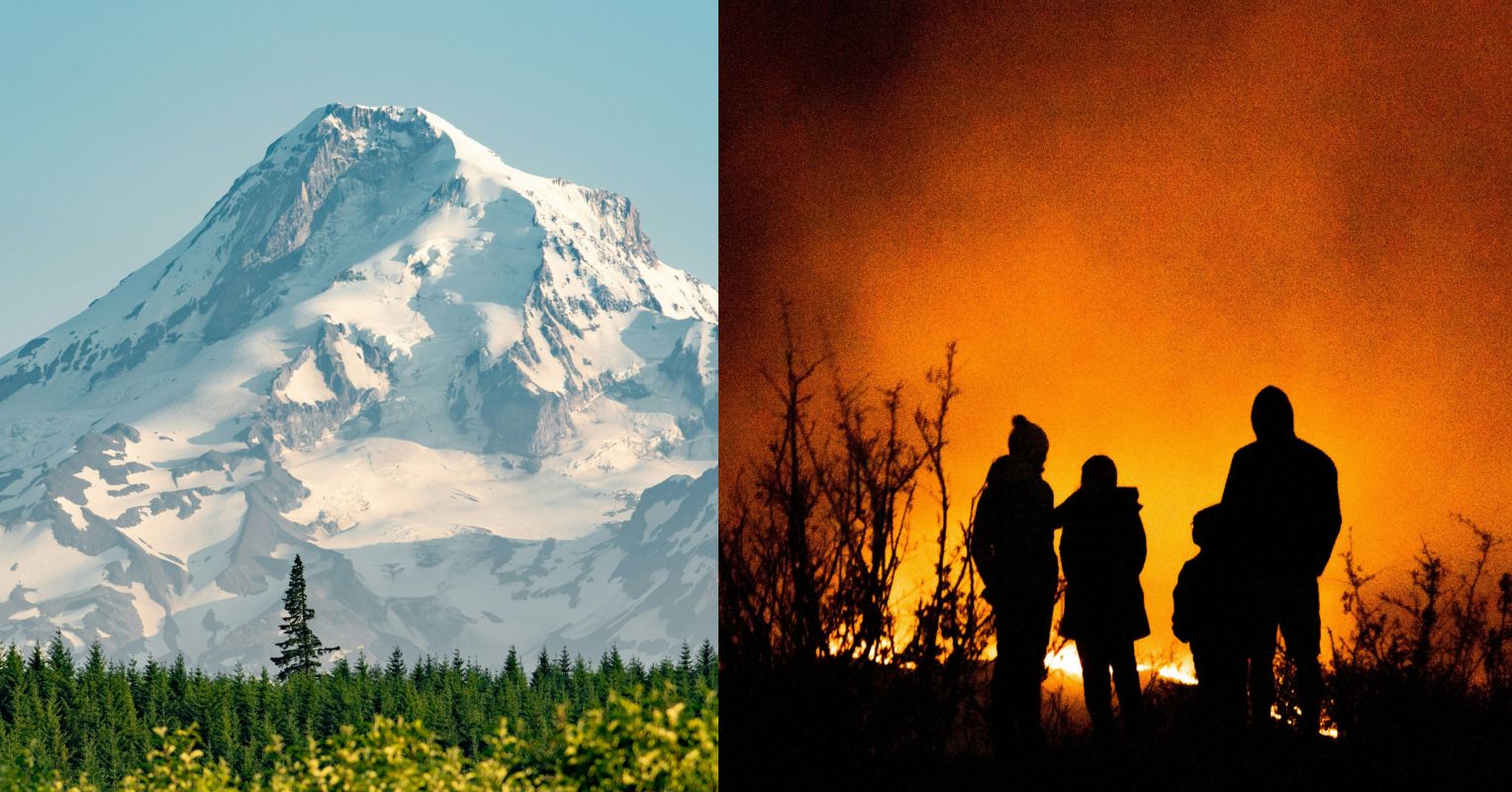
The feeling that I experienced as that wildfire moved toward the treehouse can be understood as ecological grief. Researchers use the term to describe grief associated with the loss or anticipated loss of ecosystems, species, landscapes, and ways of life due to environmental change. Sometimes ecological grief arrives after a place is gone. Sometimes it arrives while we are terrified of losing it. Here in Oregon, this feeling is becoming too familiar. I find myself refreshing wildfire maps and seeing the places I love within red evacuation zones. Smoke filters the sun into an apocalyptic orange glow. I recognize the names of forests, mountains, rivers, and wilderness areas threatened by wildfires. These aren’t simply places on a map to me. I have walked through them. They have witnessed my grief, moved me with their beauty, and challenged me as a hiker and climber.
As an ecotherapist and former outdoor guide, I have spent years thinking about how landscapes help humans heal. When we are outside, our attention shifts. Anxious thought spirals can quiet. Awe draws us beyond ourselves. Our relationships to our bodies change. We connect with other people and with something larger than ourselves. But climate change has made me think more about the other side of that relationship: What happens when the place you go to heal becomes something you have to grieve?
Missing a Place While You’re Still There
Environmental philosopher Glenn Albrecht coined the term solastalgia, to describe the distress people experience when a familiar environment changes around them and no longer feels the same. Many people around the world are experiencing this now. Increasingly, summers in the West carry this feeling. For many, summers involved trips to the river, camping, stargazing, walking outside, and picnics. Now summers are marked by smoke forecasts, extreme heat, closures, and air quality alerts. Before heading out on a climb, I find myself checking not only the weather, but also fire maps and the AQI.
And the changes are visible to those who pay close attention. We notice when snow disappears earlier in the season. We witness glaciers grow thinner each year. We remember what a forest looked like before it became a burn zone. Those of us who enjoy time in nature become firsthand witnesses to climate change. And now we wonder whether the landscapes we have enjoyed will still be around for our children
Climate change introduces a strange anticipatory grief into our love of wild places in nature. We can anticipate that these places could be lost. Environments that once felt permanent suddenly face the vulnerability of destruction. To love a place is not without risk
When Your Refuge Becomes Anxiety-Provoking
- Understanding Grief
- Take our Depression Test
- Find counselling to heal from grief
There is a painful paradox for those of us who rely on nature for our mental health. The outdoors is where many of us go when life becomes too much. But we can no longer enter those places without encountering evidence of the damage that climate change is causing. The place that calms my anxiety can now provoke another kind of anxiety
Eco-anxiety describes the stress related to climate change and environmental degradation. It includes feelings of fear, helplessness, anger, sadness, and worry about the future. These are valid, important feelings about a serious concern. Eco-anxiety is not a psychological problem that needs to be solved, but it does shine light on the evidence of our innate, intimate connection to nature
Grief Essential Reads

Don’t Let AI Speak for the Dead

Recovering From the Death of a Loved One
The Cost of Loving a Place
I don’t think that the answer to climate grief is to pull away from nature as a means of emotional self-preservation. Or to try to care less. For me, the grief serves as a reminder to pay close attention and to savor the moments that I have. I notice as much as I can: The smell of the earth when it rains. The intricacies of wildflowers that grow alongside the trail. The frogs croaking in the meadow. The sense of wonder I feel when I see Mount Hood, the 500,000-year-old volcano in my backyard, knowing that it has witnessed a span of history that my mind can barely comprehend.
There is more tenderness in my relationship with nature now. And perhaps more urgency—to protect habitats, participate in climate solutions, and advocate for the preservation of public lands and places. I wish I could return to hiking without needing to reference wildfire maps. And I wish I could know that the landscapes that I love will look the same when my children are grown. But I cannot
Perhaps loving nature simply requires that we pay attention and protect it. And when the places that have held our grief begin to disappear, to allow ourselves to grieve them, too
Roszak, T. (1992). The voice of the earth. Simon & Schuster
