


Premium
- HEALTH
The breakthrough that could end preeclampsia, a leading cause of maternal deaths
New research may finally explain the biology that triggers this deadly complication of pregnancy—and point the way to a cure
ByMariel Mohns
Published August 6, 2026
Many scientific discoveries happen unexpectedly after several years of incremental progress. But in the case of preeclampsia— a serious pregnancy complication that remains poorly understood despite being a leading cause of maternal and fetal deaths worldwide—a new breakthrough also came from an unexpected place
A dermatology lab
Johann Gudjonsson, a dermatologist and professor of immunology at the University of Michigan Taubman Medical Research Institute, had set out to answer a different question fundamental to women’s health: why are autoimmune diseases more common in women? Because many of these disorders manifest symptoms in the skin, his team was particularly invested in discovering the answer
(Why women are more prone to autoimmune diseases.)
But Gudjonsson’s interests began to evolve after a chance hallway conversation with colleagues, including Ashley Bartell, an OB-GYN who specializes in cardio-obstetrics. Gudjonsson was intrigued when his colleagues told him how difficult it can be to distinguish between patients with autoimmune disorders and preeclampsia
It occurred to Gudjonsson that perhaps he might have already found the missing link
“The first thought that came into my mind was, I gotta take a look at this, there’s gotta be something there,” he says. “It was a lightbulb moment.”
He hired scientist Olesya Plazyo, an immunologist with a background in placental biology, and they joined forces with their colleagues in cardiology and obstetrics to explore this area of research outside his comfort zone
“I figured no matter the cost, I would regret not looking,” he says
They recently published their findings in the journal Circulation suggesting that dysregulation of a gene called VGLL3—which is highly expressed in both women’s skin and in the placenta—may in fact be the root cause of preeclampsia. If they can target and control VGLL3, it could unlock new possibilities for diagnosing, treating, and even potentially preventing this life-threatening and perplexing condition
“I love the idea of dermatologists making a fundamental contribution to preeclampsia,” says Paige Porrett, a uterus transplant surgeon and immunologist at the University of Alabama at Birmingham (UAB) who was not part of this study. “Because that’s exactly how we’re going to get to the multiple roots of this disease.”
The puzzling biology of the placenta
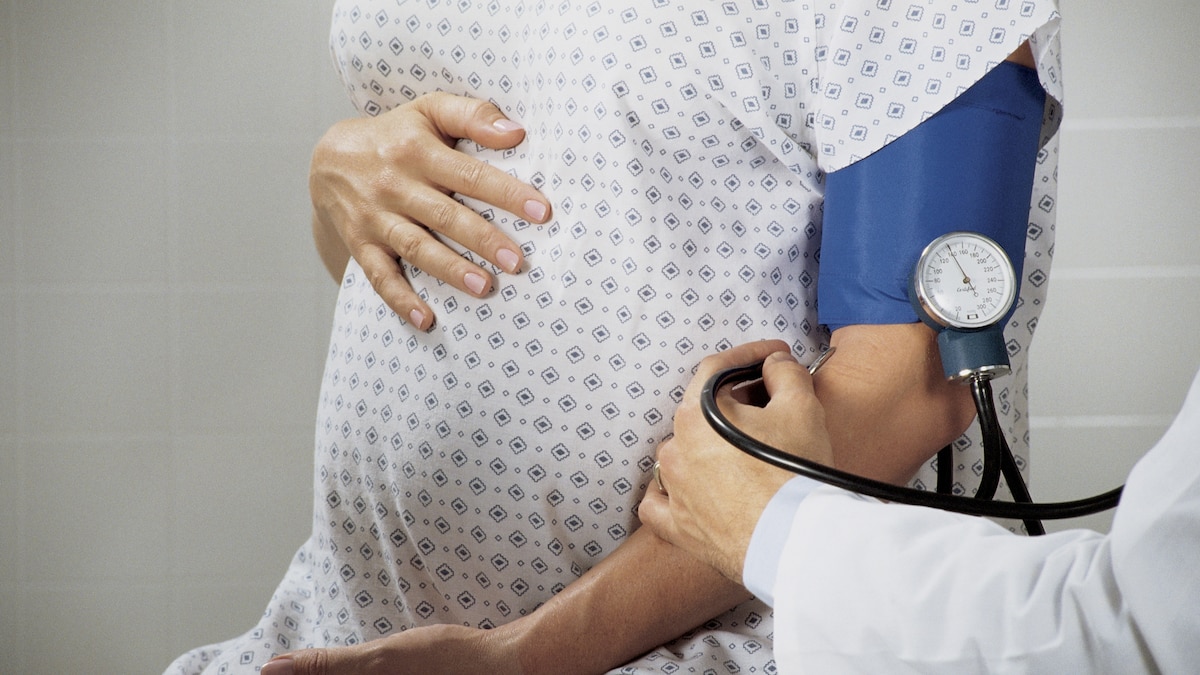
Typically characterized by high blood pressure during pregnancy, preeclampsia symptoms may also include headaches, shortness of breath, nausea, confusion—if doctors can diagnose it at all. Severe complications can result in preterm birth and even the death of both mother and fetus
There is no treatment or cure beyond managing the pregnancy through delivery. Even then, delivery is not a cure, says Bartell, since preeclampsia leads to a lifelong risk for heart disease, stroke, and death
(Pregnancy reshapes the brain. But each pregnancy may do it differently.)
After experiencing two preeclamptic pregnancies herself, Bartell says the complexity of the disorder makes it difficult to diagnose. Current guidelines state that preeclampsia occurs after 20 weeks of gestation, and the patient must have multiple blood pressure readings above 140/90
But it’s rarely so simple. During her own pregnancy, she says, “there was a lot of great debate because some of my markers were up, some were not, and even as an OB-GYN and researcher in this area, I think to this day, Did my son need to be born at 35 weeks? And that’s hard, when you can’t say it for yourself, to say it with confidence for your patients.”
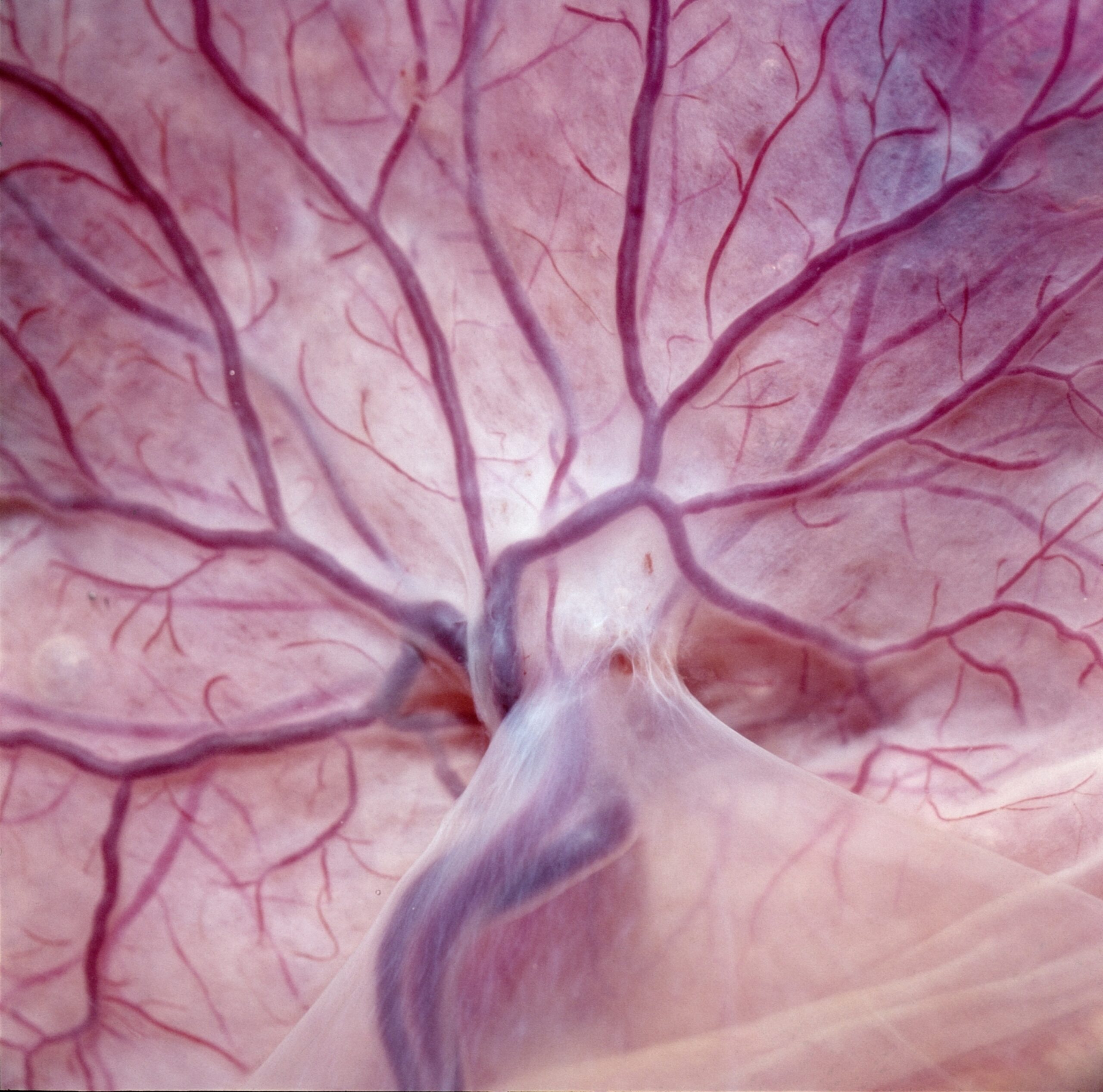
Research suggests that preeclampsia and its debilitating symptoms all stem from the placenta
Plazyo, who also had preeclampsia, says it comes down to these “very unique type of cells which come into existence only during pregnancy”—cells called trophoblasts that are only found in the placenta, where they live at the interface between mother and the fetus and interact with immune cells. “That interaction is thought to be crucial in developing preeclampsia,” she says
Trophoblasts help an embryo attach to the uterine wall and guide the growth of blood vessels to support the placenta. They also produce signaling factors that can cross into the mother’s blood. One of them, a protein called sFLT-1, is involved with vascular dysregulation
“It’s one of the key biomarkers of preeclampsia,” says Gudjonsson. In 2023, the FDA approved a blood test that detects sFLT-1 and another biomarker to predict which patients might be at risk for developing preeclampsia
(How a blood test helps predict who is at risk for preeclampsia.)
But while these tests may help doctors identify preeclampsia, they don’t explain everything that goes wrong inside trophoblasts to cause it. Gudjonsson believes VGLL3 can provide an explanation—and potentially even a cure
“It’s exciting that we are now getting some ways to open that black box. That’s what VGLL3 really is to me,” Bartell says
And perhaps, she adds, these new molecular findings could help doctors make better informed decisions when faced with conflicting symptoms and biomarkers
“That gives us some things to hang our hat on when we’re actually making a diagnosis,” she says
Cracking the genetic code
This molecular breakthrough came while Gudjonsson was examining skin samples from patients with autoimmune disease and found VGLL3 was more highly expressed in the skin of women compared to men
The find was especially intriguing because VGLL3 is a transcription cofactor, meaning it acts as an on/off switch to activate other genes that produce proteins involved in many different biological pathways, including cell growth, immune regulation, metabolism, and hormonal signaling. Gudjonsson found studies showing it plays a role in the timing of a person’s first menstrual period—and even sexual maturity in Atlantic salmon
(What scientists are uncovering about the most debilitating form of PMS.)
These clues gave him reason to wonder if it might also play a role in both autoimmune disorders and preeclampsia
Using placenta samples provided by Bartell, Plazyo performed RNA sequencing to compare the genes expressed in healthy donor tissue and preeclamptic donors. The team found that VGLL3 was generally overexpressed and dysregulated in the preeclamptic placentas, confirming the data they saw in existing published datasets
They then used single-cell RNA sequencing technology to identify gene expression levels in each individual cell within a tissue
Plazyo compares RNA sequencing to making a smoothie—a bunch of different fruits mixed together create one flavor. Single-cell RNA sequencing is like being able to take a sip and identify each individual fruit separately. This allowed the team to confirm that VGLL3 isn’t overexpressed in all the cells of the placenta—but specifically in the trophoblast cells
To understand how VGLL3 may control the biological mechanisms behind preeclampsia, the team used multiple experimental models, including in vitro cell culture, human placental tissue samples, and mouse models
“We kind of wanted to look at all the different angles to be able to say, okay, yes, we have something here—it’s not just like a fluke or one model system that doesn’t represent what’s happens in real life,” Plazyo says
(Science is finally confirming the most mysterious symptoms of endometriosis.)
Gudjonsson acknowledges there are limitations. “It takes a long time to generate these mouse models, and mice are not exactly humans,” he says
However, the mouse models yielded promising results—overexpression of VGLL3 caused high blood pressure, while inhibition of the protein or deletion of the VGLL3 gene resulted in normal, healthy pregnancy
In cell culture models and placental tissue samples, they confirmed that VGLL3 controls genes involved in blood vessel development, cell growth and differentiation, and immune responses
“I think of it almost like as a like a thermostat that is kind of stuck at the high level,” Gudjonsson says. “These are all normal biological processes that VGLL3 regulates but then sends into overdrive when it’s when it’s dysregulated.”
The path forward
This research is the start of a long-overdue investigation into the underlying cause of a condition that kills an estimate of 70,000 women each year
“That is crucially important because women have historically been excluded from science,” Bartell says. “To me, this work is an act of advocacy, reversing decades of a lack of mechanistic attention to women and treatments given in and around pregnancy.”
The team is moving forward with more experiments that will demonstrate VGLL3 as a potential biomarker for diagnostics or treatment. The ultimate proof will be clinical trials in humans with preeclampsia, with a drug that would target and modify VGLL3 activity— which is a long way off. But Gudjonsson believes that each small step forward generates powerful data that can support clinical trials
“There’s little to indicate that it wouldn’t work,” he says. “We’ve targeted this mechanism and shown it can revert many of the features of preeclampsia. So without a doubt, I think we could prevent it.”
Bartell says this find emphasizes the importance of bridging the gap between research and patient care. “In other areas of medicine we’ve moved towards precision medicine, leveraging genetics, leveraging biomarkers,” she says. “It’s time for that to come to obstetrics.”
It would be unlikely for a researcher from any one discipline to make this discovery on their own, Gudjonsson adds. Since hypertension is such a dominant symptom, it would have been easy to have tunnel vision on vascular symptoms and not dig any deeper
Porrett agrees
“What happens when a transplant surgeon, a dermatologist, a cardiologist, and an OB-GYN walk into bar?” Porrett jokes. “Oh, we figured out preeclampsia!”
Mariel Mohns is a freelance science writer based in Madison, Wisconsin. She reports on general science topics, with an interest in health and medical research.
