


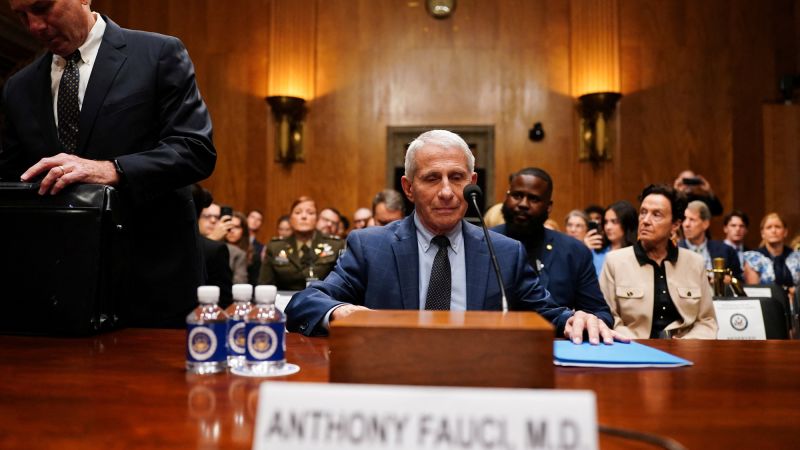
Dr. Anthony Fauci repeatedly invoked the Fifth Amendment during a July 29 congressional hearing.
See all topics
Republican lawmakers and Trump administration officials berated Dr. Anthony Fauci last week in a congressional hearing and in the media, blaming the former chief medical adviser to the White House for causing unnecessary suffering in the Covid pandemic
Sen. Rand Paul of Kentucky, who convened the hearing, has accused Fauci of concealing the origins of Covid and lying about it — and then of mishandling the pandemic response through unscientific overreaction. Among Fauci’s worst deeds was his use of “lockdowns.”
After the July 29 hearing ended, Paul wrote on X, “If there’s one thing I wanted to make clear to Anthony Fauci, it’s that he’s culpable for the lockdowns we all endured.”
Health Secretary Robert F. Kennedy Jr. piled on over the weekend in an interview with CNN’s Dana Bash. “President Trump, as you recall, wanted to end the lockdowns,” he said. “I think the thing that did the most damage to our country was the lockdowns.”
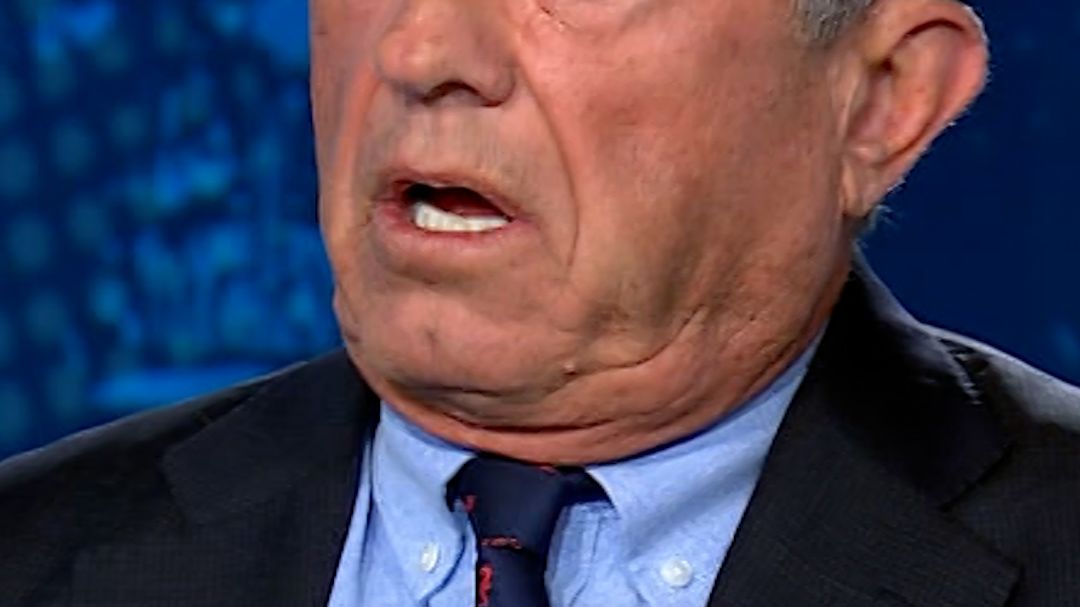
Debunking false health claims made by RFK Jr. in a CNN interview
CNN Medical Correspondent Meg Tirrell fact checks claims made by HHS Secretary RFK Jr. during a CNN interview with Dana Bash
2:13• Source:
CNN
Debunking false health claims made by RFK Jr. in a CNN interview
2:13
The notion that “lockdowns” during Covid were harmful and excessive is not confined to the right. “Were the Covid Lockdowns Worth It?” was a question asked by the title of a March 2025 episode of The New York Times podcast “The Daily.” Answering in the negative were Princeton University political scientists Stephen Macedo and Frances Lee, authors of “In Covid’s Wake: How Our Politics Failed Us.”
But what were the “lockdowns,” exactly? News organizations first used the word in connection with the Covid pandemic on January 23, 2020,in stories aboutChinese authorities suspending virtually all travel in Wuhan, the epicenter of the outbreak — a policy called “fengcheng,” meaning “sealing the city.”
EDITOR’S NOTE: CNN’s “Word of the Week” brings you the meaning behind the words in the news
English-language media quickly adopted “lockdown” to describe the measures. “Coronavirus: panic and anger in Wuhan as China orders city into lockdown,” a headline in The Guardian read
In the weeks that followed, the Chinese government tightened freedom of movement even further in an effort to contain the spread of the virus: Residential complexes were monitored around the clock, private car use was banned and people were barred from setting foot outside their homes without permission. Similarly severe policies would be imposed on other Chinese cities over the next two years
“Lockdown” didn’t typically appear in official government communications about pandemic restrictions, but media outlets relied on it as a shorthand to describe extreme precautions implemented in various countries and localities. “Lockdowns” in Italy, at first localized then extended to the entire country in March 2020, confined people to their homes except in rare cases, banned all public gatherings, and shuttered schools and all nonessential businesses. Spain and France followed suit with their own “lockdowns,” as did India when it asked its population of 1.3 billion to stay home.
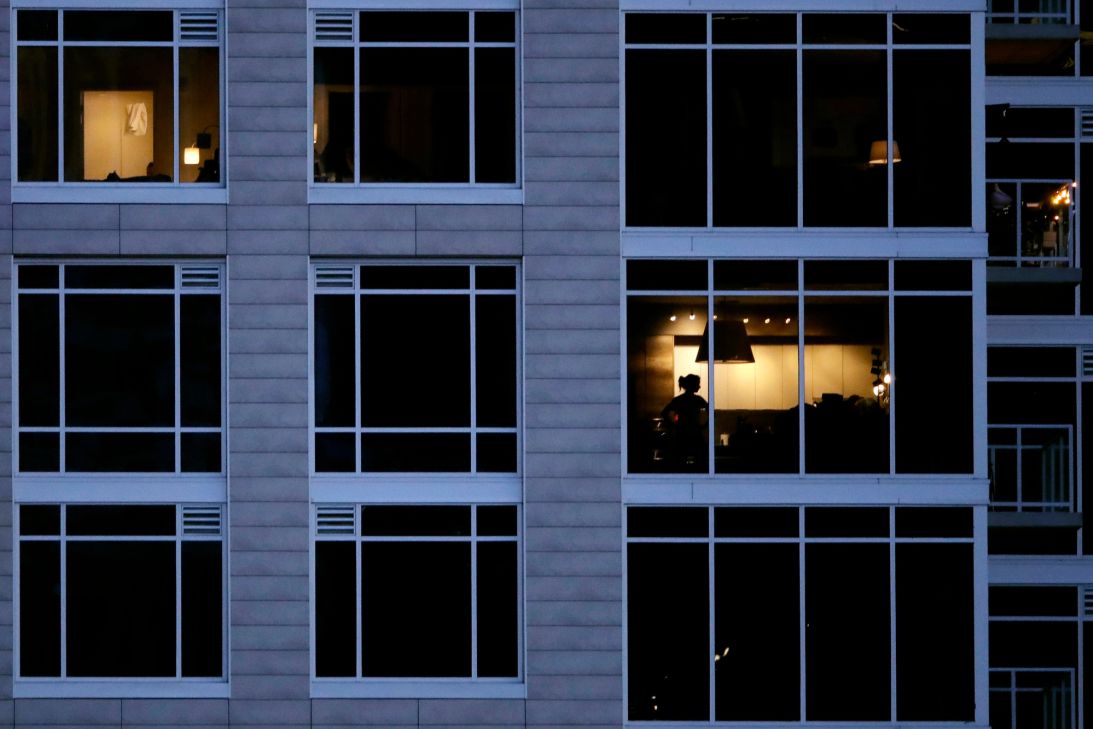
A Kansas City, Missouri, apartment building on May 3, 2020.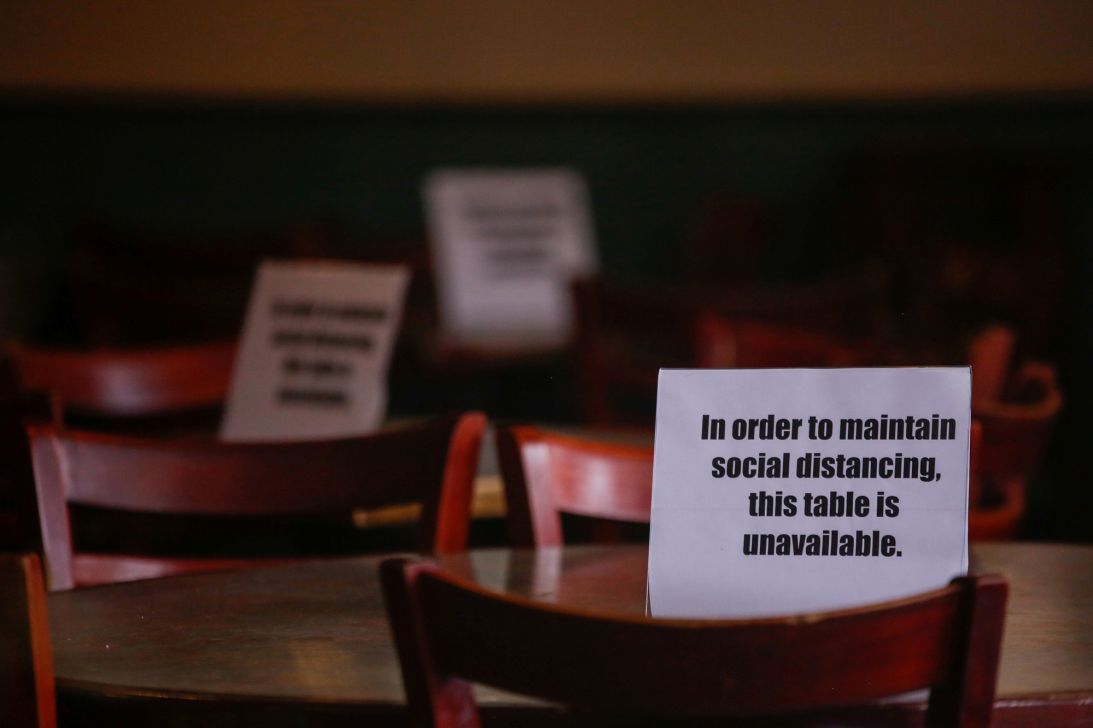
Restaurants and businesses implemented social distancing measures in 2020 to comply with state and local orders.
If “lockdowns” could be understood as severe restrictions on movement, the US did not “lock down” on an organized, national scale — the country’s pandemic response instead manifested as a patchwork of state and local decision-making, the stringency of which typically broke down along partisan lines
On March 19, 2020, California issued a statewide order directing people to stay at home and all nonessential businesses to close. Other states soon followed: 43 states would go on to implement similar orders between March and April 2020, though Republican-led states generally lifted restrictions much sooner than Democratic-led ones. Some measures lasted several weeks; others, like California’s, stretched on for months
A team of Oxford University researchers who assessed the stringency of various countries’ pandemic responses rated the US in the middle of the pack between 2020 and 2021. But Anna Petherick, one of the principal investigators, noted that the wide variance across states made it hard to evaluate the US response on a national scale. Researchers determined that by 2022, the US had some of the least restrictive Covid policies
That didn’t keep Americans from talking about “lockdowns.”
“Lockdown” was first recorded in its modern sense in 1973 to describe the confinement of prisoners to their cells as a security measure. In 1974, the word appeared in a New York Times story about an outbreak of violence among people incarcerated at San Quentin Prison
The word was not, however, part of the official lexicon of public health. And in the thick of the pandemic, it became clear that nobody quite agreed on what it meant
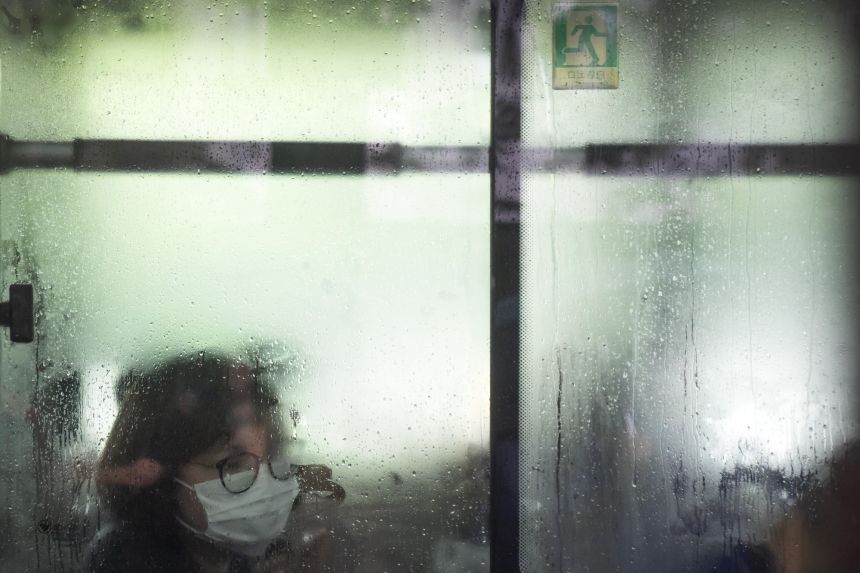
A woman wearing a face mask in Beijing on July 12, 2022.
What qualified as a lockdown was apparently a matter of dispute between Fauci and Scott Atlas, then a member of the Trump White House’s Coronavirus Task Force. “He explicitly wants to never do contact tracing and never isolate any person who is infected. He feels that this constitutes a ‘lockdown’ and feels that the POTUS does not want to lock down,” Fauci wrote in an October 17, 2020 diary entry. He added that he and Deborah Birx, then the White House’s coronavirus response coordinator, “have repetitively said that we do not want to lock down.”
But over the course of the pandemic, virtually any virus-curbing measure — save for vaccines and therapeutics — would come to be characterized as “lockdowns.”
Collins English Dictionary named “lockdown” its word of the year for 2020, noting that it registered more than 250,000 uses of the word compared to around 4,000 the previous year. The dictionary defined the term as “any set of procedures imposed on a community, as the closing of schools and restaurants, to limit the spread of a disease as during an epidemic.”
Though that definition described how lay people and media organizations used “lockdowns,” public health experts and researchers eschewed the word in favor of more precise terms
“It was a word that we resisted a bit because everybody meant something different by it,” said Petherick, the Oxford researcher. “And our job was to, as precisely as possible, measure policy changes around the world in real time and make that data available for people without an agenda other than just trying to help the public good.”

Sandile Cele, a researcher at the Africa Health Research Institute in Durban, South Africa, seen on December 15, 2021, as a new Covid variant drove a surge of infections in the country.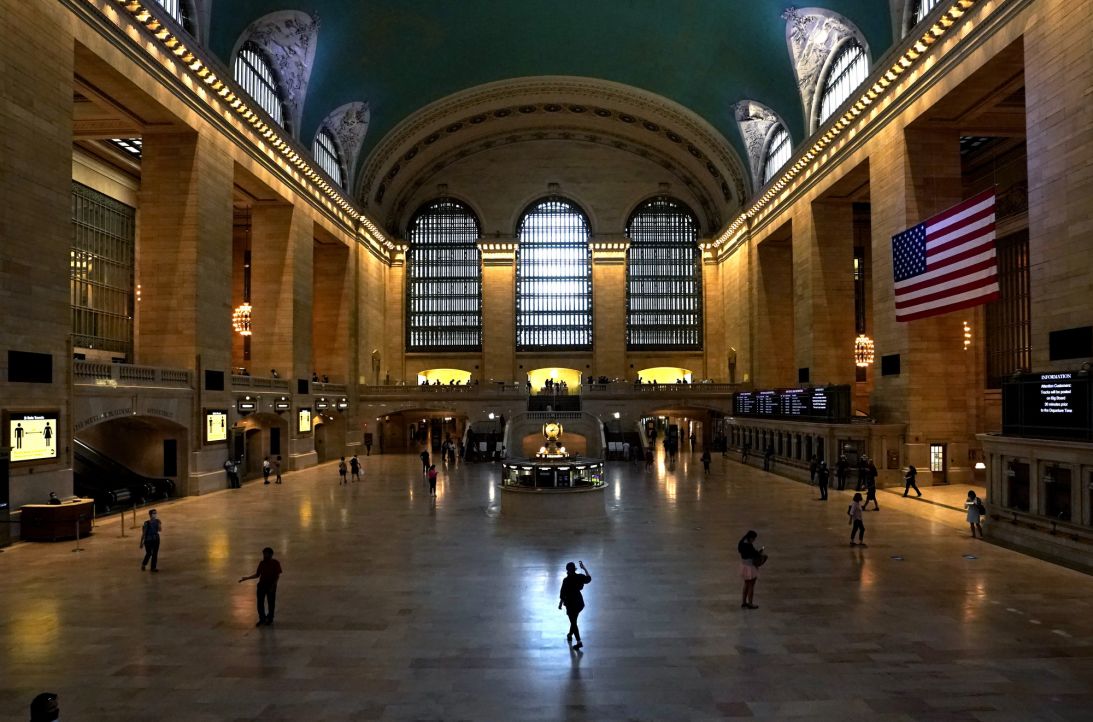
New York’s usually bustling Grand Central Terminal stood virtually empty on July 21, 2020.
Michael Stoto, a professor emeritus at Georgetown University who studies public emergency preparedness and trust in public health, said a better term is “non-pharmaceutical interventions,” a category that includes masking and social distancing along with those restrictions on public gatherings and strict stay-at-home orders that might constitute a “lockdown.”
Lucky Tran, a science communicator based in New York, noted that government officials at the time commonly used the terms “stay-at-home orders” or “public health measures.”But none of the more precise terms quite roll off the tongue
It’s tempting to dismiss such matters as pedantry. But opting for “lockdowns” over more specific language can influence public perception and affect how countries might prepare for future pandemics, said Tran
“Its overuse gives people the false impression that public health measures were as strictly enforced in the US as in countries like Australia and New Zealand,” Tran wrote in an email. “Incorrectly assuming US rules were stricter fuels incorrect claims that public health measures failed, when in reality weak or poorly implemented policies caused higher death rates.”
There are genuine questions that are worth asking about what might have been done differently to yield better outcomes, said Stoto. Should schools have reopened earlier? How could officials have struck a more favorable balance between the benefits of public health measures and the costs? But by broadly claiming that “lockdowns” were disastrous, Stoto said, Republicans are sidestepping those questions
“Conservatives have basically avoided those by saying, ‘Lockdowns don’t work, masks don’t work, school closings don’t work,’” he said. “But they do reduce infections and save lives. The question is: What are the benefits compared to the harms?”
He added: “It simplifies a complicated problem into a bumper sticker that’s easy to dismiss.”
The focus on “lockdowns,” by conservatives and liberals alike, recasts the Covid pandemic experience as one of unwonted panic and human error, rather than one of an unchecked virus filling mass graves and refrigerator trucks with bodies. It also glosses over the fact that officials were initially making these decisions before they knew much about how the virus spread, said Maureen Miller, an epidemiologist and medical anthropologist. There are fair criticisms to be made about how forthcoming officials were about that uncertainty and about how they might have better communicated it, she said. But blaming “lockdowns” obscures the true root of the problem.
“I don’t think it’s the lockdowns that caused harm,” she said. “I think it’s the pandemic that caused harm, and that never gets into the discussion.”
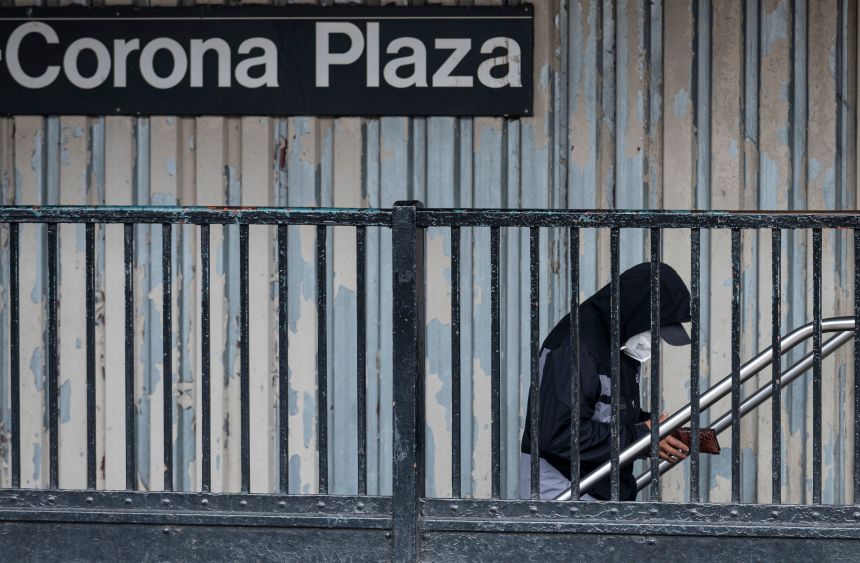
A person wears a face mask while walking to the subway in Corona, Queens, on April 29, 2020 in New York City.
READ MORE IN THIS SERIES
See all topics
