



August 6, 2026 | Featured
Customer success story: How CHU Nîmes went from install to routine rare disease use in three months
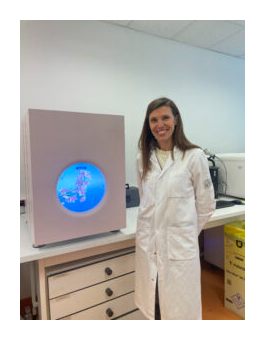
For many genetics labs, the road from instrument installation to routine use consists of long months of validation, workflow development, and institutional sign-off. Dr. Claire Guissart, head of the Molecular Genetics Unit at CHU Nîmes in France, and her team did it in three
Dr. Guissart’s unit specializes in rare neurogenetic diseases, including ataxias and Amyotrophic Lateral Sclerosis (ALS). For this patient population, getting a clearer genetic answer can determine whether someone proceeds to more expensive testing, or finally has an explanation after years of uncertain symptoms
In this interview, Dr. Guissart shares what led her team to bring a Vega system in house, how they navigated the transition from validation to routine use, and what she would tell other labs considering the same path
For more real-world examples and expert guidance for targeted sequencing implementation like Dr. Guissart’s, explore our targeted sequencing re
Q: Can you tell us about your role at CHU Nîmes and the patient population your team serves?
Dr. Claire Guissart: I am the head of the Molecular Genetics Unit within the Department of Biochemistry and Molecular Biology at CHU Nîmes. Our laboratory performs not only genetics testing but also biochemistry and pharmacotoxicology analyses. My responsibility is specifically the genetics section
We focus on the diagnosis of rare diseases, primarily in the field of neurogenetics. This includes conditions such as ALS. Expanding our activity in ataxia was one of the key drivers that led us to explore new technologies such as PureTarget
Q: What challenges were you facing with your initial repeat expansion testing workflow?
Answer: The traditional methods we were using, primarily fragment analysis, required us to investigate genes one at a time. In many cases, several different assays were needed for a single gene
For example, in Friedreich’s ataxia, we had to perform two repeat-primed PCR assays to detect expansions. If an expansion was identified, we then needed a third method, such as long-range PCR, to further characterize it
This was extremely time-consuming. When multiple genes needed to be investigated and you have a small team, it becomes difficult to provide answers efficiently
Q: What led you to adopting PureTarget on the Vega system?
Answer: What attracted us to PureTarget on the Vega system was the efficiency in obtaining answers for many genes in a single workflow. Instead of performing multiple separate assays, we could run one experiment and obtain results across a larger panel of genes. PureTarget allowed us to expand from testing only seven genes to reporting on eleven genes, which was a significant improvement
The availability of a fully optimized kit and an existing bioinformatics workflow was very reassuring because it eliminated the need for extensive internal development. This comprehensive, end-to-end solution was a major factor in our decision to adopt PureTarget
And when weighing our options economically, it is difficult to provide a precise cost comparison, but in terms of a panel that includes multiple genes, our evaluation showed that PureTarget was favorable in this respect
Q: Has anything surprised you with the PureTarget workflow?
Answer: In some situations, clinicians still request testing for only a limited number of genes, often because of perceived cost concerns. However, what we are seeing is that the pathogenic expansion is frequently located in a different gene than the one initially suspected.
With our previous approach, we focused on only one or a few genes at a time. Now that I can systematically review a broader panel, I see how many findings would have remained hidden using the old workflow
I continue to be surprised by how often we identify clinically relevant findings outside the originally suspected gene
Three months from install to routine use
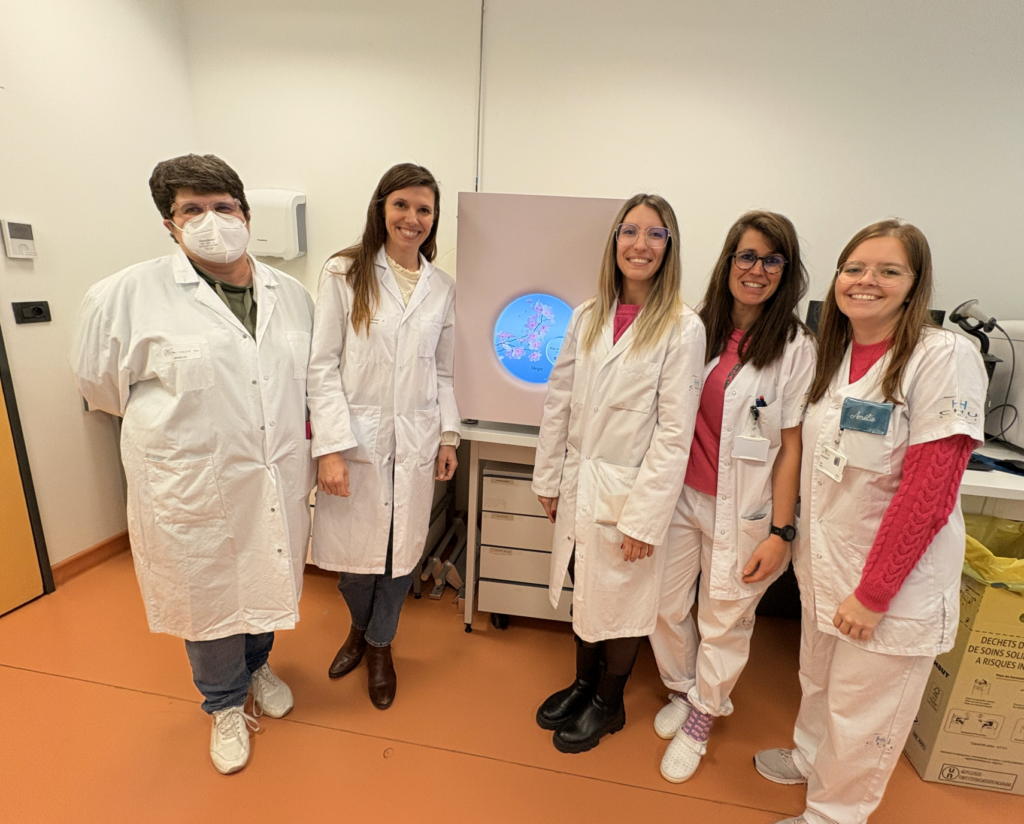
Q: One of the most impressive aspects of your story is that you transitioned from installation to routine use in approximately three months. What made that possible?
Answer: From the beginning we approached the project with the mindset that we wanted to move directly into routine use, so we invested significant effort into planning our implementation strategy. We carefully selected validation samples with known repeat expansions across as many genes as possible
Training also played a major role. The PacBio support team accompanied us during our first run, and from there, we started immediately with a 24-sample run. Initially that seemed ambitious, but we trusted our technicians because they were already experienced with NGS workflows. In practice, everything went very smoothly, and the support from the PacBio team was critical. We were not left on our own
When implementing something completely new, especially when there is significant institutional investment and pressure for success, you do not want to feel isolated
At the same time, we were developing our analysis workflow. It became a collaborative process between the technicians generating the data, the bioinformaticians building the tools, and the clinical scientists interpreting the results. This process is ongoing: we are continuously refining the workflow and adjusting the interface whenever we identify something that needs improvement
Clinical impact
Q: Since bringing PureTarget into routine use, what benefits have you observed?
Answer: Our clinicians are extremely pleased. Previously, they often had to send samples to multiple laboratories across France because different laboratories tested different genes. This meant additional logistics and, in some cases, multiple sample collections from patients.
Now, they can send samples to a single laboratory and receive more comprehensive results. For patients, this is also a major benefit. Results are delivered more quickly and are more complete than before
This is particularly important because many people with ataxia are waiting to determine whether they should be referred for additional testing, such as genome sequencing through national diagnostic programs. Before reaching that stage, clinicians first need to rule out repeat expansion disorders that would not be detected through standard short-read approaches.
PureTarget helps accelerate that entire diagnostic pathway
Q: How has the ability to characterize repeat expansions more comprehensively improved your confidence when interpreting challenging cases?
Answer: A good example is the RFC1 gene, which is associated with CANVAS syndrome.
With fragment analysis, there were cases we simply could not interpret. Some sample files remained unresolved because our previous technologies did not provide enough information to reach a conclusion
PureTarget completely changes that situation because we can now directly visualize and characterize what is happening inside the repeat expansion
For us, this has been a tremendous improvement in our ability to analyze complex cases
Q: Your presentation highlighted a reduction in turnaround time from several weeks to approximately two weeks for some assays. What impact does faster reporting have?
Answer: Anything that reduces the diagnostic mystery is a major benefit for both clinicians and patients. Waiting several months for results from multiple laboratories is extremely difficult for people. By shortening turnaround times, we can provide answers more quickly and help clinicians determine which avenues should be explored next
Future impact
Q: What advice would you give to laboratories considering implementing long-read sequencing for repeat expansion disorders?
Answer: First, I would recommend assigning your most experienced technicians to the project. The PureTarget workflow requires careful laboratory work over multiple days and involves handling many samples. Having experienced staff is extremely important
Second, develop the interpretation interface as early as possible
Finally, invest time in designing a robust validation strategy. The choice of validation samples is critical. You need samples that will allow both the laboratory team and the clinical scientists to gain confidence that the assay can reliably detect repeat expansions
In my opinion, the key success factors are:
• Experienced technical staff
• A well-designed interpretation interface
• Careful selection of validation samples
Q: You have already expanded from 7 genes to 11 genes and are planning to move to 19 genes. What excites you most about the next phase of your program?
Answer: What excites me most is knowing that the data are already there
For many of the patients we have already analyzed, additional information is waiting to be explored. There may be positive findings that we simply have not investigated yet because those genes are not currently included in our reporting workflow
My motivation has always been finding the cause of disease for patients. I hope that by expanding the number of genes we analyze, we will continue to improve our diagnostic findings and expand the number of patients who can benefit from long-read sequencing technologies
Q: How do you see long-read sequencing shaping the future of repeat expansion diagnostics over the next few years?
Answer: Personally, I would like to use long-read sequencing to help identify new repeat expansion genes
I believe there are still undiscovered expansion disorders, particularly in diseases such as ALS
Every time a new repeat expansion gene is discovered, we are able to solve cases that previously remained unexplained.
For me, long-read sequencing is not just the future—it is already the present. We should be using it as much as possible
I believe long-read whole genome sequencing will play a major role in discovering new disease genes, and targeted approaches such as PureTarget can continue evolving alongside those discoveries
Dr. Guissart’s experience at CHU Nîmes offers a practical blueprint for labs weighing the same transition. Starting with experienced staff, a thoughtful validation strategy, and a clear goal of going straight to routine use, her team turned an ambitious timeline into reality. Three months after installation, they were delivering more comprehensive results from a single laboratory
For labs weighing the same move, the right technology and support can make this kind of timeline realistic
For more real-world examples and expert guidance for targeted sequencing implementation like Dr. Guissart’s, explore our targeted sequencing re
