


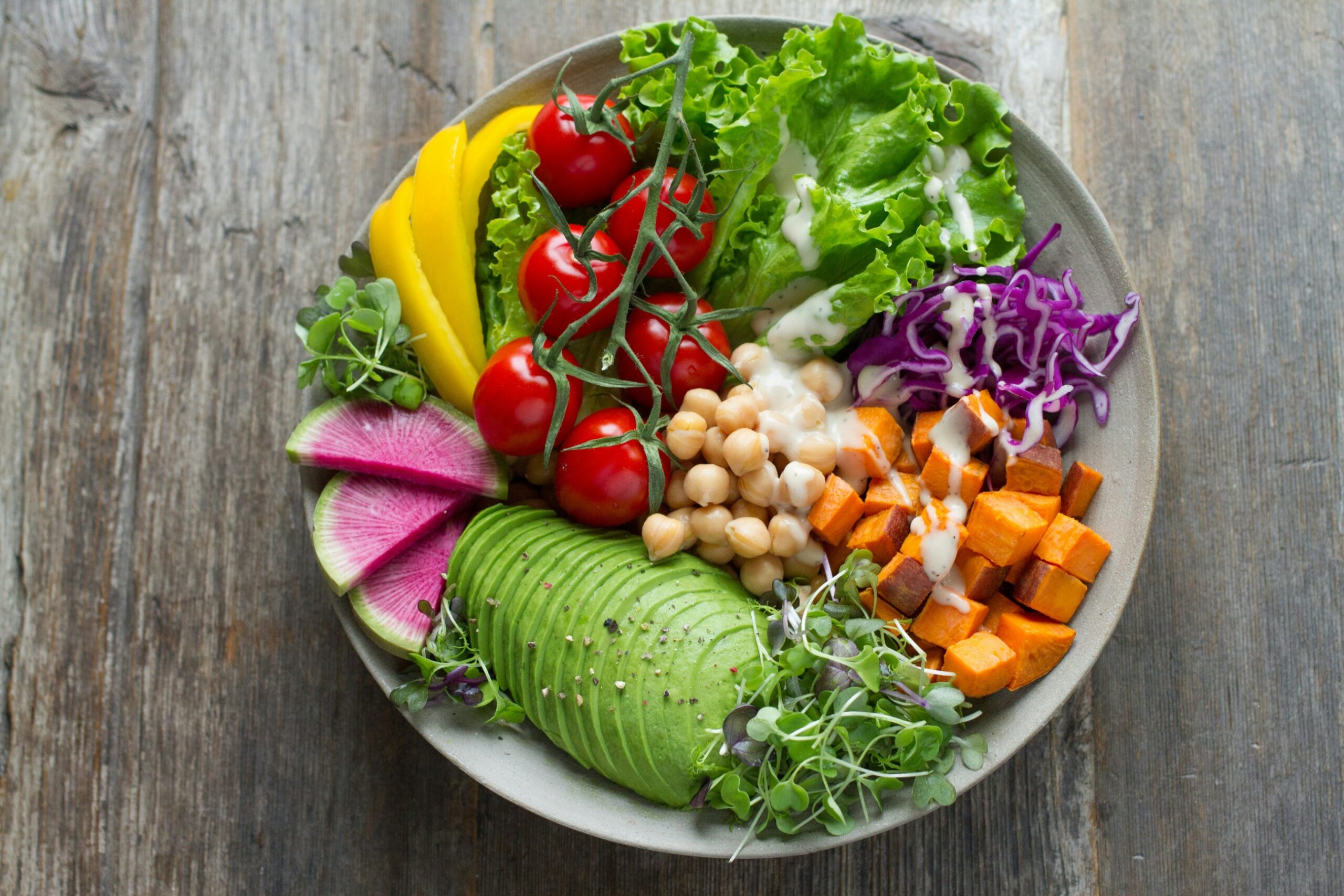
For German households that have absorbed years of food-price inflation, a study published August 5 by food-systems campaign organization Madre Brava and analytics firm PATOS Solutions arrives with an argument that inverts the usual calculus: eating by the most rigorous science-backed dietary standard available is not a luxury — it is already the cheaper option. The report, titled Healthy Returns: What the Planetary Health Diet Means for German Wallets and Wellbeing, finds that a two-person German household <a href="https://www.madrebrava.org/latest/better-for-wallets-wellbeing-and-healthcare-new-study-reveals-the-benefits-of-plant-forward-diets-in-germany” rel=”nofollow noopener” target=”_blank”>aligned with the Planetary Health Diet (PHD) spends approximately €73.14 per week on groceries, against a national average of €98.36. That €25 weekly gap compounds to roughly €1,315 per year — equivalent to approximately $1,519 at current exchange rates.
The PHD is the dietary framework developed by the EAT-Lancet Commission — a 37-member independent scientific body — and published in The Lancet in 2019. It is a flexitarian diet built around vegetables, fruits, whole grains, legumes, nuts, and unsaturated oils, with modest amounts of fish, poultry, and dairy, and a sharp reduction in red meat. The commission designed it to be simultaneously healthy for humans and sustainable within planetary boundaries — and since 2019 it has been adopted as a benchmark by sixteen cities in the C40 Climate Leadership Group, including New York, Seoul, and Milan.
Protein Is Where the Money Goes
The widest cost gap between a typical German basket and a PHD-aligned one sits in protein. The average German household currently spends €2.47 per day on protein sources. Under the PHD model, that figure falls to €1.55 — a reduction of roughly 37 percent. The mechanism is direct: the PHD calls for legumes (lentils, chickpeas, beans, 75 grams per day target), nuts (50 grams per day), and seeds as the primary protein sources, replacing much of the meat that dominates a typical German shopping basket. These whole foods deliver substantial protein per kilogram at a fraction of the retail price of beef, pork, or chicken.
This cost advantage is not theoretical. Independent pricing research by ProVeg International, conducted across 153 stores at eight major German supermarket chains in October 2025, found that a plant-based shopping basket was already 5 percent cheaper overall than its animal-based equivalent — a reversal from 2022, when the same comparison showed a 52 percent premium for plant-based goods. Germany’s food prices overall remain elevated relative to pre-2020 levels, with the Deutsche Bundesbank reporting a harmonized inflation rate of 2.8 percent in July 2026, but the structural direction is clear: as meat prices track input costs upward and plant-based alternatives reach scale, the protein price gap continues to widen in favor of plant sources.
What the Grocery Bill Actually Means for Germany’s Healthcare Crisis
The Madre Brava–PATOS report does not stop at shopping receipts. Using two independent scientific modeling approaches — which the authors note converged on consistent results — the study projects that if German citizens broadly adopted a PHD-aligned diet, approximately 200,000 premature deaths could be prevented each year. Over an 80-year lifespan, PHD alignment could add nearly two additional healthy years per person
Translated into economic terms, the study models annual savings in direct and indirect healthcare costs at roughly €53 billion in projected savings, equivalent to approximately $61.2 billion. The context makes that number significant: Germany’s statutory health insurance system (the GKV, or Gesetzliche Krankenversicherung) faces a projected funding gap of approximately €15.3 billion in 2027, rising to around €40 billion by 2030 without further structural reform, according to Germany’s Federal Health Ministry. Germany’s parliament passed a major GKV reform package in July 2026 designed to address those shortfalls — but the modeled diet-related savings of €53 billion would exceed the pre-reform projected gap, a comparison the study’s authors make explicitly.
“Two independent scientific models arrive at the same result on an issue that affects every household in Germany,” said Dr. Amelie Michalke, Managing Director of PATOS Solutions. “Health outcomes can no longer be a footnote in how we calculate the true cost of our food.”
Germany’s Big Four Supermarkets: Individual Actions, No Shared Target
Madre Brava — which describes its mission as driving a shift to more plant-based foods in the food system and should be understood as an advocacy organization rather than a neutral research body — worked with Germany’s four dominant grocery chains in producing the report. Aldi Süd, Edeka, Lidl, and Rewe collectively control approximately 80 percent of the German grocery market, making their combined purchasing and merchandising decisions the most powerful structural lever in the country’s food environment.
Each chain has taken independent steps. Edeka has integrated plant-based products into its established Herzstücke private-label range and publishes PHD-aligned recipes and weekly meal plans. Aldi Süd has assembled its own in-house nutrition team and more than doubled its range of fully plant-based labeled products since 2021. Rewe and Lidl have gone further by setting concrete targets to increase their plant-based protein sales share — and most major retailers now formally calculate their “protein split,” the ratio of animal-based to plant-based protein in their overall sales.
Yet the study argues this patchwork of individual commitments falls short of what the evidence requires. Germany currently has no single, industry-wide dietary target, despite clear recommendations from both the German Nutrition Society (DGE) — which updated its guidelines in 2024 to recommend that at least 75 percent of a diet come from plant sources — and the EAT-Lancet Commission. The report calls on supermarkets to commit collectively to a protein sales ratio of 38 percent plant-based to 62 percent animal-based by 2035, and a 32 percent plant-based share for dairy and dairy-alternative products by the same year.
Civil society contributors to the study — including ProVeg, the Albert Schweitzer Foundation, the Netzwerk Ernährungsräte, the Verbraucher Initiative, and Paritätischer Wohlfahrtsverband — identified fragmented coordination as the primary structural barrier to a coherent dietary transition at scale
Does Individual Choice Matter When Four Companies Set the Default?
Florian Wall, Madre Brava’s Associate Director Germany, framed the study’s findings in terms that shift the lens from consumer behavior to retail responsibility. “The fact that a colorful, healthy, delicious diet can already be cheaper today proves that, in a time of rising prices and overlapping crises, supermarkets can be a source of stability — if retailers step up to that responsibility,” he said. “That means the whole industry agreeing on one shared target for a more plant-based range, so that healthy eating stops being a matter of chance and becomes the default.”
This is the structural argument that the savings figure and the healthcare projections together support. When four companies control 80 percent of the national grocery market, a consumer’s ability to find a PHD-aligned basket depends less on that individual’s dietary knowledge than on what the store stocks, how it prices those items, and where it places them on the shelf. A plant-based protein that is not stocked, or is stocked in inconsistent quantities across a chain’s locations, is effectively unavailable to most shoppers regardless of its price advantage. ProVeg’s October 2025 study found that while most plant-based product categories were available in 93 to 99 percent of stores surveyed, availability at Aldi Süd and Nord averaged only around 52 to 53 percent — meaning that at Germany’s two largest discount retailers, shoppers face less than a coin-flip chance of finding a given plant-based product.
What the Planetary Health Diet Actually Is
The EAT-Lancet Commission published the PHD in January 2019 after a two-year process involving 37 scientists from 16 countries working across health, agriculture, political science, and environmental science. The diet’s design target was dual: minimize chronic disease risk and keep the global food system within planetary boundaries. The commission estimated that universal adoption of the PHD would prevent 11 million deaths per year globally, primarily from coronary heart disease, stroke, type-2 diabetes, and some cancers.
The PHD is not a vegan diet. Its target macros permit modest animal protein: roughly 29 grams per day of chicken, 28 grams of fish, 14 grams of red meat (approximately one medium hamburger per week), one egg every third day, and up to 250 grams of dairy per day. What it eliminates is the dominant role of animal protein — the daily meat portions and the processed meat that characterize the average German plate
The diet has attracted criticism alongside its support. Some researchers have raised concerns about micronutrient gaps, particularly vitamin B12, calcium, and iron for populations who reduce animal products sharply without supplementation. The affordability case is also context-dependent: while German households can access a PHD-aligned basket at lower cost than their typical basket, the same is not true in low- and middle-income countries, where at least 1.58 billion people were estimated in 2020 to be unable to afford the diet at its minimum cost.
The PHD’s reception has also been shaped by organized opposition. In 2025, DeSmog reported that a public relations firm called Red Flag, working on behalf of the Animal Agriculture Alliance, had organized a social media backlash against the original EAT-Lancet report starting three days before its publication in 2019 — including coordinating with academics and think tanks to portray the diet as “radical” and “out of touch.” The culture-war framing of dietary change has complicated public and policy understanding of what the underlying science says.
Is the Cheapest Healthy Diet Still Worth Eating?
A note on methodology: this study was commissioned by Madre Brava, an international food-systems campaign organization with an explicit advocacy mission to shift food systems toward more plants. Its analytics partner, PATOS Solutions, is a German quantitative modeling firm led by Dr. Michalke. The report’s grocery basket comparison uses real German shopping data and PHD-aligned substitutions; the health modeling uses established academic mortality modeling frameworks cross-validated by two independent approaches. Readers should weigh the findings in that light: the economic comparison is grounded in real retail price data, while the 200,000-deaths and €53 billion healthcare projections are models, not observations, and depend on the assumption that actual dietary change occurs at population scale — which requires the retail-sector coordination the report is simultaneously advocating for.
Currency conversions in this article use a rate of approximately 1 EUR = 1.1549 USD, the XE mid-market rate as of August 6, 2026. All USD figures are approximate
Frequently Asked Questions
Is the Planetary Health Diet actually cheaper to eat in Germany right now?
According to the August 2026 Madre Brava and PATOS Solutions analysis, a two-person German household aligned with the PHD spends approximately €73.14 ($84) per week on groceries — roughly €25 ($29) less than the national average of €98.36 ($114). The cost advantage is largest in the protein category, where shifting from meat to legumes and nuts reduces daily protein spending from €2.47 ($2.85) to €1.55 ($1.79). Independent ProVeg pricing data from October 2025 confirms that a plant-based basket is now 5 percent cheaper than an animal-based one across seven of Germany’s eight major supermarket chains.
What does the study say about health outcomes, and how confident should I be in those numbers?
The report models two outcomes: approximately 200,000 premature deaths prevented annually in Germany, and nearly two additional healthy years per person over an 80-year lifespan, if the PHD were broadly adopted. These are projections from health economics modeling — not observed outcomes — and depend on population-level dietary change that does not currently exist. The study used two independent scientific models that converged on consistent results, which the authors cite as a mark of reliability. The figures are directionally consistent with global estimates from the original EAT-Lancet Commission (11 million deaths prevented worldwide per year with universal adoption), but should be read as illustrative of the potential scale, not as guaranteed outcomes.
Why do supermarkets matter more than individual consumer choices in this context?
Four companies — Aldi Süd, Edeka, Lidl, and Rewe — control approximately 80 percent of the German grocery market. That concentration means that what a shopper can find, afford, and choose between is largely determined by what those four chains decide to stock, price, and promote. The report finds that while most major retailers now calculate their “protein split,” no shared industry target exists, and product availability at discount retailers (which serve price-sensitive consumers most likely to benefit from plant-protein savings) averages around 52 percent. The structural argument is that individual dietary change at scale depends on the retail environment, not just consumer awareness.
Does the Planetary Health Diet work for people in lower-income countries, or only wealthy ones like Germany?
The affordability dynamic is sharply different outside high-income countries. A 2020 analysis in The Lancet Global Health found that at least 1.58 billion people worldwide could not afford the PHD at its minimum daily cost, and that the diet was more expensive than minimum-nutrient-adequacy diets in low- and middle-income countries. The German case — where the PHD basket is already cheaper than the national average — reflects the particular price structure of a wealthy European grocery market, where staple animal proteins are relatively expensive relative to legumes and plant-based alternatives, especially as climate-related input cost pressures drive meat prices upward. The savings finding should not be generalized to lower-income markets without country-specific analysis.
ⓒ 2026 TECHTIMES.com All rights reserved. Do not reproduce without permission
Tags:Healthy Eating
