


NewsexplainersDead Lizard, Watery Gravy: Why The Mid-Day Meal Scheme Faces Tough Questions On Hygiene And Nutrition
Dead Lizard, Watery Gravy: Why The Mid-Day Meal Scheme Faces Tough Questions On Hygiene And Nutrition
Published By :
- Shilpy Bisht
- ,News18.com
Last Updated:August 07, 2026, 16:58 IST
For millions of children from low-income families, mid-day meal is often the most nutritious meal of the day. Every lapse in food quality or nutrition is a matter of public health
Rapid Read

Rapid Read
Summarized by AI.
+
Mid-day meal scheme under scrutiny after food incidents.
PM-POSHAN scheme feeds 11.8 crore children nationwide.
Concerns over food safety, nutrition, and implementation.
More Rapid Read
Like this summary?
Share Your Feedback
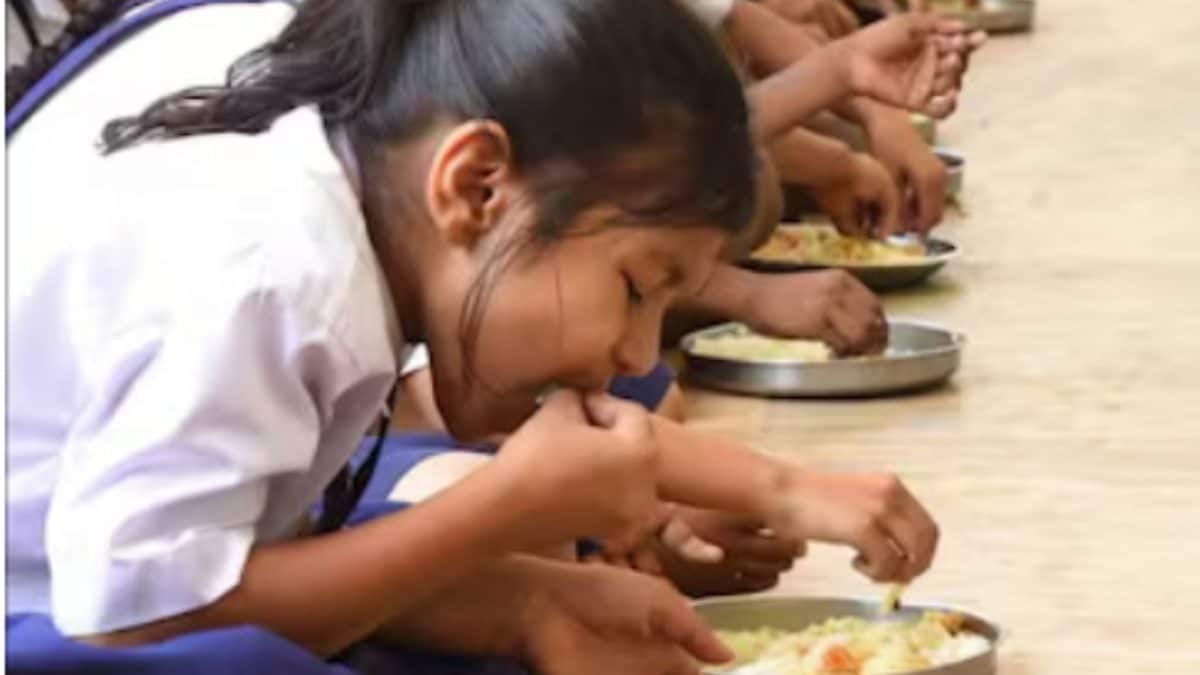
Under the PM POSHAN guidelines, primary school students are expected to receive meals providing around 450 calories and 12 grams of protein, while upper-primary students should receive 700 calories and 20 grams of protein. (Representative image)
Reports of a dead lizard found in a mid-day meal served at a government school in Delhi’s Hari Nagar surfaced on July 3. In another incident, a video showing watery vegetable gravy and rotis strewn across the floor at a primary school in Uttar Pradesh’s Sitapur went viral on social media this week. Together, the two incidents have once again put the PM POSHAN scheme under scrutiny
While the immediate focus has been on food safety, these incidents have reignited a much larger debate: Are school meals truly nutritious enough to tackle child malnutrition, or does the quality of a child’s lunch now depend largely on the state they live in?
Recommended Stories
The PM POSHAN Scheme feeds nearly 11.8 crore children studying in more than 10 lakh government and government-aided schools across the country. For millions of children from low-income families, it is often the most nutritious meal of the day. That makes every lapse in food quality or nutrition a matter of public health rather than just school administration
Most recently, a government school headmistress in Uttar Pradesh was suspended after a video allegedly showing poor-quality midday meals went viral, once again highlighting concerns over implementation on the ground
The school meal programme is not merely designed to fill empty stomachs. It was created to improve children’s nutritional status, encourage school enrolment, reduce classroom hunger and improve attendance, particularly among children from economically weaker families
Under the PM POSHAN guidelines, primary school students are expected to receive meals providing around 450 calories and 12 grams of protein, while upper-primary students should receive 700 calories and 20 grams of protein. The meals are also meant to include cereals, pulses, vegetables and cooking oil in quantities that support balanced nutrition
However, nutrition experts increasingly argue that meeting calorie targets alone is no longer enough. Children also need adequate protein, iron, calcium, vitamins and dietary diversity to support healthy growth, stronger immunity and better cognitive development
As India continues to battle high levels of child malnutrition and anaemia, school lunches have become one of the country’s most important nutrition interventions
One Scheme, Many Menus
Although PM POSHAN is a national programme, there is no uniform menu followed across India. States are free to design meals based on local food habits, agricultural availability, budgets and nutritional priorities. That has created striking differences in what children eat depending on where they live
Karnataka has introduced bananas into school meals in several districts to improve fruit consumption among children. Tamil Nadu, which pioneered school feeding programme decades ago, continues to diversify its menu and has even experimented with serving biryani on special occasions to make meals more appealing
West Bengal has made eggs a regular feature of school meals, recognising them as one of the most affordable and effectivebate whether eggs should be served at all, often balancing nutritional recommendations against cultural preferences, religious sensitivities and financial constraints
Some states have instead introduced milk, fruits or fortified foods as alternatives, while others continue to rely largely on traditional rice-and-dal combinations
The result is that two children covered under the same national scheme may receive very different nutritional support simply because they attend school in different states
Are School Meals Nutritious Enough?
Is PM POSHAN measuring success by the number of meals served or by the nutritional value those meals provide?
India continues to face one of the world’s highest burdens of child malnutrition. According to the latest National Family Health Survey (NFHS-5), 35.5% of children under five are stunted, 19.3% are wasted, and 32.1% are underweight
Against this backdrop, nutrition experts say school meals must go beyond providing calories. A balanced meal should contain adequate protein, vegetables, micronutrients and dietary diversity to address deficiencies that affect children’s physical growth, immunity and brain development
Yet delivering such meals consistently remains challenging. Rising food prices have steadily increased the cost of preparing nutritious meals, placing pressure on state budgets. Policy experts have argued that the current per-child allocation often leaves limited room to introduce more protein-rich foods, fruits or greater menu diversity without additional financial support
At the same time, repeated incidents of contamination have exposed weaknesses in food preparation, storage, transportation and quality monitoring. Experts argue that nutrition and food safety cannot be separated. A nutritious meal serves little purpose if children or parents lose confidence in its safety
Why It Matters Beyond The Lunch Break
The impact of school meals extends far beyond the afternoon meal served in classrooms. Studies have consistently shown that nutritious meals improve school attendance, reduce drop-out rates and help children concentrate better during lessons. Better nutrition during childhood is also linked to improved learning outcomes, stronger immunity and healthier physical development
For many low-income households, PM POSHAN also reduces the financial burden of providing one nutritious meal every day, encouraging families to keep children, especially girls, in school
In the long run, healthier children contribute to a healthier workforce, higher productivity and lower healthcare costs. A staggering 57% of women and 67% of children in the country are classified as anaemic in the recent NFHS-5
Economists increasingly describe school nutrition programmes not simply as welfare schemes but as investments in a country’s future human capital
What Should India Learn
The latest incident in Delhi serves as a reminder that expanding school nutrition requires equal attention to food safety, hygiene and quality control
Policy experts believe the next phase of PM POSHAN should focus on improving both nutrition and implementation. States that have successfully introduced eggs, fruits or locally available proteint abandoning regional food preferences
Equally important is strengthening monitoring systems. Better kitchen infrastructure, stricter hygiene standards, regular inspections, transparent supply chains and improved training for cooks and food handlers can help reduce contamination risks while rebuilding public confidence
Watch more videos
Ultimately, the success of PM POSHAN should not be measured only by the number of children it feeds. It should be judged by whether every child, regardless of which state they live in, receives a meal that is safe, nutritious and capable of supporting healthy growth and learning
About the Author
Shilpy BishtShilpy Bisht is a News Editor at News18, where she leads the English app operations. She writes on world affairs, health, AI, career, business, and issues affecting women and children. A former print …Read More
tags :government schoolsMid-day meal scheme
Click here to add News18 as your preferred news source on Google.Check US IRAN War Latest News Today, RBI MPC Meeting 2026 Live Updates and Repo Rate.
Location :New Delhi, India, India
First Published:August 07, 2026, 16:52 IST
Disclaimer: Comments reflect users’ views, not News18’s. Please keep discussions respectful and constructive. Abusive, defamatory, or illegal comments will be removed. News18 may disable any comment at its discretion. By posting, you agree to our Terms of Use and Privacy Policy.
Loading comments…
The PM POSHAN Scheme feeds nearly 11.8 crore children studying in more than 10 lakh government and government-aided schools across the country. For millions of children from low-income families, it is often the most nutritious meal of the day. That makes every lapse in food quality or nutrition a matter of public health rather than just school administration
Most recently, a government school headmistress in Uttar Pradesh was suspended after a video allegedly showing poor-quality midday meals went viral, once again highlighting concerns over implementation on the ground
Why PM POSHAN Matters So Much
The school meal programme is not merely designed to fill empty stomachs. It was created to improve children’s nutritional status, encourage school enrolment, reduce classroom hunger and improve attendance, particularly among children from economically weaker families
Under the PM POSHAN guidelines, primary school students are expected to receive meals providing around 450 calories and 12 grams of protein, while upper-primary students should receive 700 calories and 20 grams of protein. The meals are also meant to include cereals, pulses, vegetables and cooking oil in quantities that support balanced nutrition
However, nutrition experts increasingly argue that meeting calorie targets alone is no longer enough. Children also need adequate protein, iron, calcium, vitamins and dietary diversity to support healthy growth, stronger immunity and better cognitive development
As India continues to battle high levels of child malnutrition and anaemia, school lunches have become one of the country’s most important nutrition interventions
One Scheme, Many Menus
Although PM POSHAN is a national programme, there is no uniform menu followed across India. States are free to design meals based on local food habits, agricultural availability, budgets and nutritional priorities. That has created striking differences in what children eat depending on where they live
Karnataka has introduced bananas into school meals in several districts to improve fruit consumption among children. Tamil Nadu, which pioneered school feeding programme decades ago, continues to diversify its menu and has even experimented with serving biryani on special occasions to make meals more appealing
West Bengal has made eggs a regular feature of school meals, recognising them as one of the most affordable and effectivebate whether eggs should be served at all, often balancing nutritional recommendations against cultural preferences, religious sensitivities and financial constraints
Some states have instead introduced milk, fruits or fortified foods as alternatives, while others continue to rely largely on traditional rice-and-dal combinations
The result is that two children covered under the same national scheme may receive very different nutritional support simply because they attend school in different states
Are School Meals Nutritious Enough?
Is PM POSHAN measuring success by the number of meals served or by the nutritional value those meals provide?
India continues to face one of the world’s highest burdens of child malnutrition. According to the latest National Family Health Survey (NFHS-5), 35.5% of children under five are stunted, 19.3% are wasted, and 32.1% are underweight
Against this backdrop, nutrition experts say school meals must go beyond providing calories. A balanced meal should contain adequate protein, vegetables, micronutrients and dietary diversity to address deficiencies that affect children’s physical growth, immunity and brain development
Yet delivering such meals consistently remains challenging. Rising food prices have steadily increased the cost of preparing nutritious meals, placing pressure on state budgets. Policy experts have argued that the current per-child allocation often leaves limited room to introduce more protein-rich foods, fruits or greater menu diversity without additional financial support
At the same time, repeated incidents of contamination have exposed weaknesses in food preparation, storage, transportation and quality monitoring. Experts argue that nutrition and food safety cannot be separated. A nutritious meal serves little purpose if children or parents lose confidence in its safety
Why It Matters Beyond The Lunch Break
The impact of school meals extends far beyond the afternoon meal served in classrooms. Studies have consistently shown that nutritious meals improve school attendance, reduce drop-out rates and help children concentrate better during lessons. Better nutrition during childhood is also linked to improved learning outcomes, stronger immunity and healthier physical development
For many low-income households, PM POSHAN also reduces the financial burden of providing one nutritious meal every day, encouraging families to keep children, especially girls, in school
In the long run, healthier children contribute to a healthier workforce, higher productivity and lower healthcare costs. A staggering 57% of women and 67% of children in the country are classified as anaemic in the recent NFHS-5
Economists increasingly describe school nutrition programmes not simply as welfare schemes but as investments in a country’s future human capital
What Should India Learn
The latest incident in Delhi serves as a reminder that expanding school nutrition requires equal attention to food safety, hygiene and quality control
Policy experts believe the next phase of PM POSHAN should focus on improving both nutrition and implementation. States that have successfully introduced eggs, fruits or locally available proteint abandoning regional food preferences
Equally important is strengthening monitoring systems. Better kitchen infrastructure, stricter hygiene standards, regular inspections, transparent supply chains and improved training for cooks and food handlers can help reduce contamination risks while rebuilding public confidence
Ultimately, the success of PM POSHAN should not be measured only by the number of children it feeds. It should be judged by whether every child, regardless of which state they live in, receives a meal that is safe, nutritious and capable of supporting healthy growth and learning

Download App Now
Stay Ahead, Read Faster
Enjoy uninterrupted reading? Unlock the full story, distraction-free
Scan the QR code to download the News18 app and enjoy a seamless news experience anytime, anywhere
OR
login
