


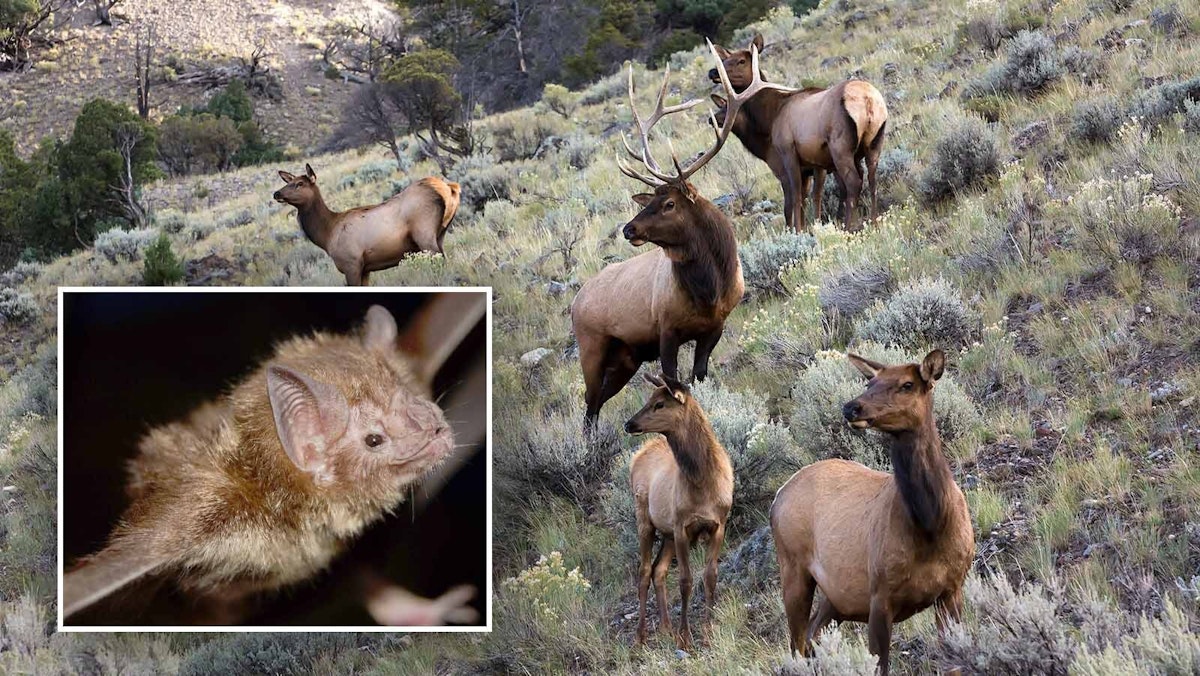
As vampire bats move north and chronic wasting disease (CWD) spreads south, a disease researcher is worried it’s only a matter of time before the two find each other, if they haven’t already
And that could just add to and accelerate the spread of the pernicious disease, which has killed countless deer and elk, Peter Larsen, associate professor at the University of Minnesota’s Department of Veterinary and Bio<a href="https://healthylife7.com/lee-county-moves-closer-to-new-medical-center-after-years-of-roadblocks/” title=”Lee County moves closer to new medical center after years of roadblocks”>medical Sciences, told Cowboy State Daily
There’s also concern that the spread of CWD could prompt the development of other fatal prion-based diseases, which could sicken and kill other species, including humans, added Larsen, also the co-director of the Minnesota Center for Prion Research and Outreach
Prions are malformed proteins that cause CWD and similar maladies, which attack the brain and nervous system
At present, there’s no risk of CWD getting into cattle, veterinarians told Cowboy State Daily
There’s zero evidence in Wyoming for the presence of the cattle-specific prion disease bovine spongiform encephalopathy (BSE), commonly called mad cow disease, Wyoming State Veterinarian Hallie Hasel told Cowboy State Daily
In the 1980s and 1990s, there was an outbreak of the human form of mad cow disease, variant Creutzfeldt-Jakob disease (vCJD). It killed 178 people who ate contaminated beef, mostly in the United Kingdom
There’s never been a documented case of humans getting similarly ill by eating meat from CWD-infected deer and elk
Blood-Sucking Bats
Personal experience prompted Larsen to start researching the possible links between CWD and vampire bats
“I was fed on by a vampire bat when I was doing research in South America,” he said
Vampire bats are native to South America and Central America. They’ve been expanding their range into Mexico
And it’s possible that they could get as far north as New Mexico within a decade or so, Larsen said
As to whether they’ll ever make it to Wyoming, the chances are “very low,” because vampire bats are adapted to hot, humid climates, he said
However, other species of bats that eat insects and can survive farther north might take in CWD prions from “blood-engorged insects,” he said
Moreover, CWD-positive white-tailed deer might have been imported to Mexico from ranches in Texas, Larsen said
So, there’s a chance the vampire bats are already sucking blood from those deer in Mexico, he said
“My biggest concern, from a vampire bat perspective, is, over time, does that raise the risk to livestock?” Larsen said
Vampire bats moving north into Texas could transmit rabies to cattle. And “if you add a layer of prions on top of that, that’s a big deal,” Larsen said
‘We Need To Get In Front Of It’
During a previous interview with The Wildlife Society, Larsen said the leading hypothesis for the origin of CWD was from a research facility that kept mule deer alongside sheep infected with another prion disease, scabies
Continuous exposure to scabies prions might have caused the deer to eventually develop CWD prions, he said
Prions can be spread through the blood, urine or feces of infected animals, and they can survive in soil, water or even dust for years
Larsen said he’s concerned that with CWD prions becoming so prevalent across such a broad area they might give rise to prion diseases in other species
There have been cases of animals that were “exhibiting strange symptoms, like rabies symptoms” but tested negative for rabies, Larsen said
“Does that mean that those were cases of prion diseases that are being missed?” he said
For now, CWD is thought of as just “a deer and elk disease,” he said
And it might remain so, but he encourages more research into the possibility that it won’t
He used the recent New World screwworm outbreak in cattle in Texas and other states as an example of something that shouldn’t have taken Americans by surprise
“We need to get in front of it. If we think, ‘this can never happen,’ and then it starts happening, then we’re already behind,” Larsen said
‘Species-Specific’
For the most part, prion diseases stay in their lanes and don’t cause cross-species harm, former Montana state veterinarian Martin Zaluski told Cowboy State Daily
“Prion diseases are highly species-specific, until they’re not,” he said
However, the instances of “until they’re not” seem extremely rare, he said
“The general consensus is that we’ve had CWD since, maybe, the 1940s or 1950s,” and there has been no evidence of it sickening cattle, he said
The chances of prions getting transmitted to cattle through bats also seem incredibly slim, he said
CWD prions are most likely to get into cattle through soil and plants, by way of deer or elk urine or feces, or the carcasses of animals that died from CWD, he said
CWD could be taken up in plants, which are in turn grazed by cattle, Zaluski said
“That’s happening across the U.S. already,” with no evident threat to livestock health, he said
CWD possibly sickening Wyoming cattle “is not a concern in any way,” said Hasel
Mark Heinz can be reached atmark@cowboystatedaily.com
