


Motivational speakers love butterflies. So do gurus and pastors and coaches. Butterflies offer a stirring metaphor for the potential of human transformation. You disappear into a chrysalis, do some mysterious inner work, and emerge shockingly upgraded, effortlessly beautiful, and ready to soar. It’s a lovely image, but it has one glaring problem: Almost none of us experience change that way. Most of us don’t wake up one morning with a brand-new identity. We wake up feeling oddly uncomfortable in the old one.
I recently stumbled onto a metaphor that feels much closer to real life while recording my podcast, Fifty Words for Snow. Every week, my friend Emily John Garcésand I invite a guest on to introduce us to a word from a language other than English or from the vernacular of a particular culture. The podcast is built around the idea that language gives us new ways of seeing ourselves, and sometimes a single word quietly rearranges how we think. This week, our guest, Ballona Wetlands tour guide and bird expert Susan Levinson, introduced us to the word molt: the process by which an animal sheds an outer layer that can no longer serve it.
The more I learned about molting, the more I wondered why we don’t use it as our primary metaphor for change. Snakes shed their skin. Tarantulas crawl out of an entire exoskeleton. Deer lose their antlers. Birds replace their feathers because feathers cannot repair themselves. Once a feather has become worn, there is no polishing it or patching it. The only way to get a new feather is to let the old one go. That strikes me as a much more honest description of what psychological growth often feels like than the butterfly model.
The Problem With Self-Improvement
I realized how different this is from the way we usually think about psychological growth. We tend to imagine that becoming healthier means adding things to ourselves. More confidence. Better boundaries. Greater resilience. Improved communication. A calmer nervous system. We picture ourselves as home renovation projects, constantly installing upgrades
But what if some of the most important growth doesn’t come from adding anything at all? What if it comes from shedding? What if the next version of ourselves isn’t hidden underneath a new skill but underneath an old habit we’re finally ready to release? That possibility feels both less glamorous and much more honest
Looking Scruffy
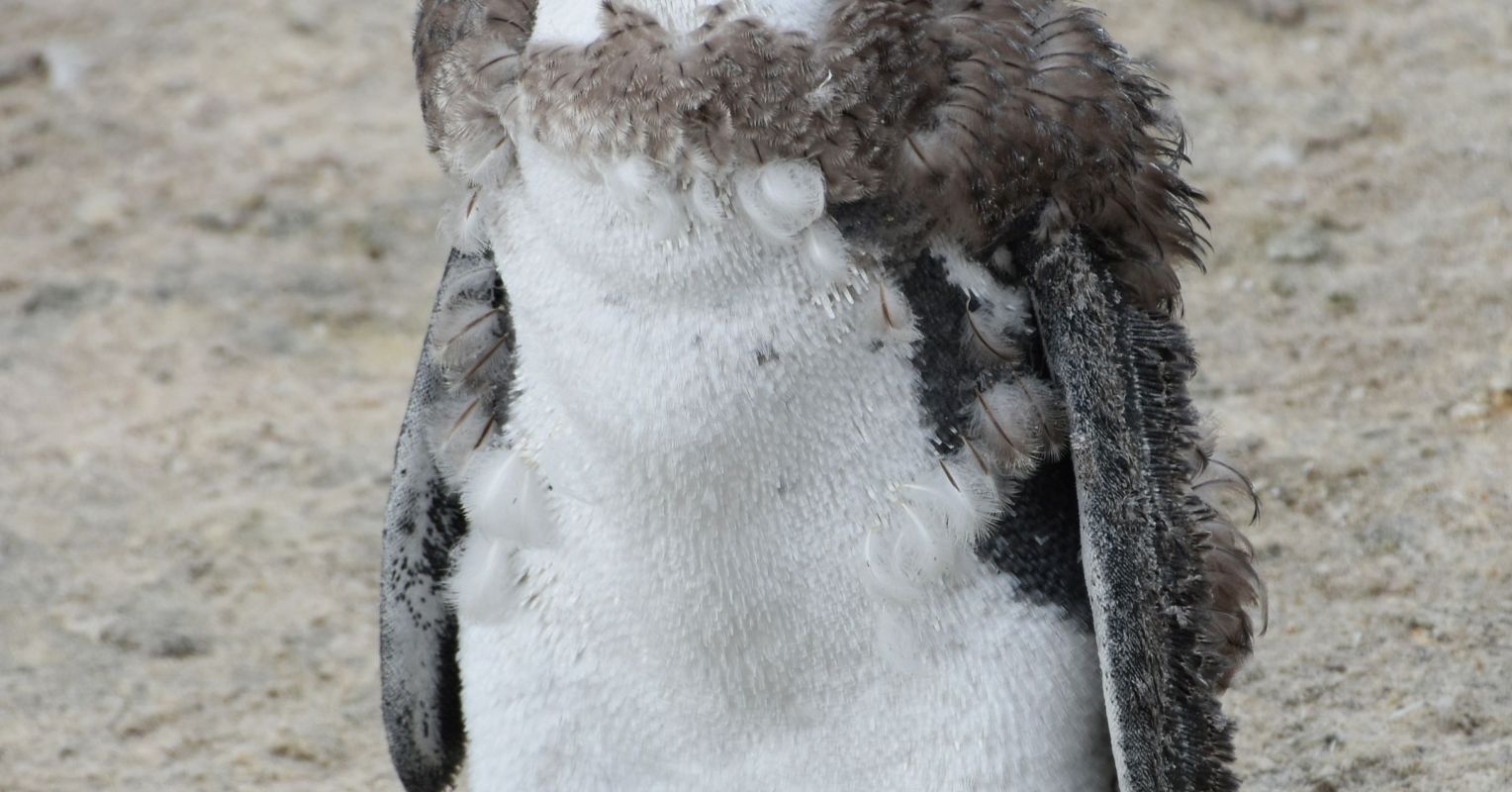
One of my favorite things I learned about birds is that they don’t molt all at once. If they suddenly lost every feather, many of them wouldn’t be able to fly. Instead, they lose a few feathers and grow a few feathers. During that time, they often look a little ragged. A little uneven. A little less magnificent than the nature documentaries would have us believe
I found that oddly comforting because psychological change has always made me feel scruffy. There is an awkward stretch where the old way of being no longer fits, but the new way hasn’t settled in yet. You’re less certain. Less polished. Less fluent. From the outside, it can look as though you’re regressing, when in fact you’re simply in the middle of replacing something that can no longer carry you
The Feathers We Keep Repairing
It also struck me that many of our emotional habits resemble old feathers. They were once exactly what we needed. People-pleasing may have kept the peace in a chaotic family. Perfectionism may have earned us praise. Constant productivity may have helped us feel safe in an unpredictable world. These strategies deserve a little gratitude. They got us here
The trouble begins when we assume that because something once protected us, it must protect us forever. We become remarkably loyal to coping strategies that have quietly outlived their usefulness. Instead of letting them fall away, we spend years trying to repair them. We become experts at reinforcing what nature may already be asking us to shed
Growth Mindset Essential Reads

A Surprising Way to Get Unstuck In Your Life

Creating Our Own Luck: 4 Ideas for Taking Decisive Action
My Own Molt
Lately, I’ve been trying to molt something surprisingly ordinary. I realized that I have an almost compulsive need to eliminate silence from conversations. If a pause appears, I rush in with another story, another joke, another observation. I thought I was being a good conversationalist. In truth, I was mostly trying to soothe my own discomfort
So I’ve been experimenting with saying less. Not dramatically less. Bird less. A feather here. A feather there. The silence still feels awkward sometimes, and I occasionally catch myself reaching for an unnecessary anecdote the way someone reaches for a familiar sweater. But each time I resist, I notice something unexpected. The conversation doesn’t die. Someone else speaks. Or nobody does. Either way, the world continues turning without my plugging up the gaps in the social dialogue
A Feather at a Time
Birds don’t become entirely different birds after they molt. They simply replace what has become worn. They trust that new feathers will grow in their own time. They don’t panic because they look a little disheveled for a season
Maybe we could offer ourselves the same grace. We don’t have to reinvent our personalities or emerge as dazzling new versions of ourselves. We only need to notice which old feathers have stopped carrying us. Then, awkwardly and imperfectly, we can let one drift away. The new plumage rarely arrives all at once, but perhaps that’s exactly the point. Growth is less often a butterfly than a molt, and maybe looking a little scruffy for a while is one of the surest signs that something new is growing.
