


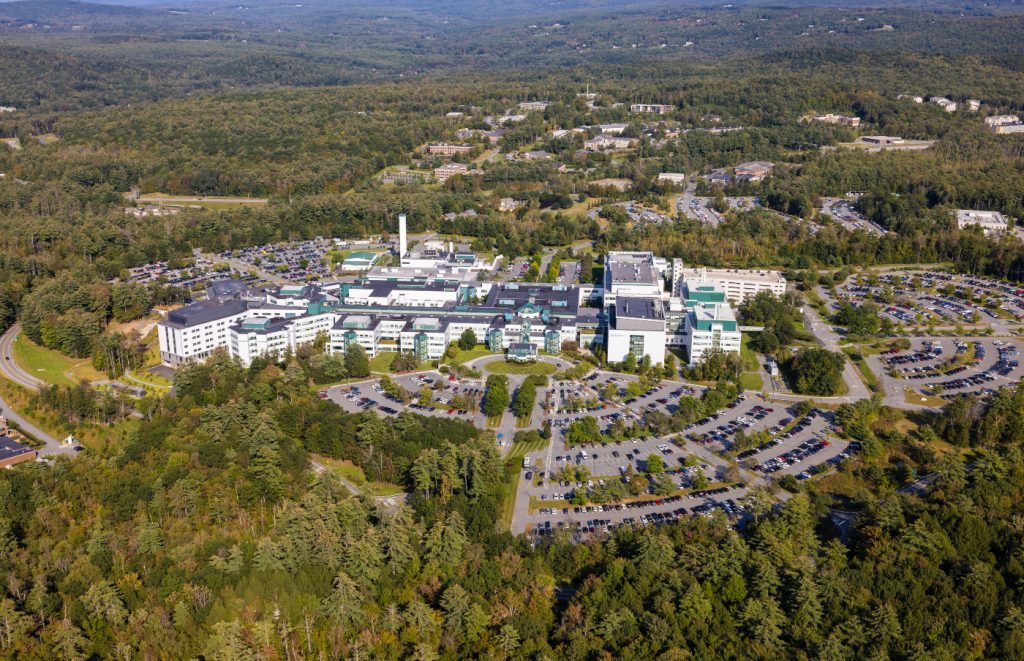
N.H. –Dartmouth <a href="https://healthylife7.com/health-hub-helping-farmers-catch-hidden-conditions/” title=”Health hub helping farmers catch hidden conditions”>Health, among the nation’s most rural healthcare systems, has received an $11.8 million federal grant to develop a multidisciplinary research program focused on addressing the needs of people aging with serious illness
The National Institute of General Medical Sciences (NIGMS), part of the National Institutes of Health, awarded the grant through its Centers of Biomedical Research Excellence (COBRE) program, which supports research capacity building in states that have historically received lower levels of NIH funding. The award will fund the creation of the Center for Aging with Serious Illness (CASI) at Dartmouth Health. The COBRE funding also includes a $2.7 million award to Dartmouth’s Geisel School of Medicine to fund its participation in CASI.
“Rural America is the next frontier in healthcare, and nowhere is that clearer than in the care of older adults living with serious illness,” said Dr. Joanne M. Conroy, CEO and president of Dartmouth Health. “The Dartmouth Health system sits at the center of one of the oldest, most rural regions in the country, which gives us both the responsibility and the opportunity to lead. CASI lets us turn that responsibility into research that will change how these patients are cared for here and across rural America.”
The growing number of older adults living with chronic, serious illness represents one of the most pressing public health challenges in the United States. However, research addressing the unique needs of this population has not kept pace with its rapid expansion. Building a robust evidence base to improve the quality of life for this group is critical to advancing healthcare
“CASI will concentrate on building a network of experts who will conduct clinical, behavioral, and health-services research to address the challenges faced by older adults with serious illness,” said Dr. Angelo E. Volandes, Dartmouth Health’s interim chief research officer, Anna Gundlach Huber professor of medicine, and senior associate dean for clinical and translational research at the Geisel School of Medicine at Dartmouth
“Our investigators will focus on solving key issues in aging with serious illness and use their findings to inform healthcare policy and stakeholder decision-making,” added Volandes, co-principal investigator of CASI. “This center will foster independent investigators whose work will ultimately improve the care and quality of life for older adults.”
CASI’s overarching goal is supporting early-career clinician-scientists as they develop experience and expertise as independent researchers dedicated to improving care for older adults with serious illness. It does so through three specific aims: (1) Establishing a robust framework that integrates research expertise and mentorship to formalize CASI and strengthen Dartmouth Health’s research infrastructure, in collaboration with affiliate institutions; (2) developing a structured pathway to support early-career clinician-scientists as research project leaders and to enhance their transition to independent investigators through tailored, milestone-driven research plans; and (3) ensuring the success of research and pilot project leaders by providing comprehensive technical assistance through the biostatistics, ethics, data management, research design, and community engagement (BEDRoC) core, which will serve the broader Dartmouth Health research community focused on improving care for older adults with serious illness.
“Given our location between two of the oldest population states per capita – New Hampshire and Vermont – Dartmouth Health is uniquely qualified to be the home of CASI,” said Dr. Nathan E. Goldstein, the Herman O. West professor of geriatrics at the Geisel School of Medicine at Dartmouth, chair of Dartmouth Health’s department of medicine, and co-principal investigator of CASI. “Our academic medical system is also one of the nation’s most rural. We know that rural Americans face numerous barriers to accessing healthcare, and these hurdles are especially challenging for older adults living with chronic illness.”
“This COBRE funding will allow the CASI team to create the foundational infrastructure required to conduct research leading to improved outcomes for this patient population,” Goldstein added. “It also gives us a way to keep our most promising young physician-scientists here, training the next generation of Geisel investigators to spend their careers on the patients our region needs them to serve.”
Learn more about CASI at www.reporter.nih.gov/project-details/11265888
