


Getting your Trinity Audio player ready…
A drug-resistant fungus is spreading across the United States, with 3,437 clinical cases documented nationwide this year in 27 states, according to data from the Centers for Disease Control and Prevention
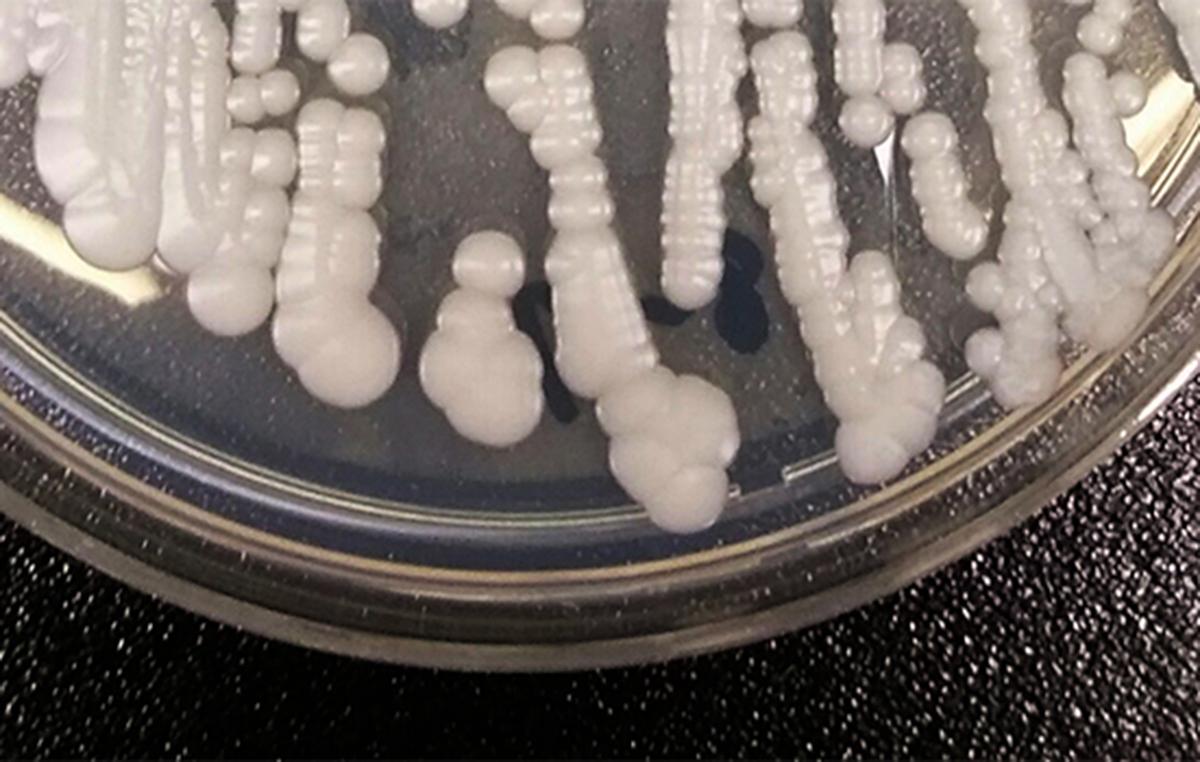
Candida auris, called a “superbug” due to its resistance to treatment, was first discovered in 2009, and the first clinical cases began appearing in 2016, the CDC said. What makes the fungus concerning is its resistance to anti-fungal medications widely used to treat infections an infectious disease specialist with Hartford HealthCare
There were 6,304 new clinical cases of Candida auris in the United States in 2024, according to the CDC. The total number of U.S. clinical cases has increased each year since the first U.S. case was reported in 2016, but in recent years, the rate of increase has been slowing down, according to the federal agency
Wu said that the fungus mostly affects patients with severe underlying medical conditions who require complex medical care. Patients with invasive medical devices like breathing tubes, feeding tubes and catheters are at increased risk for infection. Residents in long-term care facilities like nursing homes are also at risk, he said
“Anyone who resides in long-term care facilities is vulnerable,” Wu said. “What has changed is the education and recognition around this drug-resistant fungus. The analogy I would make is that people think vaccines cause autism, when in reality we have become better at diagnosing autism and neurodivergence. Candida auris is becoming more common because we are now looking for it. I have no doubt it’s in every single state and a lot of facilities probably have it.”
Candida, a genus of yeasts, is the most common cause of fungal infections worldwide. The genus Candida encompasses about 200 different species. Candida is often responsible for most yeast infections with the majority of species reactive to treatment. Candida auris is one of the few yeast species that has become resistant to several drugs
“Hartford HealthCare does have a very active screening protocol to look for this for people who may be at high risk,” Wu said. “And because of that, we have also found it a few times over the years. Without violating patient privacy, we have had a couple infections over the years, but mostly colonizations are what we pick up on our routine screening.”
Wu said there is an important distinction between clinical infection and colonization from a fungus. People without risk factors generally do not get sick or display symptoms from Candida auris. People with healthy immune systems may test positive for colonization of the fungus in their bodies but have no outward symptoms, Wu said. Sometimes individuals in long-term care facilities who are considered most vulnerable may test positive for the fungus but have no symptoms, he said
“When we find Candida auris, it doesn’t necessarily mean someone is sick or displaying symptoms,” Wu said. “Remember that the average person has 60 trillion microorganisms on them. Many people might have Candida auris on themselves right now but are not actually infected and displaying symptoms. That’s called colonization. We use to only find Candida auris when someone got sick from it. But new protocols now can test for colonization, which is partly why we’re seeing a bump in detections.
“Think of it this way, infection represents the tip of the iceberg, colonization represents the rest of the iceberg,” he said. “Now we’re starting to look underwater to find colonizers and not just those who are sick. So infection really just represents the small tip. There are many people who are colonizers of the fungus and will never develop symptoms.”
Good immune systems typically fight off the fungus easily, according to the CDC. Most healthy people do not have the fungus on their bodies. In addition, daily life and casual contact do not spread it to healthy people and it cannot be transmitted like a virus. Wu said there are cleaning protocols hospitals and long-term care facilities can use to minimize potential spread of the fungus
Dr. David Calfee, chief epidemiologist of Yale New Haven Health, said that transmission of Candida auris happens more like traditional bacteria through direct contact, rather than airborne viruses, making cleaning and sterilization important to stop the spread
“Candida auris is spread more from direct contact through either the body or the secretions of a person who is infected or indirect contact with contaminated medical equipment or surfaces,” Calfee said. “So it’s really more touch or contact-related transmission than that aerosol and droplet transmission with viral infections like influenza or COVID-19.”
Connecticut reported 12 clinical cases of Candida auras infection in 2024 the state only had between one and 10 reported cases. Neighboring New York reported the most cases with 460 in 2024. From 2016 through 2024, Connecticut reported a total of 20 clinical cases, according to data
Calfee said that the fungus most likely will continue to be reported, as it has become easier to detect and healthcare providers have become more familiar with it
“Similar to some of the other multi-drug resistant microorganisms, which usually are more bacteria typically, this seems to be following a similar trajectory where there is enough of it out there that total eradication is unlikely,” Calfee said. “I do suspect we will continue to see Candida auris be reported. I think there is also more awareness of it. Initially it was difficult to detect and misidentified in the past, but more laboratories are able to detect it now allowing for better monitoring.”
Stephen Underwood can be reached at sunderwood@courant.com
