


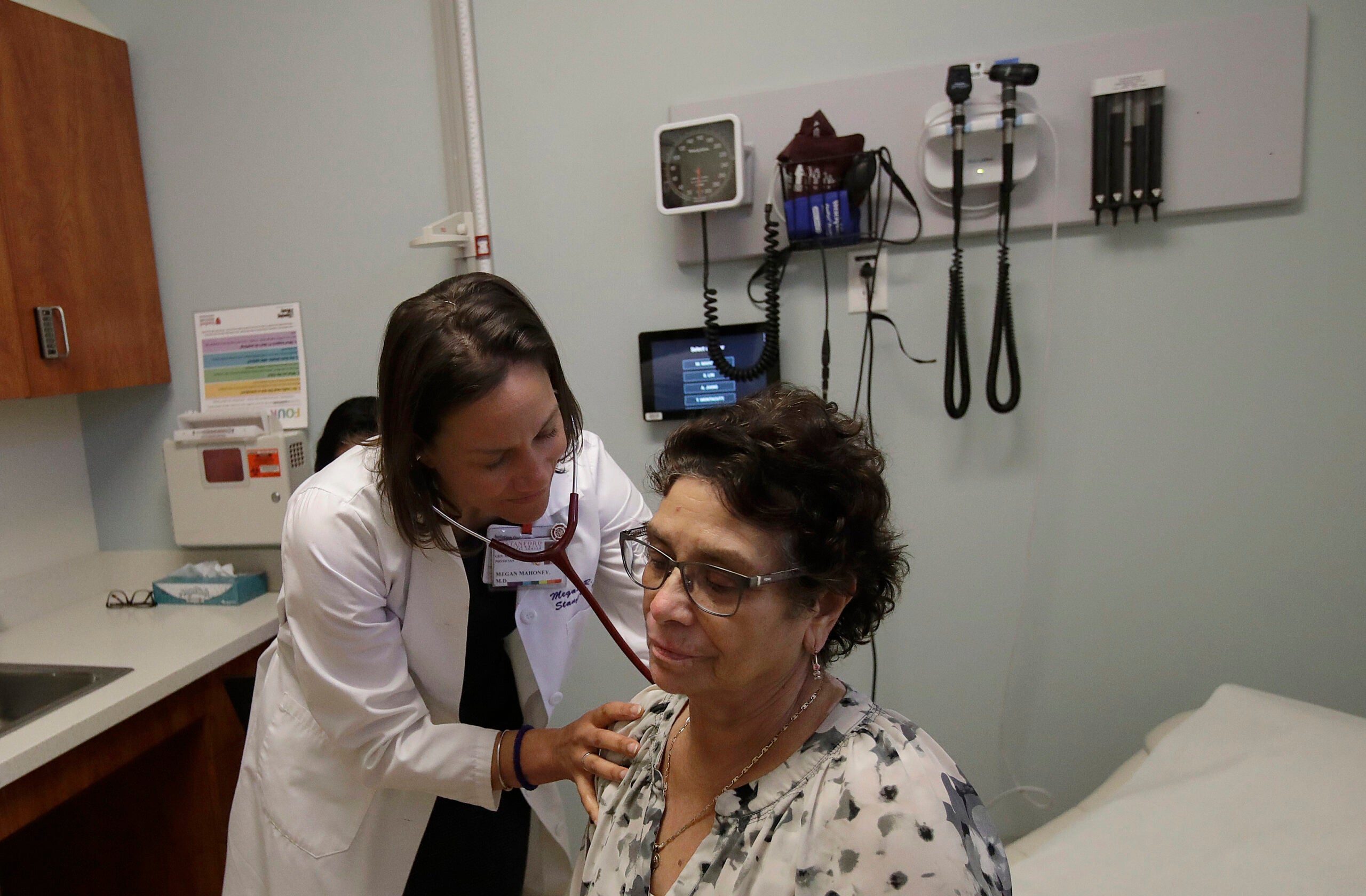
Wisconsin health leaders worry future work requirements for Medicaid recipients will create both an administrative and ethical burden for doctors and other providers
Starting next year, adults between ages 19 and 64 will be required to work, go to school or volunteer for 80 hours per month to qualify for coverage under the safety-net program.
The new rule, which was included in Republicans’ “One Big Beautiful Bill Act” last year, provides exemptions for a number of groups, including people who are pregnant, have children under age 19 who live with them and people with a recognized disability
Understanding Wisconsin, Together
WPR’s “Wisconsin Today” newsletter keeps you connected to the state you love without feeling overwhelmed. No paywall. No agenda. No corporate filter
There is also an exemption for people with serious or complex medical conditions, or what’s considered “medically frail”
In guidance released in June, the Centers for Medicare and Medicaid Services, or CMS, said state Medicaid programs should not only consider a person’s diagnosis or condition but also “the extent to which the condition impairs an individual’s ability” to meet the new requirements
But Dr. Ken Schellhase, a primary care physician and member of the Wisconsin Medical Society, said making that determination is not simple, even for a doctor
“That will require training and skills that the typical primary care doc does not have,” he said. “Honestly, that’s a big reason why most docs in primary care practices don’t do the official disability evaluations for Social Security.”
Doctors working in occupational medicine or rehabilitation are specially trained to determine someone’s functional capacity in an objective way, Schellhase said, but there are limited numbers of those providers
Speaking to reporters on July 30, Wisconsin Department of Health Services Secretary Kirsten Johnson said the state needs more guidance from CMS as it develops a system for verifying who qualifies for the exemption.
She said DHS is looking to use existing records like medical billing to verify that someone is unable to meet the work requirements, as well as a process allowed by CMS during the first year where a recipient can self-attest that they are unable to work
Scott Stewart, CEO of the Wisconsin Primary Health Care Association, said the existing system for health insurance claims is not designed to indicate a person’s level of impairment or ability
“It’s set up to say this is what a patient has, but it’s not set up to say anything more than that,” Stewart said. “You have to really also think about the privacy aspects of that. Now you’re saying that I have to potentially give a patient’s chart, which they have to sign off on in terms of HIPAA, to say that they are medically frail and meet all definitions?’”
Schellhase worries involving medical charting and billing could also influence the way doctors care for their patients, including how quickly they make a diagnosis. As an example, he described someone coming in for treatment of asthma symptoms
“Not everybody who wheezes has asthma, and so sometimes we struggle with as a diagnosis code,” he said. “Do we put in just wheezing? Or have we seen it enough times, but it’s just not absolutely confirmed that yeah, this person probably has asthma? There’s a lot of gray area in that.”
He said patients with conditions not considered severe enough for exemption could have their health decline if they lose access to health insurance. And he worries the new process will create a conflict of interest for doctors who have a professional obligation to help, and not harm, their patients
“We’re supposed to be that patient’s advocate, to do whatever’s in our power to help them and get them the help that we think that they need,” he said.
Stewart, whose organization represents the state’s federally supported Community Health Centers, said increasing paperwork requirements has been shown to lead to more people losing access to care
He’s concerned that health systems will be incentivized to help patients qualify for an exemption to keep their coverage so providers can continue to bill the program for care
“We’ve seen issues with the Medicare Advantage program and things like that in the same way, around wanting patients to have access to these programs, but having the kind of perverse financial incentive to get them on (the program),” he said
WPR contacted a number of major Wisconsin health systems for comment on potential impact of the work requirements, but did not receive any responses.
The Wisconsin Hospital Association, or WHA, declined WPR’s interview request. In a statement, WHA’s senior vice president for finance and payment, Christian Moran, said the association appreciates DHS’s efforts to “minimize additional regulatory burdens on hospitals and providers while helping eligible individuals maintain Medicaid coverage and reducing the risk of higher uncompensated care in Wisconsin hospitals.”
Moran wrote that WHA will continue to watch the state agency’s plans as more details become available
Wisconsin Public Radio, © Copyright 2026, Board of Regents of the University of Wisconsin System and Wisconsin Educational Communications Board
