- Genetic testing is helping rare disease patients get answers earlier, sometimes before symptoms appear, opening the door to treatment before irreversible damage occurs.
- For families, a genetic diagnosis can provide much more than a name for a condition — it can connect them to research, patient communities, treatment options and information that helps guide future family planning.
- As genetic testing technology improves, experts say families should consider retesting after inconclusive results, while broader newborn genomic screening could dramatically expand the number of rare diseases identified early.
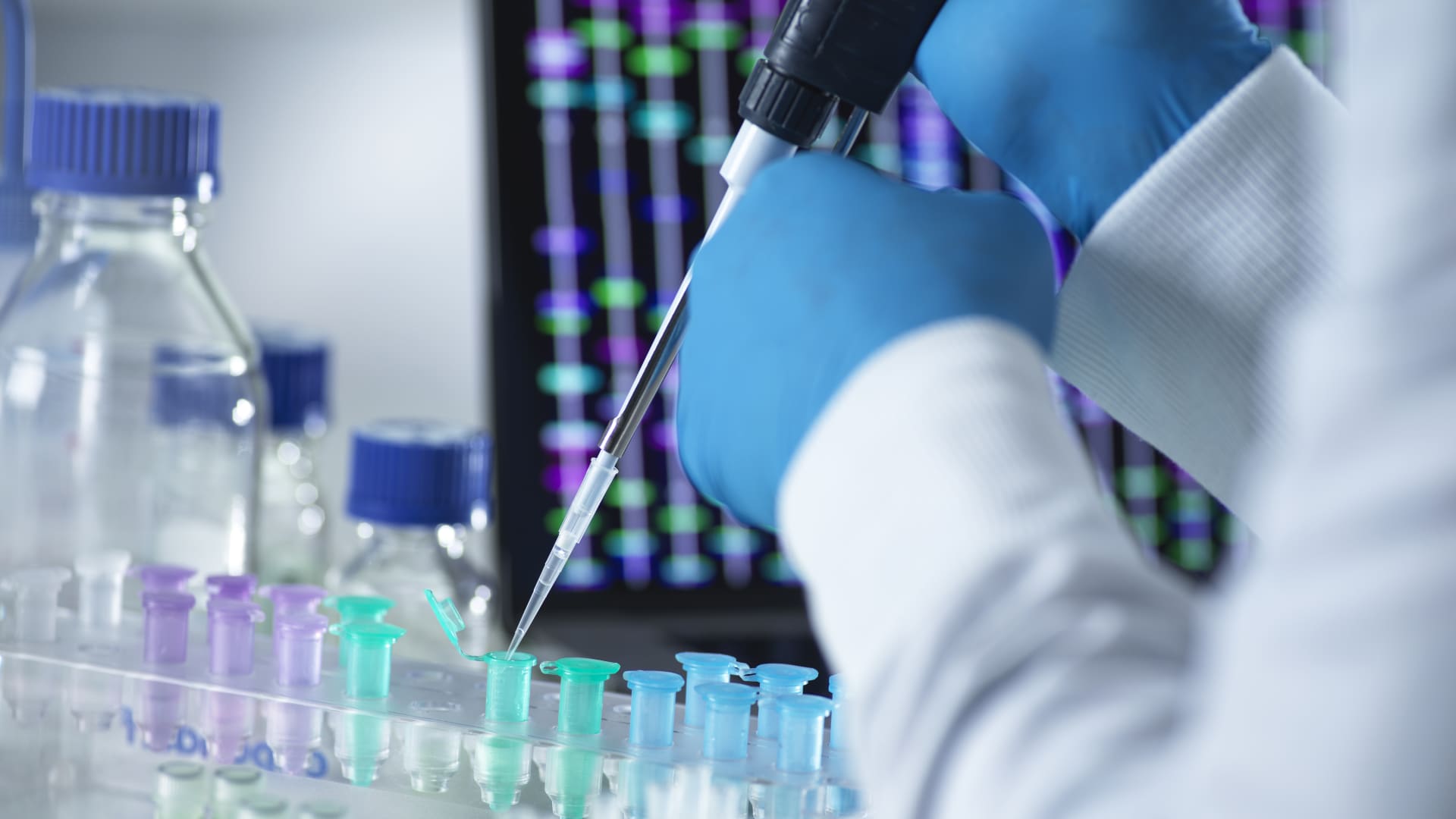
Westend61 | Westend61 | Getty Images
CNBC Cures is proudly under AstraZeneca Rare Disease, whose support enables our journalism to elevate stories that advance research, innovation and patient care in rare diseases
For more stories like this, sign up for the CNBC Cures newsletter
In an academic article published in June, a team of researchers from New York and Boston highlighted the case of a 6-month old girl in New York diagnosed with Batten disease, a rare, fatal genetic condition that impacts the nervous system
Typically, children are diagnosed with Batten disease after they start showing symptoms – like sudden vision changes or the onset of seizures. Once symptoms are present, irreversible neurological damage has already been done
What made this particular case newsworthy was that the girl was given her diagnosis before she became symptomatic — which for her specific subtype of Batten, may not have occurred for several more years
The girl was part of the Genomic Uniform-screening Against Rare Diseases In All Newborns, or GUARDIAN, Study — a large-scale research initiative launched in the state of New York out of Columbia University with funding from Sanofi, Illumina and GeneDx. Lead by clinical and molecular geneticist Dr. Wendy Chung, a CNBC Cures Advisory Board member, the goal of the program was ambitious: provide free whole genome sequencing to screen up to 100,000 newborns across the state of New York for rare genetic conditions.
Standard newborn screening – something nearly every baby born in the U.S. already undergoes – usually tests for between 30 – 50 diseases. GUARDIAN screens for 450 genetic conditions. It does not require any additional blood samples. It’s just a better screening model.
Preliminary findings published last year in JAMA showed that among the first 4,000 newborns screened, the test identified serious genetic conditions in just under 4% of the children. More than 90% of those diseases would have been missed by traditional testing methods.
All of that context brings us back to the patient we started with in this story, the 6 month old girl diagnosed with Batten disease before she became symptomatic. After receiving the girl’s diagnosis, her parents and doctors decided to start a treatment that they hope could delay or even prevent some of the neurological damage associated with Batten. It’s too early to say if their efforts will be successful, but because of GUARDIAN, at least the family has a chance.
Genetic Testing Action Day – a public awareness initiative started by Start Genetic and CureSHANK – was celebrated by rare disease advocates late last month. In honor of that call to action, below are three firsthand accounts of people impacted by genetic testing: a parent who says a genetic test not only opened up treatment avenues, but also gave her and her husband the ability to plan for the future; another parent whose journey led to not one, but two rare disease diagnoses; and a doctor who has seen the power that genetic tests have to free patients and unlock scientific understanding.
Eliza Goldwasser, Founder of AUTS2 Research Collaborative, Rare Disease Parent
Eliza Goldwasser with her husband and son, who was diagnosed with AUTS2 syndrome.
Eliza Goldwasser
When our son was diagnosed with AUTS2 syndrome, we thought we’d reached the end of a long search for answers
Instead, we found ourselves at the beginning of an entirely new journey. We discovered a community of families, clinicians, and researchers already dedicated to understanding AUTS2 syndrome
We learned from parents a few years ahead of us and realized we were no longer navigating this journey alone. We connected with scientists who generously shared their time and knowledge. Through those conversations, we came to understand not only our son’s condition, but also something we never imagined was possible: that treatments for rare genetic conditions like AUTS2 syndrome are no longer science fiction. For the first time, we believed they could become a reality within our son’s lifetime—and within a timeframe that matters for his development.
A diagnosis gave us far more than an explanation for our son’s delays. It gave us a way to contribute. Our son could participate in research. We could enroll in patient registries and contribute samples to biobanks that help researchers make new discoveries, prepare for clinical trials, and ultimately develop treatments
It also changed our family’s future in practical ways. Learning that our son’s condition was caused by a spontaneous genetic change—one that neither my husband nor I carry—gave us confidence as we made decisions about growing our family. Information that initially felt devastating ultimately replaced uncertainty with clarity
Today, my husband and I lead the AUTS2 Research Collaborative, a nonprofit born from the relationships that began with our son’s diagnosis. We fund research, build shared rery partners to accelerate treatments for AUTS2 syndrome
A diagnosis doesn’t change who your child is. But it can change everything that comes next. It turns isolation into community, uncertainty into action, and fear into hope. Every family deserves timely access to genetic testing, not just to name a condition, but to begin building the future that diagnosis makes possible
Jenny Graham Beeson, Co-Founder of Start Genetic, Board Member of CureSHANK, Rare Disease Parent
Jenny Graham Beeson and her two rare children.
Jenny Graham Beeson
I am a parent advocate and leader within both the SHANK3/Phelan-McDermid and Tatton-Brown-Rahman syndrome communities. My family’s story illustrates a message that many families, and even some providers, still don’t fully understand: genetic testing technology evolves rapidly, and yesterday’s negative result may not be today’s answer
Both of my children had significant developmental concerns. My daughter had undergone genetic testing years earlier, but whole exome sequencing was not yet available to her. When I learned that a newer test being offered to my son could identify conditions that previous testing could not, I insisted that both children be tested at the same time
That decision changed everything
My son was diagnosed with a spontaneous variant resulting in Tatton-Brown-Rahman syndrome, and my daughter ultimately received an accurate genetic diagnosis of Phelan-McDermid syndrome after years of unanswered questions. She was nearly ten years old when we finally got the answers that earlier testing could not provide
Their diagnoses connected us to patient communities, research opportunities, and a deeper understanding of their medical and developmental needs.
Today, I work as an advocate in both rare disease communities and help educate families about the importance of genetic testing and periodic re-evaluation as technology advances
Genetic Testing Action Day provides an opportunity to highlight a simple but powerful message: for many families, the diagnostic journey should not end with a negative or inconclusive genetic test result
Dr. Richard Finkel, MD, Department of Genomic and Translational Neuroscience, St. Jude Children’s Research Hospital
Dr. Richard Finkel is the Director of the Experimental Neuroscience Program at St. Jude Children’s Research Hospital.
Dr. Richard Finkel
There are thousands of rare and ultrarare medical disorders, and the majority have a genetic basis, where there is a flaw in the individual’s genetic code that causes their medical condition. Not only does genetic testing provide an answer to “Why did this happen?”, but it also opens the door to “Now what can I do to treat this?”
Genetic testing has truly revolutionized medical care of individuals living with a rare disease and even those yet to be born with that condition. Several types of testing are now widely available to pinpoint the spelling error and provide an understanding of the basic cause of the disease
Establishing an accurate diagnosis can then lead to targeted treatment options and avoid unnecessary further testing. This also allows for a discussion if there is a risk of this condition recurring with a future pregnancy or if it may be present in other family members
As a neurologist who sees children with rare disorders, genetic testing has become the most common and powerful tool I use. I have personally witnessed the impact of genetic testing in several situations: to identify the cause of a suspected genetic disorder of an individual in the clinic; to use this tool in severely ill infants, children, and adolescents in the intensive care setting; and, increasingly, through newborn screening of all babies to identify conditions that require urgent identification and treatment before they even show signs of the disease.
Genetic testing of a woman planning on a pregnancy or early after conception can now screen for nearly a hundred serious genetic disorders and, if present, guide the parents on treatment options. Gene-targeted treatments that address the fundamental cause of a genetic disease are being rapidly developed, and in several instances, I have witnessed extraordinary responses
Some babies that used to die from one genetic disease – spinal muscular atrophy – before their 2nd birthday now are living normal lives. Use of these genetic tools will certainly increase in the coming years to empower parents, patients themselves, and their physicians to understand the cause of their genetic disorder, and how to treat it as rapidly as possible to optimize the response to treatment
This is the dream we live today for a few select genetic disorders…one we hope will grow rapidly in the coming years