


Op-ed: Privatized Prison Food Degrades Quality and Safety | Civil Eats
Op-ed: Privatized Prison Food Degrades Quality and Safety | Civil Eats
Op-ed: The Privatization of Prison Food Is Selling Nutrition to the Lowest Bidder
Massive corporate contracts are leading to a decline in food quality and safety, impacting the health of incarcerated individuals.
August 12, 2026
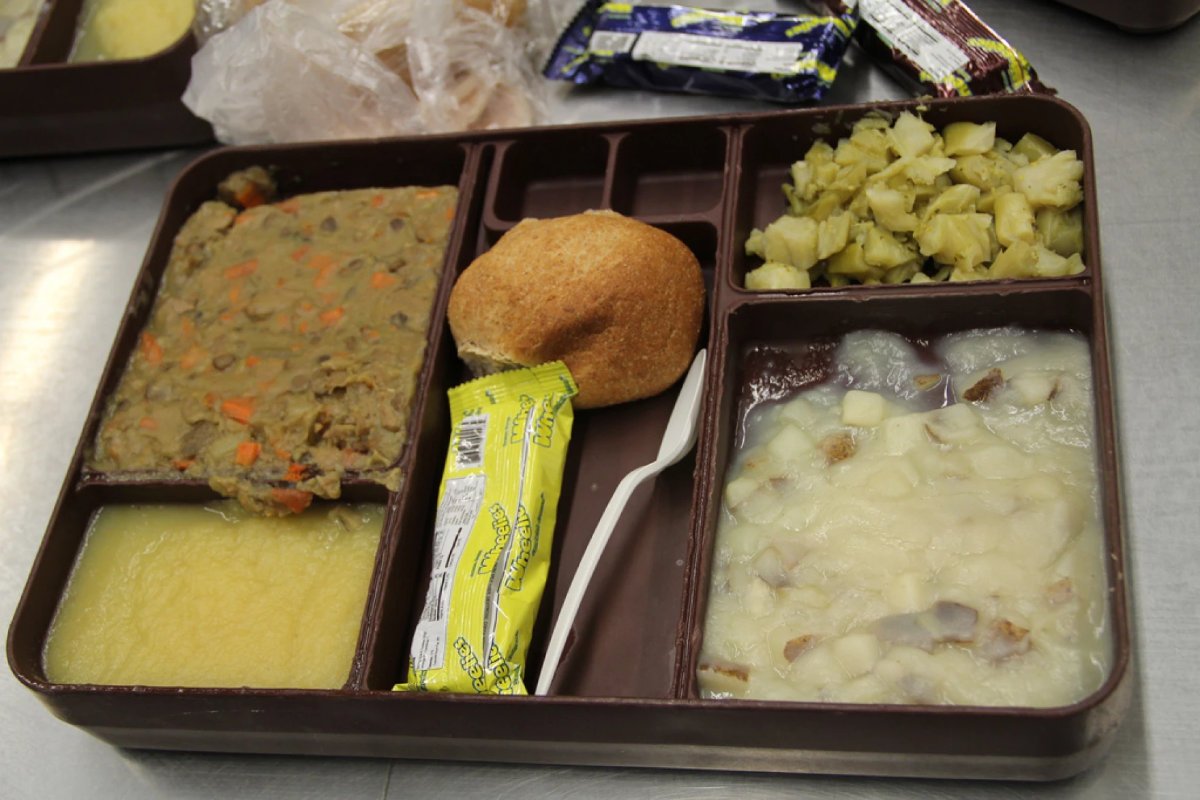
A depiction of a typical prison or jail meal. Note: This photo was not taken in an Aramark-managed facility. (Photo courtesy of the authors / HTF Market Intelligence)
Picture this: You’ve waited all day for dinner trays to roll into the jail’s housing unit, and then for the evening count to finally clear. Cell doors release so you and your cellmate can get your trays with the people in your housing unit. You’re hoping there’s something decent to eat
Unlock the Full Story with a Civil Eats Membership
Expand your understanding of food systems as a Civil Eats member. Enjoy unlimited access to our groundbreaking reporting, engage with experts, and connect with a community of changemakers
Your stomach drops when you see another pile of indistinguishable, grey potato/soy/gravy slop in the tray’s entree slot. You sit down and start eating anyway, until the guy across the table starts shouting. “There’s a mouse in my food!” You don’t want to look, but you do anyway. “No. It’s half a mouse!”
It was just another day in the District of Columbia (D.C.) jail, which currently holds over 2,200 incarcerated people, most of whom are unadjudicated and awaiting trial. And one of the authors of this op-ed (Daniel) was at that table, watching the scene unfold
Food service at the D.C. jail is provided by Aramark, the same company that serves food in college dorms, concert venues, sports arenas, schools, and military bases. Aramark serves at least 400 million meals per year to incarcerated people in 17 state prison systems and additional jails nationwide and is the <a href="https://www.cspi.org/sites/default/files/2026-05/carceralNutritionProject_report.pdf” rel=”nofollow noopener” target=”_blank”>largest private sector player in prison food, capturing an estimated 35 percent of the $5.1 billion annual U.S. market. Trinity Services Group and Elior North America hold the second and third largest market shares.
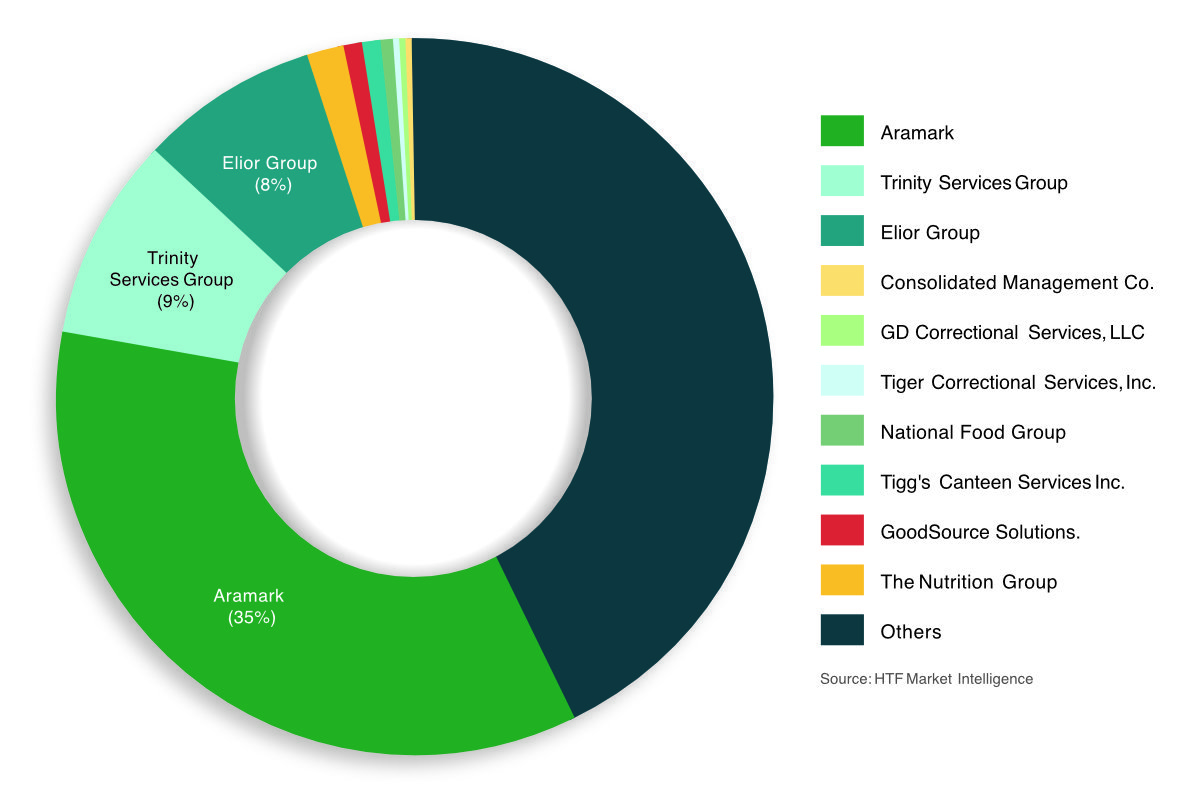
U.S. correctional food service market share, by company
Nationwide, food served in prisons and jails is notoriously unappetizing and unsafe. Meals rarely include fresh produce and often rely on carb-heavy, highly processed foods, starchy vegetables, and mystery meat or soy products. Additionally, safety and quality control measures are inconsistent or entirely lacking. Our new report, “Private Food, Public Harm: Privatized Food Service in Prisons and Jails,” published in May by the Center for Science in the Public Interest and Carceral Nutrition Project, suggests that food quality and safety may suffer even more when food service is run by private vendors.
In trying to boost their own profits, private companies employ various strategies, including charging for meals that were never served, cutting ingredients and adding cheap fillers, and eliminating training requirements for staff who prepare and handle food. Incarcerated individuals at facilities that outsource food service report receiving undercooked, moldy, and rotten food; inadequate portions; and meals contaminated with maggots. In other words, food unfit for human consumption. Although Aramark has been repeatedly fined for failing to meet contractual agreements, the company has allegedly maintained many of its contracts and poor practices.
The harmful trend of privatizing food service and commissary service may be on the verge of expansion. On May 1, the Federal Bureau of Prisons (BOP), which currently runs the food service program for its 122 facilities nationwide, released requests for information (RFIs) to explore outsourcing food service, commissary operations, and health care. (Prison commissaries sell essential items like soap, deodorant, and toothpaste, and shelf-stable, packaged foods like ramen, mac and cheese, peanut butter, and desserts.) Based on our report, outsourcing could lead to reduced accountability and transparency and a decline in the quality of meals served to the more than 150,000 people in custody.
The BOP serves nearly 430,000 meals daily (amounting to 150 million meals in fiscal year 2024). The agency has yet to publicly share the results of its RFIs or intended next steps. Meanwhile, the expansion of privatized foodservice and commissary to additional state facilities remains an ongoing threat
The Problems With Privatized Prison Food
For years, state agencies managed food service and commissary operations at state and local prisons. The outsourcing of food to private companies began in the early 1970s as a move to increase efficiency and cut costs. While many states still manage their own food services, privatization is increasing; 18 state correctional agencies now out
To understand the impacts of this outsourcing for our report, we reviewed 134 articles and reports on the subject; conducted in-depth interviews with four advocates, three formerly incarcerated individuals, and three food service professionals; and analyzed over 500 legal cases filed against Aramark since 2000. Across the board, people who had eaten and served Aramark meals in carceral settings shared serious concerns about the nutritional adequacy and safety of the meals
We ended up with the following takeaways:
• Meals fall short of dietary guidance. Aramark’s meals commonly fail to meet key recommendations outlined in the 2020-2025 Dietary Guidelines for Americans, with limited fruits and vegetables and excessive sodium and refined grains
• Insufficient portions and unpalatable meals contribute to hunger. Incarcerated people consistently report that Aramark’s meals are inadequate in quantity and quality—pushing people to use their own money to purchase food items from the commissary, which are often unhealthy and high in sodium and refined carbohydrates
Having the same vendor operate both food service and commissary is problematic because it creates a profit incentive to reduce the quantity and quality of meals. Aramark is being sued in federal court for practices that plaintiffs say violate consumer protection laws in West Virginia, where the company holds the contracts for both food service and commissary management in state prisons. Aramark’s main competitors, Trinity Services Group and Summit Correctional Services (operated by Elior North America), also have affiliated commissary businesses.
We’ll bring the news to you
Get the weekly Civil Eats newsletter, delivered to your inbox
Sign up today
Sign up today
• Food safety risks are widespread.Allegations and documented cases of Aramark’s food safety lapses include improper food storage, contaminated meals, failure to maintain sanitary conditions, and foodborne illness. In surveys with people incarcerated in Nevada state prisons, which contract with Aramark, an overwhelming majority report having been served rotten meat, undercooked eggs, moldy bread, or spoiled milk—much of which ends up in the trash. These inconsistent food safety practices put incarcerated people at risk for acute illness—and violate basic human dignity.
• Privatization may exacerbate existing challenges. Evidence from multiple states suggests that transitioning from in-house to Aramark-managed food service leads to declines in food quantity, quality, and/or safety. For example, after Aramark took over state-run food service in Nevada in 2022, the quality and quantity of meals reportedly declined
• Lack of accountability.The 500-plus cases filed against Aramark in the last two decades reveal widespread allegations of nutritionally inadequate and unsafe food, as well as failure to meet medical or religious dietary requirements, but many have been unsuccessful in achieving relief for plaintiffs. Even in instances where Aramark has been fined for contract violations, the infractions have allegedly continued. Trinity and Eliorhave also been named in prison food lawsuits
Prioritizing Accountability Over Profit
Our report concludes that prisons and jails with self-operated food service should generally avoid outsourcing, because there is evidence that food quality and food safety are likely to decline. Despite correctional institutions citing cost savings as the primary motive for outsourcing food service, we found that Aramark lowered costs by reducing food quality, quantity, staffing, wages, and staff training. Aramark also overbilled correctional agencies in multiple states
Rather than outsourcing food service to profit-driven vendors, state and federal agencies should focus on establishing, meeting, and improving evidence-based food and nutrition standards. Ultimately, we support the call to end mass incarceration and reduce spending on carceral systems overall. But in the interim, state legislatures and Congress should allocate adequate funding to cover the rising costs of food so as not to exacerbate harm in carceral settings
Meanwhile, local jails and state prisons that have already privatized food service need to hold private vendors accountable for meeting the nutrition and food safety provisions in their contracts. One way to do this is to vest authority in independent oversight bodies to conduct unannounced inspections that can evaluate compliance with nutrition, food safety, and palatability standards. We’ve outlined further recommendations in our report
Also, concerned citizens can urge Aramark leadership to improve their carceral food service practices
The nearly two million people who are currently incarcerated should not be sentenced to unsafe, unpalatable, and nutritionally inadequate meals. Ninety-five percent of them will eventually return to their communities, and we need to ensure they are not burdened with diet-related health problems that could impact reentry success and recidivism, the effects of which extend to their families and our broader communities
If we want to set people up to thrive upon release, we need to serve them real food that’s made with their health and dignity in mind, not corporate profit
More from
Food Access
Meet the Immigrant Doulas Feeding Their Wisconsin Communities
By Vanessa Johnston
July 30, 2026
‘My Shelves Are Very Empty’: How a Year of SNAP Cuts Is Pressuring the Food System
By Rebekah Alvey
July 16, 2026

USDA Claims SNAP Fraud Is Rampant. Here Are the Facts
By Rebekah Alvey
June 15, 2026

Civil Eats Included in ‘The Best American Food and Travel Writing 2026’
By Paula Cristobal Madina
June 8, 2026
Featured
In These Orchards, Fruit Has All But Disappeared This Year
By Lisa Held
August 11, 2026
Across the country, farmers who grow apples, peaches, and plums had catastrophic losses tied to freezes and a changing climate
New GRAS Rule Falls Short on Food-Additive Safety, Consumer Advocates Say
By Rebekah Alvey
August 10, 2026
In These Orchards, Fruit Has All But Disappeared This Year
By Lisa Held
August 11, 2026
How Everyone Pays the Cost for Patents on Seeds, and Private Companies Get Rich From Keeping Them Secret
By Julie Dawson, Kiki Hubbard and Paulina Jenney, The Conversation
August 10, 2026
The Most Impactful Food Policy Stories of 2026 (So Far)
By The Civil Eats Editors
August 3, 2026

Popular
2026 Farm Bill Fails to Advance Out of Senate Agriculture Committee
By Lisa Held
August 10, 2026

Congress Moves Forward on Two Food Labeling Bills
By Rebekah Alvey
July 31, 2026
Will MAHA Candidate Zach Lahn Stand Up to Big Ag in Iowa?
By Lisa Held
July 30, 2026

‘We Can’t Build a System on Luck’
By Jamila Norman
July 30, 2026

‘;
userWithoutSessionInfo.classList.add(‘wk-user-update-info’);
userWithoutSessionInfo.insertAdjacentHTML(‘beforeend’, infoBlock);
authForm.parentNode.insertBefore(userWithoutSessionInfo, authForm);
authForm.style.display = ‘none’;
document.addEventListener(‘click’, hideUserWithoutSessionInfo);
}
signInSubmitSpinner.style.display = ‘none’;
return true;
}); window.wk.events.subscribe(“success-auth”, function ({register}) {
let userWithoutSessionInfo = document.querySelector(‘.wk-user-update-info’);
if(userWithoutSessionInfo) {
hideUserWithoutSessionText();
}
if (register) {
subscribeSignUpNewsletters();
const extra_groups = [];
/** Location data */
extra_groups.push({
group_key: “signup-info”,
field_key: “signup-location”,
field_value: window.location.href
});
/** UTM data */
let utm_data = getUTMdata();
if (utm_data.length>0) {
utm_data.forEach(item => {
extra_groups.push({
group_key: “signup-info”,
field_key: item[0],
field_value: item[1]
});
})
}
/** saving data: */
window.wk.sdk.methods.client.put({
path: ‘/user/extra/data’,
data: {
extra_groups: extra_groups
}
}).catch(error => {
console.log(error.response.error, ‘error’);
});
}
});
async function subscribeSignUpNewsletters() {
let tags = {
598: true
}
await window.wk.sdk.methods.client.put({
path: ‘/integrations/activecampaign/user/tags’,
data: {
tags: tags
}
}).then(function (response) {
console.log(‘SUBSCRIPTION SUCCESS’, response);
}).catch(function () {
console.log(‘SUBSCRIPTION ERROR’);
});
}
function getUTMdata() {
let query = window.location.search.substring(1);
let vars = query.split(‘&’);
let utm_data = [];
for (let i = 0; i < vars.length; i++) {
let pair = vars[i].split(‘=’);
pair.forEach((item, index) => {
try {
pair[index] = decodeURIComponent(item);
} catch (e) {
}
});
if (pair[0] === ‘utm’ || pair[0].startsWith(‘utm_’)) {
utm_data.push(pair);
}
}
return utm_data;
}
window.wk.events.subscribe(‘wk-event-checkout-success’, function (value) {
const extra_groups = [];
/** Location data */
extra_groups.push({
group_key: “payment-info”,
field_key: “payment-location”,
field_value: window.location.href
});
/** UTM data */
let utm_data = getUTMdata();
if (utm_data.length>0) {
utm_data.forEach(item => {
extra_groups.push({
group_key: “payment-info”,
field_key: item[0],
field_value: item[1]
});
})
}
/** saving data: */
window.wk.sdk.methods.client.put({
path: ‘/user/extra/data’,
data: {
extra_groups: extra_groups
}
}).catch(error => {
console.log(error.response.error, ‘error’);
});
});
}
});
function hideUserWithoutSessionInfo(e) {
switch(e.target.id) {
case ‘auth-signup-link’:
case ‘auth-modal-close-btn’:
case ‘auth-modal-wrapper’:
case ‘auth-password-link’:
hideUserWithoutSessionText();
break;
}
if(e.target.classList.contains(‘wk-form-button’)) {
hideUserWithoutSessionText();
}
}
function hideUserWithoutSessionText() {
let userWithoutSessionInfo = document.querySelector(‘.wk-user-update-info’);
let authForm = document.querySelector(‘#wk-email-auth-form’);
document.removeEventListener(‘click’, hideUserWithoutSessionInfo);
userWithoutSessionInfo.remove();
authForm.style.display = ‘block’;
let authFormHeaderError = document.querySelector(‘#wk-email-auth-form .wk-form .wk-form-header .wk-form__error’);
if(authFormHeaderError) {
authFormHeaderError.style.display = ”;
}
} function wkSignInButtonModify() {
let menuSignInButtons = document.querySelectorAll(‘.wkwp-user-my-account-button’);
if (menuSignInButtons.length > 0) {
menuSignInButtons.forEach(element => {
element.classList.remove(‘wkwp-user-my-account-button’, ‘wk-call’, ‘wk–sign-in’);
element.classList.add(‘custom-wkwp-user-my-account-button’);
});
}
document.addEventListener(‘click’, (e) => {
if (e.target.classList.contains(‘wallkit-sign-in-cta’) || e.target.classList.contains(‘custom-wkwp-user-my-account-button’)) {
e.preventDefault();
if (typeof window.wk.authentication !== ‘undefined’ && window.wk.authentication.isAuthenticated()) {
// user authenticated
} else {
window.wk.authentication.show(‘sign-in’);
}
}
});
}
function wkShowUserStatus() {
let wkSettings = window[“wallkitSettings”] || {};
let wkCallClass = wkSettings.integration.call.classForHandleClick || ‘wk-call’;
let wkTranslations = window[“wallkitTranslations”] || {};
const accountStatusSpanEls = document.querySelectorAll(‘.custom-wkwp-user-my-account-button’);
if (!accountStatusSpanEls.length) {
return;
}
if (window.wk.authentication.isAuthenticated()) {
if (accountStatusSpanEls.length > 0) {
accountStatusSpanEls.forEach(element => {
element.innerHTML = wkTranslations.my_account || ‘My Account’;
element.classList.add(wkCallClass, ‘wk–account-settings’);
element.style.display = ‘block’;
});
}
} else {
if (accountStatusSpanEls.length > 0) {
accountStatusSpanEls.forEach(element => {
element.classList.remove(wkCallClass, ‘wk–account-settings’);
element.innerHTML = wkTranslations.sign_in || ‘Sign in’;
element.style.display = ‘block’;
});
}
}
let topSignIn = document.querySelector(‘header nav .wrapper-menu-buttons .custom-wkwp-user-my-account-button’);
if(topSignIn) {
topSignIn.style.display = ‘inline-block’;
}
}
async function updateUserInfo() {
if (window.wk.authentication.isAuthenticated()) {
if (!window.wk.sdk.methods.user.email) {
await window.wk.sdk.methods.client.get({
path: ‘/user’
})
.then((responce) => {
if (responce.id > 0 && responce.id === window.wk.sdk.methods.user.id) {
window.wk.sdk.methods.user = responce;
}
}, (error) => {
console.log(‘ERROR:’, error);
});
}
}
}
async function setWisepopsArgs() {
if (window.wk.authentication.isAuthenticated()) {
wisepops(“properties”, {
firstName: window.wk.sdk.methods.user.first_name,
lastName: window.wk.sdk.methods.user.last_name,
authentication: true,
plan: window.wk.sdk.methods.user.subscriptions[0].plan.title,
priceTier: window.wk.sdk.methods.user.subscriptions[0].title
});
}
}
function wkCheckPostAccess() {
if (typeof window.wallkitPostData.config !== “undefined”
&& typeof window.wallkitPostData.data.type !== “undefined”
&& window.wallkitPostData.data.type === ‘post’
&& typeof window.wallkitPostData.data !== “undefined”
&& typeof window.wallkitPostData.data.id !== “undefined”
&& window.wallkitPostData.data.id !== ”
) {
const postInfo = window.wallkitPostData.data;
const wkPost = new window.wk.content(postInfo);
const postContentWrapper = document.querySelectorAll(“.wrapper-content-story .row > *”);
let topElement = document.querySelector(“#pico .wrapper-content”);
let paragraphs = topElement.querySelectorAll(‘.wrapper-content-story .post-single-left p’);
// let wkContentAfterEls = document.querySelectorAll(“.wrapper-content-story .row .post-single-left .post-simple”);
if (!topElement || !paragraphs.length) {
return;
}
wkPost.checkAccess().then((response) => {
if (!response.allowed) {
let showParagraphs = paragraphs.length > 2 ? 2 : paragraphs.length – 1;
var paragraphsHTML = ”;
for (var i = 0; i <= showParagraphs; i++) {
paragraphsHTML += `
` + paragraphs[i].innerHTML + `
`;
}
showWKPaywall(topElement, paragraphsHTML);
if (postContentWrapper.length) {
postContentWrapper.forEach((e) => {
if (!e.classList.contains(‘sidebar-right’)) {
e.classList.add(‘wk-content-paywall’);
}
});
}
let paywallBlockLoginLink = document.querySelector(‘.wallkit-paywall-block__login_plans’);
if (paywallBlockLoginLink) {
if (window.wk.authentication.isAuthenticated()) {
paywallBlockLoginLink.style = “display:none;”;
} else {
paywallBlockLoginLink.style = “display:block;”;
}
}
} else {
if (postContentWrapper.length) {
postContentWrapper.forEach((e) => {
if (!e.classList.contains(‘sidebar-right’)) {
e.classList.remove(‘wk-content-paywall’);
}
});
}
let wkPaywallBlock = document.querySelector(“.wkwp-paywall-block-wrapper”);
if (wkPaywallBlock) {
wkPaywallBlock.parentNode.removeChild(wkPaywallBlock);
}
}
if (postContentWrapper) {
postContentWrapper.forEach((e) => {
if (!e.classList.contains(‘sidebar-right’)) {
e.classList.add(‘wk-content-active’);
}
});
}
}).catch((error) => {
console.log(‘!! wkPost ERROR’, error);
});
}
}
function showWKPaywall(contentNode, paragraphsHTML) {
let wkSettings = window[“wallkitSettings”] || {};
let paywallBlockContent = document.querySelector(“.wkwp-paywall-block-wrapper”);
if (!paywallBlockContent) {
paywallBlockContent = document.createElement(‘div’);
paywallBlockContent.classList.add(‘wkwp-paywall-block-wrapper’, ‘wrapper-content’, ‘wrapper-content-story’);
paywallBlockContent.insertAdjacentHTML(‘beforeend’, `${paragraphsHTML} ${wkSettings.config.paywall.content}
`);
contentNode.parentNode.insertBefore(paywallBlockContent, contentNode);
}
}
})();
var bl_wkuser = window?.Wallkit?.user;
var wisepopsProperties = {};
if (bl_wkuser) {
wisepopsProperties = {
WKemail: bl_wkuser.email,
WKactive: bl_wkuser.active,
WKFirstName: bl_wkuser.first_name,
WKLastName: bl_wkuser.last_name,
WKSubscription: bl_wkuser.subscriptions.length
};
}
wisepops(“properties”, wisepopsProperties);
