



Research and Innovation
Funded Study Explores How the X Chromosome Influences Alzheimer’s Disease Risk
By: Andrea Leiseca | August 13, 2026 | 8 min. read |
Women are nearly twice as likely as men to develop Alzheimer’s disease. A new NIH-funded study at the University of Miami Miller School of Medicine will investigate how genetic and epigenetic changes on the X chromosome may influence risk
Biological sex is one of the strongest known influences on Alzheimer’s disease risk. Women are nearly twice as likely as men to develop the disease, and the biological mechanisms behind this difference are still not fully understood
Researchers at the University of Miami Miller School of Medicine believe part of the answer may lie within a frequently overlooked part of the human genome, the X chromosome
With a new award from the National Institute on Aging, part of the National Institutes of Health (NIH), a University of Miami Miller School of Medicine research team will lead a study to investigate how genetic and epigenetic changes on the X chromosome contribute to Alzheimer’s disease risk and may help explain important biological differences between men and women
• Brian Kunkle, Ph.D., M.P.H., associate professor in the Miller School’s John P. Hussman Institute for Human Genomics
• Eden Martin, Ph.D., professor in the John P. Hussman Institute for Human Genomics
• Juan Young, Ph.D., research associate professor in the John P. Hussman Institute for Human Genomics
• Lily Wang, Ph.D., professor of public health sciences at the Miller School
“Most genetic studies of Alzheimer’s disease have focused on the other chromosomes, largely because the X chromosome is much more challenging to analyze,” said Dr. Kunkle. “Yet the X chromosome contains hundreds of genes that are essential for brain function and the immune system, making it an important piece of the Alzheimer’s puzzle.”
Why Are Women More Likely to Develop Alzheimer’s Disease?
Although the X chromosome makes up nearly 5 percent of the human genome and contains approximately 800 protein-coding genes, it has often been excluded from large genetic studies because of its unique biology. Women have two X chromosomes, while men have one. To balance gene activity, one X chromosome in females is largely switched off through a process known as X chromosome inactivation. However, many genes escape this process, creating complex patterns of gene activity that differ among individuals.
These biological differences may hold important clues to why Alzheimer’s disease affects women and men differently
The research team will analyze genetic, epigenetic and molecular data from large populations representing the United States to identify X chromosome variations associated with Alzheimer’s disease. Drawing on large and genetically varied datasets increases the statistical power to detect risk variants and helps ensure that the findings, including future tools for predicting risk, are accurate for all patients
In addition to studying DNA sequence differences, the researchers will investigate chemical modifications to DNA known as DNA methylation, which help regulate whether genes are turned on or off. These epigenetic changes become increasingly important with aging, the greatest known risk factor for Alzheimer’s disease, and may influence how the X chromosome contributes to disease risk
By integrating genetic, epigenetic and other molecular datasets, the investigators hope to identify not only genetic variants associated with Alzheimer’s disease but also understand how those variants influence brain biology. This comprehensive approach may reveal biological pathways that have been overlooked in previous studies and identify genes that could become targets for future therapies.
“Our goal is to understand how the X chromosome contributes to Alzheimer’s disease and why risk differs between women and men,” said Dr. Martin. “By bringing together multiple layers of genomic information, we hope to uncover biological mechanisms that can ultimately improve prevention, diagnosis and treatment.”
The project also addresses an important gap in Alzheimer’s research. Although genetics has transformed scientists’ understanding of the disease and led to the discovery of several important risk genes, much of Alzheimer’s inherited risk remains unexplained. The X chromosome has frequently been excluded from large genomic studies. Researchers believe it may harbor additional genetic and biological factors that influence disease susceptibility
As the number of Americans living with Alzheimer’s disease continues to rise, with care already costing the nation hundreds of billions of dollars each year, understanding why some individuals are more susceptible than others has become increasingly urgent
What the Findings Could Mean for Alzheimer’s Patients
The findings could also advance precision medicine, an approach that tailors prevention and treatment based on an individual’s unique biology. By understanding how X chromosome genetics differ between men and women and change with aging, researchers hope to improve risk prediction and identify biological pathways that may respond differently to future therapies
Beyond generating new discoveries, the project will create valuable genetic and epigenetic re helping accelerate Alzheimer’s research across the United States and beyond. As the number of Americans living with Alzheimer’s disease continues to rise, with care already costing the nation hundreds of billions of dollars each year, understanding why some individuals are more susceptible than others has become increasingly urgent

University of Miami Researchers Study Genetic Change Linked to Alzheimer’s Risk in Men
Miller School researchers are studying whether loss of the Y chromosome may help identify men at higher risk for Alzheimer’s disease
Read more
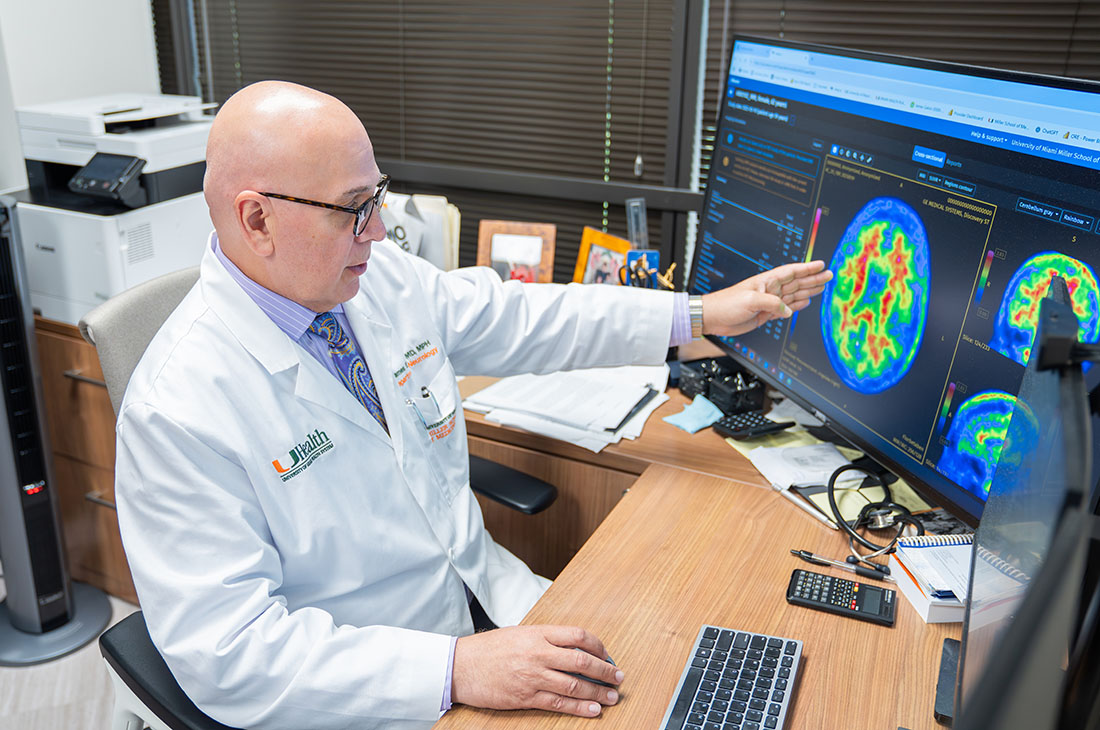
University of Miami Researchers Showcase Advances in Dementia Detection, Treatment and Brain Health at AAIC 2026
Researchers from the University of Miami Comprehensive Center for Brain Health shared 16 studies at AAIC 2026, highlighting advances in dementia treatment, blood-based biomarkers and early cognitive screening
Read more
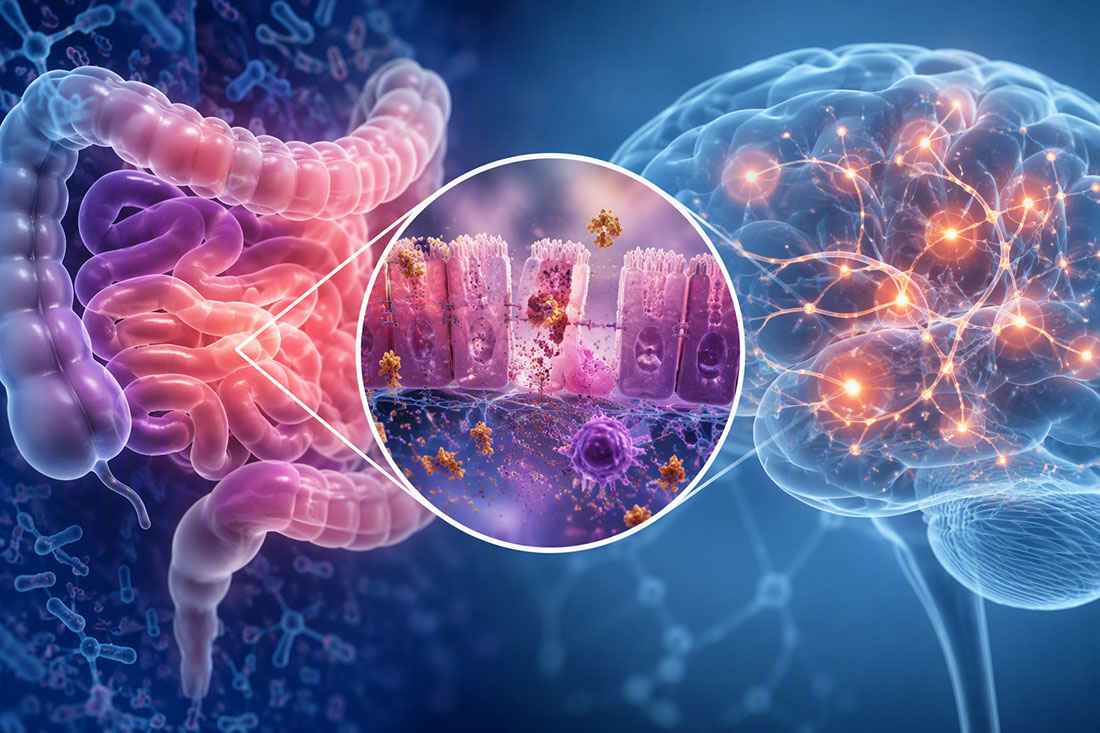
Could the Gut Hold Early Clues to Alzheimer’s Disease?
Miller School researchers found early Alzheimer’s-related damage in lab-grown intestinal tissue, revealing new clues about the gut-brain connection
Read more
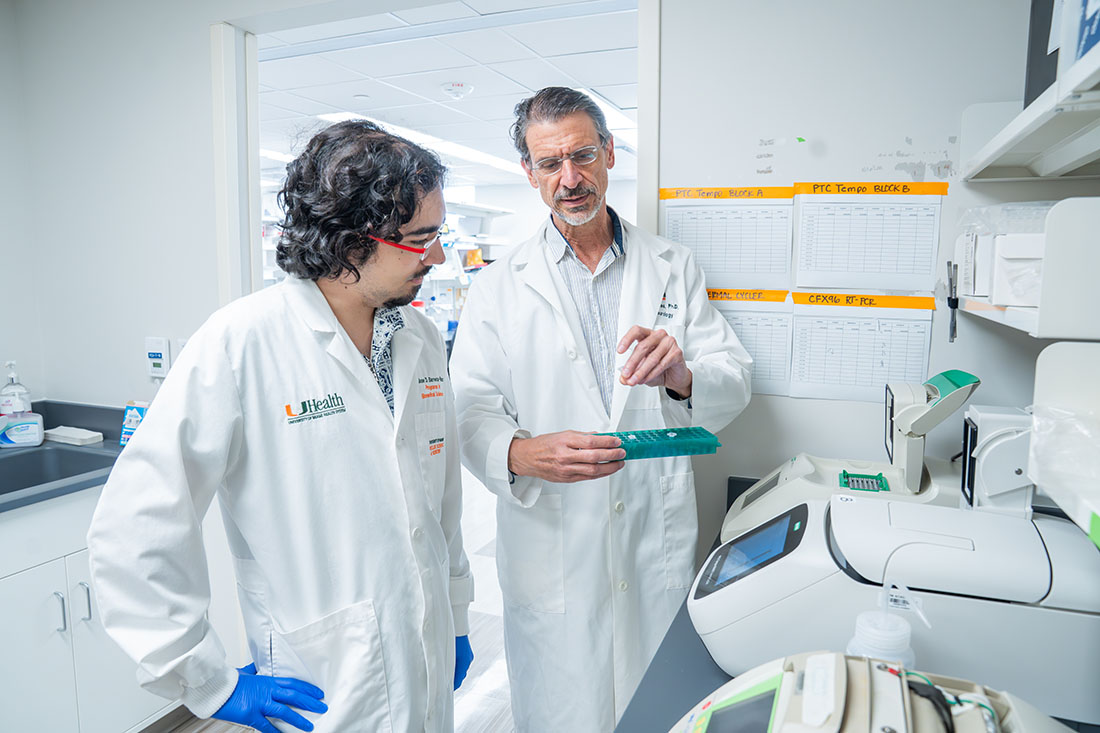
Why Some Brain Cells May Be More Vulnerable to Parkinson’s Disease
Study shows mitochondrial DNA damage can continue accumulating in vulnerable neurons, offering new insight into Parkinson’s disease
Read more
Tags:Aging Research, Alzheimer’s disease, brain health, cognitive decline, Comprehensive Center for Brain Health, dementia, Dr. Brian Kunkle, Dr. Eden Martin, Dr. John T. Macdonald Foundation Department of Human Genetics, Dr. Juan Young, Dr. Lily Wang, genetics, genomics, Hussman Institute for Human Genomics, precision medicine, public health sciences
