


Mum with rare lung condition defies five-year prognosis
55 minutes ago

BBC
Helen Sabin was told by specialists she had just five years to live when she was diagnosed with a rare lung condition in 2008
But after successfully getting on to a clinical trial – along with advances in medicine – Helen says she can now “just get on with life” 18 years on
She was 39 when she was diagnosed with Lymphangioleiomyomatosis (LAM), a condition that leads to the development of cysts in the lungs and causes breathlessness and almost exclusively affects women
The mother-of-two said she had become increasingly breathless playing netball and ended up with a collapsed lung, leading to her diagnosis
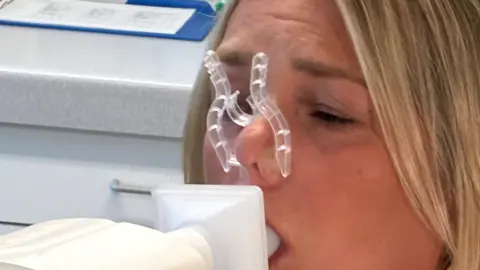
At the time, little was known about the condition, but she said the outlook for her appeared bleak
“I was frightened, felt isolated,” she said. “I had never heard of it.”
A few years after her diagnosis, Helen was accepted on to a clinical trial for the only known treatment for the illness, rapamycin, and has been doing well on the medication
She said: “I know I am lucky to be doing well on the drug. It has helped slow down the progression of my illness and be here for my two grown-up children.”
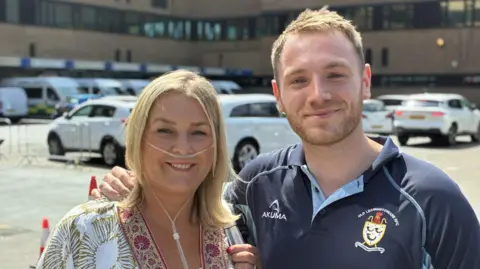
Helen, 57, has also credited being able to live a fulfilling life to the “invaluable support” of the UK specialist centre for LAM, set up at Nottingham’s Queen’s Medical Centre in 2011
The centre offers services including respiratory care, surgical assessment and treatment, as well as acting as a hub for clinical trials of new therapies, in conjunction with the University of Nottingham
“They have been a lifeline,” said Helen, of Leamington Spa in Warwickshire. “I want to tell other patients about it and I have supported several people newly diagnosed with the condition.”
She added: “They do the worrying. I focus on living.”
Helen’s son Ollie Sarginson, 28, is full of admiration for his mum
He said: “She is such a resilient, glass-half-full person. I really wish I could be a bit more like that.”
Helen, who continues to attend the centre for annual check-ups, explained that on a bad day, her illness continues to have terrible effects, adding that the condition presents her with “daily challenges” and she has suffered setbacks including infections, which have required hospital admissions
But she said she “just gets on with life”
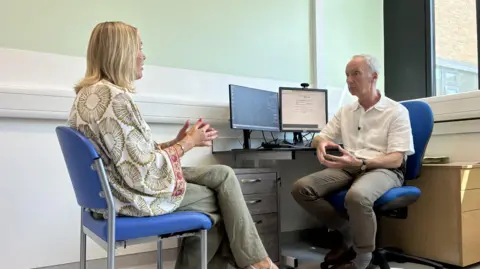
Prof Simon Johnson, who leads the NHS LAM centre, said: “We have around 300 patients we are currently looking after
“All but one of them are women as the disease predominantly impacts them
“Since 2011 we have cared for 450 patients
“LAM used to be a lifeshortening disease and that is only the case for, I would say, a minority of patients now.”
The causes of the disease are not fully understood and there is currently no cure
However, Johnson said the NHS had become more sophisticated at looking after patients with rare diseases, developing specialist centres where experience of managing complex conditions is concentrated, with the aim of tailoring care to individuals’ needs
“We know being diagnosed with a rare disease can feel isolating,” he said
“Our aim is to give patients access to specialist expertise, clear information and practical support wherever they live
“We have patients coming here from as far away as Cornwall and Inverness.”
With more research ongoing, the hope is for more understanding of the condition and treatment advances in the future
Although individually rare diseases are collectively common, the Department of Health and Social Care’s England Rare Diseases Action Plan, published in 2026, indicates one in 17 people will have a rare disease at some point in their life
The World Health Organisation (WHO) has documented more than 5,500 rare diseases globally affecting more than 300 million people worldwide
Follow BBC Nottingham onFacebook, onX, or onInstagram. Send your story ideas toeastmidsnews@bbc.co.ukor
‘My son is one of just 16 who has a condition with no name’
First newborns join screening for 200 rare diseases
How these twins’ rare growth disorder could provide the key to preventing cancer
LAM Action
UK LAM Centre, Nottingham
England Rare Diseases Action Plan 2026
Nottingham
