


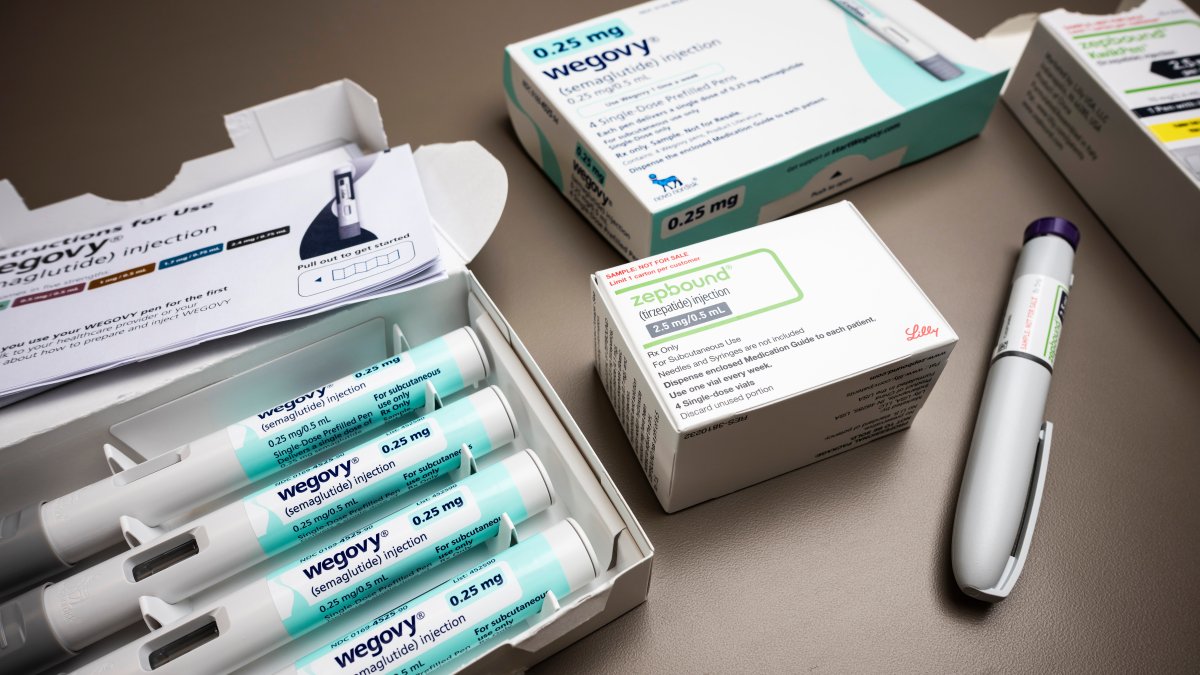

All this week, we’re taking you Beyond the Scale. On Monday, we’re diving inside the GLP-1 boom.
From treating health-related conditions to weight loss, the GLP-1 landscape is rapidly expanding
Doctor Ania Jastreboff is an endocrinologist at Yale, specializing in obesity medicine and weight management
Stream Connecticut News for free, 24/7, wherever you are
WATCH HERE
“We want to help our patients lead healthier lives,” she said
But before diving into her approach on treatment, we need to go back to the inception of these weight loss drugs
“So 20 years ago when these medicines were first approved, they were actually approved for Type 2 diabetes,” she said
GLP-1 stands for glucagon-like peptide 1 and is a multi-faceted hormone with broad pharmacological potential
“And what was noted is that as a side effect. They also led to weight reduction. So scientists became very interested in that,” she added
Health
Health & Wellness5 hours ago
Geriatrician says her healthiest patients in their 70s and older all avoid this 1 thing
health19 hours ago
Bedbugs can cause people to lose sleep — and blood. Here’s what to do about them
A recent Gallup survey found that 11 percent of adults are now taking the medication for weight loss, up significantly from 3 percent in 2024. Obesity rates are also down
“Eat less and move more is not a treatment for obesity. It’s like asking someone who has high blood sugars, who has diabetes, to meditate, to concentrate really hard, to bring their blood sugars down,” she said
When paired with a healthy diet and physical activity, research shows GLP-1s can dramatically improve the lives of patients
“Potentially preventing, mitigating or treating 200 other diseases,” she said
But in order to shift the conversation from shame and blame to compassionate care, Dr. Jastreboff says understanding the biology of obesity is critical
“Obesity is not a choice. It is not a moral failing. It is a disease with clear underlying biology,” she said
And dispelling that misconception is part of the work her team does at Yale’s Obesity Research Center
“We conduct clinical trials of these novel therapies for the treatment of obesity, that hopefully will create many, many more tools for our patients with obesity,” she added
Vincent Perricone works in the restaurant industry and is one of Dr. Jastreboff’s success stories
“So it’s like I got a big chunk of my life back that I didn’t know that I was missing,” he said. “So I had struggled with my weight my whole life. Even when I was doing the right things and eating the right things, weight just kind of wouldn’t come off.”
But after completing a GLP-1 clinical trial at Yale, he lost nearly 100 pounds
“I just couldn’t believe it. So more energy, it actually helped my joint pain,” he said. “It just makes it so we can live a normal life.”
But the Alliance for Pharmacy Compounding claims the increased demand for GLP-1s has led to mass produced copies that are operating in regulatory gray areas
“The FDA has put out safety warnings because they do not regulate compounded substances so they don’t know what is in there,” she said
According to the American Poison Center, patients with compounded substances have reported accidentally taking 10 times the recommended dose so it’s important to consult with your provider first
“We start with the lowest dose and we go very slowly. That’s a great way to mitigate side effects, to lessen side effects, to even prevent side effects from occurring,” she said. “We need to keep monitoring, we need to move forward cautiously, carefully, thoughtfully.”
Dr. Jastreboff also said that GLP-1s helped healthcare professionals discover what food noise was – those intrusive and persistent thoughts about eating regardless of whether or not you’re hungry
Many patients, like Perricone, said that food noise disappeared after taking the medication
