


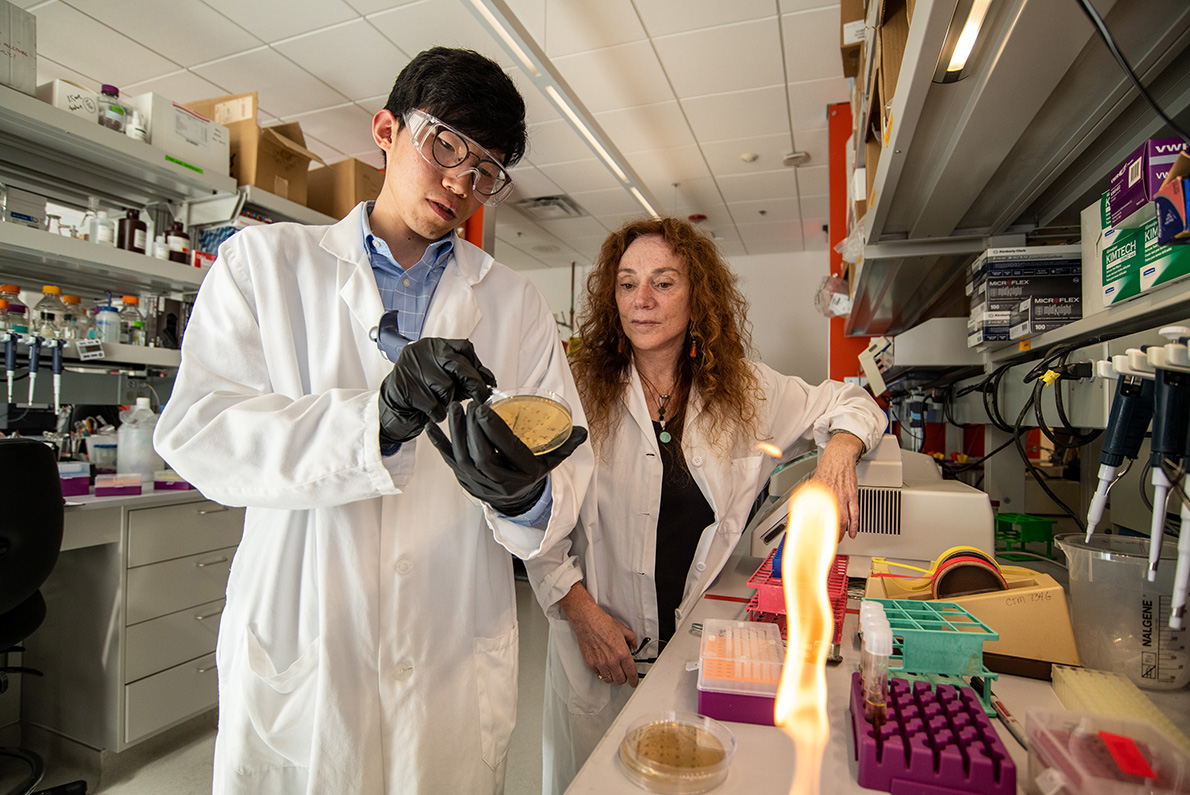
New treatments for Huntington’s disease could be on the horizon soon, following research led by scientists at Lawrence Berkeley National Laboratory (Berkeley Lab)
Huntington’s disease (HD) is a fatal, inherited neurodegenerative condition. People with Huntington’s have a mutated copy of a protein-coding gene that contains many extra nucleotides in a repeating sequence. The exact functions of this protein, called huntingtin, are unknown; but in individuals with the HD mutation, neurons in certain regions of the brain begin to die in adulthood, leading to cognitive and physical decline and eventual death. Previous research has revealed that over the course of a patient’s life, the mutated gene gains even more of these repeats due to errors that occur during cell division. The more repeats someone has, the earlier the disease onset and more severe the symptoms. Until now, it was unclear how the mutation, the subsequent mutant protein, and ongoing mutational repeat expansion over a patient’s lifetime led to neurodegeneration.
The team’s study,published in Nature Communications, revealed an additional, previously overlooked characteristic of HD appears to be driving the neurodegeneration — a marked increase in breaks in DNA strands across the genome. They then demonstrated that treatment with an antioxidant suppresses these breaks and rescues mice from neuron damage and symptoms of the disease
“Despite years of work worldwide, there’s no cure for Huntington’s, and only limited, experimental treatments. We’re excited to add another piece to the puzzle for this disease, which has proven to be frustratingly complex for a condition caused by a single gene mutation,” said Aris Polyzos, a biochemist research scientist in Berkeley Lab’s Biosciences Area. “We show that symptoms are preceded by DNA damage, and that this can be reversed using an investigational antioxidant compound, which also protects against neurodegeneration. This alleviation occurs even without altering or blocking the gene, or stopping the expansion of the mutation, which are the approaches that past and ongoing investigational treatments have taken.”
Polyzos co-led the work alongside senior lead Cynthia McMurray, a retiree affiliate in the Biosciences Area. McMurray has spent decades studying the genetic and cellular changes underlying HD, first at the Mayo Clinic, then here at Berkeley Lab
“I believe we’re opening the door to a new way to treat Huntington’s patients,” said McMurray. “Clinical agents already exist for humans that are known to change these breaks. We love that these could be easily tested and lead to a therapeutic strategy more quickly. And the simplicity of the approach is beautiful. Past approaches have tried to edit the gene, shorten the repeats, or block the gene’s expression; those are complicated interventions and none of them have translated into efficacy for real patients. The question is, will ours work in humans? The next step is to show that our findings apply to human cells and that we can protect neurons, which would be a precursor leading to clinical trials.”
New insights from cell studies
McMurray and Polyzos, with colleagues from Berkeley Lab and the Harvard T.H. Chan School of Public Health, began studying energy uptake in HD neurons ten years ago, after research by others showed that metabolic changes occur in the brains of HD patients before symptoms begin. Using a mouse model of the disease, the team saw that the support cells for neurons in the striatum, the brain region most severely affected by HD, reduced their uptake of glucose — the standard fuel for the brain — and switched instead to using fatty acids to generate ATP for themselves and their dependent neurons. Mice have the same Huntingtin gene as humans, which when edited to have the hallmark mutation of HD, also leads to a late onset neurodegenerative condition in the animals. When mitochondria inside cells break down fatty molecules for fuel, byproducts called reactive oxygen species (ROS) are generated. ROS are hazardous to cells and tissues because they are highly reactive and attach to most biomolecules. ROS are known to be particularly destructive to DNA, since oxidized DNA interferes with the role of genes and can lead to breakage of the DNA strands. So the team started looking at the integrity of the genomes in these cells.
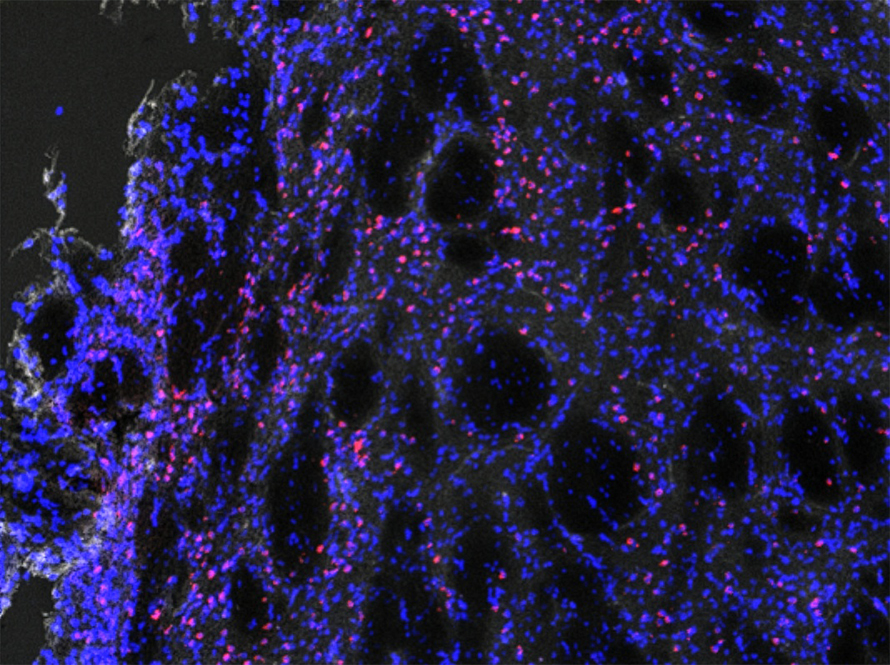
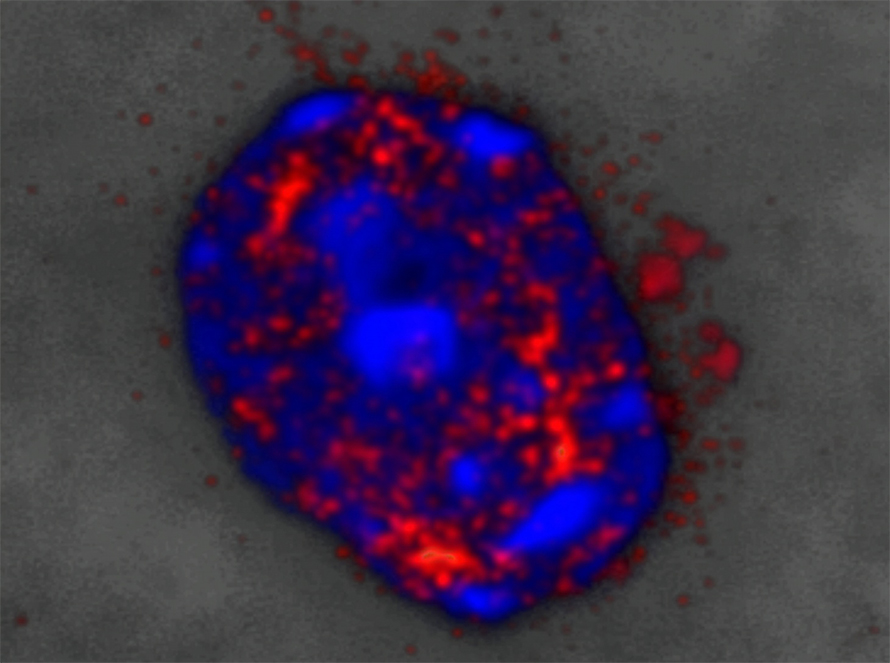
They discovered a surprising accumulation of double-stranded DNA breaks (DSBs). These are the most severe type of breakage, wherein the double-helix of the DNA is broken.The DSBs appear in cells throughout the body with age, but in HD they accumulate significantly in neurons of the striatum. The continual damage causes cell dysfunction and death, giving rise to disease symptoms and death of the individual before other areas are deeply affected
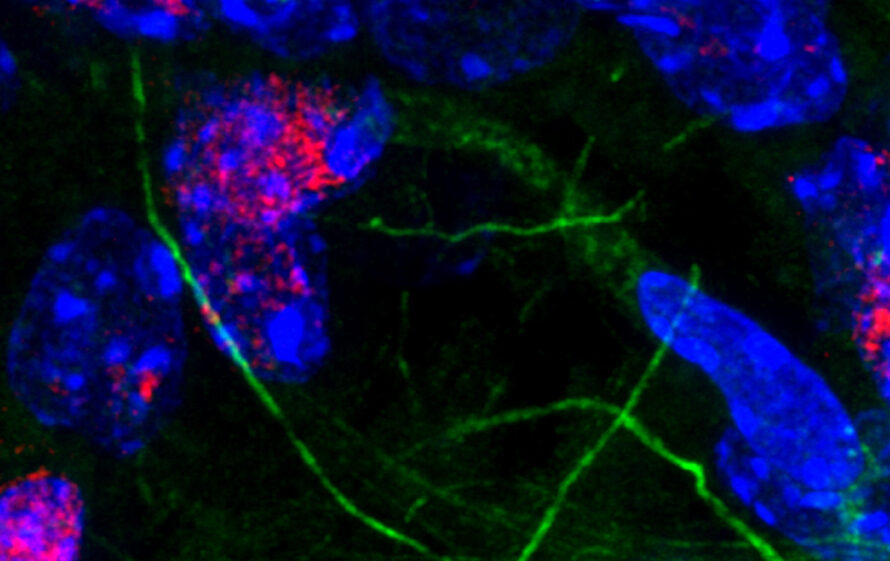
Organisms across the tree of life have evolved cellular processes to mediate damage to DNA caused by ROS, UV exposure, and toxins. The discovery of excessive DSBs meant something interferes with these safeguards in people with HD. The team later found that the normal huntingtin protein binds to DNA repair enzymes that fix these breaks. The protein’s role in healthy DNA repair remains unknown, but when the mutant huntingtin interacts with these enzymes, their activity is suppressed. The team believes this aspect of the disease was not discovered by earlier investigations because suppression is much harder to detect in genome studies than complete inhibition.
They also discovered that the suppression in DSB repair is separate from the central CAG expansion in somatic cells (all the cells in the body except reproductive cells like eggs and sperm) that occur with age. This discovery was key, as it illustrated the disease unfolds on two parallel paths — and scientists working on drug R&D had only been targeting the mutation pathway
“We clearly saw the repeats could expand unchecked during life, but it did not necessarily give rise to neuronal death,” said McMurray. In theNature Communications paper, she and her colleagues engineered two lineages of mice with the HD gene; in one, the expansion proceeded as normal during the mouse’s lifespan, in the other, the expansion was artificially blocked. Both groups of mice developed DSBs in their striatum, experienced symptoms, and died of the disease. “We connected the dots to show this is a two-stage process. The mutation is the driver of the disease because it generates a faulty protein, which is suppressing the ability to repair DSBs. But the huntingtin protein itself doesn’t kill cells.”
Armed with this key breakthrough, the team began tests with a synthetic antioxidant compound designed to mitigate ROS from mitochondria
The purpose of antioxidants is to safely neutralize ROS to prevent cellular damage, but very few natural or synthetic antioxidants can cross the blood-brain barrier to reach neuron support cells. Peter Wipf, a distinguished professor of chemistry, pharmaceutical sciences, and bioengineering at the University of Pittsburgh, recently developed a compound, called XJB-5-131, that is able to enter the brain and concentrate at mitochondria. “We realized that this compound might be what we’re looking for, a tool to delineate the role of DSBs in Huntington’s disease progression,” said McMurray.
She and Polyzos gave XJB-5-131, administered as a daily infusion, to mice with HD, and were shocked by the efficacy
The mice showed a reduction of double-stranded breaks, a lack of motor function deficits, and reduced inflammation in the brain
“It basically attenuated the disease,” said McMurray
Next steps
The promising results of this study have already garnered enthusiasm from other HD researchers. Scientists around the world are now curious to see what happens when antioxidants are administered to real patients. The first step is to establish that the same disease mechanism that was curable in the mouse also occurs in humans. Polyzos is leading a study using induced pluripotent stem cells taken from HD patients, which will be coaxed to differentiate into neurons. The team can use these to confirm the disease-induced DNA breakage results in neuronal death in a human context, and further investigate how the disease suppresses DNA repair.
Polyzos and McMurray are optimistic that the results will translate, as the cellular processes involved are known to be identical across the species
Despite the breakthrough proof-of-concept, it’s unclear whether antioxidant therapy alone will be sufficient for a long-term treatment of the disease in humans, as it doesn’t deal with the mutated protein itself. Polyzos speculates that in the future, a cure that allows genetic carriers to have a normal life expectancy without symptoms might involve a compound like XJB-5-131, to prevent double-stranded breaks, alongside a gene-modifying therapy to fix the mutation at the root of the disease.
This research project is supported by the National Institutes of Health
Lawrence Berkeley National Laboratory (Berkeley Lab) is committed to groundbreaking research focused on discovery science and solutions for abundant and reliable energy supplies. The lab’s expertise spans materials, chemistry, physics, biology, earth and environmental science, mathematics, and computing. Researchers from around the world rely on the lab’s world-class scientific facilities for their own pioneering research. Founded in 1931 on the belief that the biggest problems are best addressed by teams, Berkeley Lab and its scientists have been recognized with 17 Nobel Prizes. Berkeley Lab is a multiprogram national laboratory managed by the University of California for the U.S. Department of Energy’s Office of Science.
DOE’s Office of Science is the single largest supporter of basic research in the physical sciences in the United States, and is working to address some of the most pressing challenges of our time. For more information, please visit energy.gov/science
- Article
- Human Health
Unraveling the Mysteries of DNA Damage in the Brain
Cell ‘Fingerprinting’ Could Yield Long-Awaited Alzheimer’s Disease Diagnostic
- Q&A
- Human Health
