



This story was produced <a href="https://healthylife7.com/jet-lag-could-be-prevented-through-cell-therapy-research-suggests/” title=”Jet lag could be prevented through cell therapy, research suggests”>through the USC Center for Health Journalism’s 2026 National Fellowship
Alaska health officials on Friday awarded another $30 million from the Rural Health Transformation Program, including $12 million to state agencies
It’s a portion of the $272 million distributed to Alaska by the federal government in the first year of the newly created program, which is intended to improve healthcare in the most remote parts of the country, and partially make up for cuts to Medicaid spending projected in the coming years
Roughly $237 million remains to be distributed to hundreds of awaiting applicants in Alaska, including hospitals, clinics, local governments and Alaska Native organizations. Additional award announcements are expected in the coming weeks as the Alaska Department of Health rushes to distribute the funds in accordance with complex federal and state requirements
The trickle of funding could pose a challenge for eventual recipients, who must spend down the funds by October 2027, or else risk forfeiting the money
A list of hundreds of award finalists released by the state in June did not include any requests from state agencies, but the award recipients listed on Friday indicated that millions would go to state agencies, including the Department of Corrections and the Office of Children’s Services
State Department of Health spokesperson Mirna Estrada said that state agencies submitted their proposals “internally” rather than competing directly with non-state applicants. Additional awards to state agencies are expected, she said
The awards include $1.1 million to the Alaska education department to implement the Presidential Physical Fitness Test. The test was eliminated under former President Barack Obama in 2012 and reinstated by President Donald Trump last year
The funding will be used to “support training for teachers and coaches, and will supply schools and districts with the necessary equipment to adequately implement the program in schools across Alaska,” Department of Education spokesperson Bryan Zadalis wrote in an email, calling the funding ”a win-win for our students, schools, and the Alaskan community.”
Additionally, Alaska health officials awarded $4 million for the Department of Corrections to offer telemedicine and other services to inmates; $5 million to the Office of Children’s Services for a new information technology system; and $1 million to the University of Alaska Fairbanks for a new healthcare workforce training program
[Previously:Alaska officials award less than 2% of rural healthcare funding, postponing decision on remainder]
The Rural Health Transformation Program, which was created through a GOP-backed bill last year, has faced criticism for its strict federal requirements, which could funnel spending toward Outside technology firms, rather than resolving what Alaska health officials have identified as basic barriers to care access in the state, such as a limited number of providers and prohibitive costs that cause many Alaskans to delay basic and preventive care
The Alaska Department of Health is funneling its funding to groups in a piecemeal approach, with an average award size so far coming in at less than $700,000. The approach means more providers can get a piece of Alaska’s share, but it has also launched a mad dash for providers to submit applications, and for state officials to review whether they adhere to the federal and state requirements
“Alaska is doing something different, and I think that is the right fit for our state, but it does create additional administrative complexities,” Deputy Health Commissioner Emily Ricci said during an advisory council meeting Monday
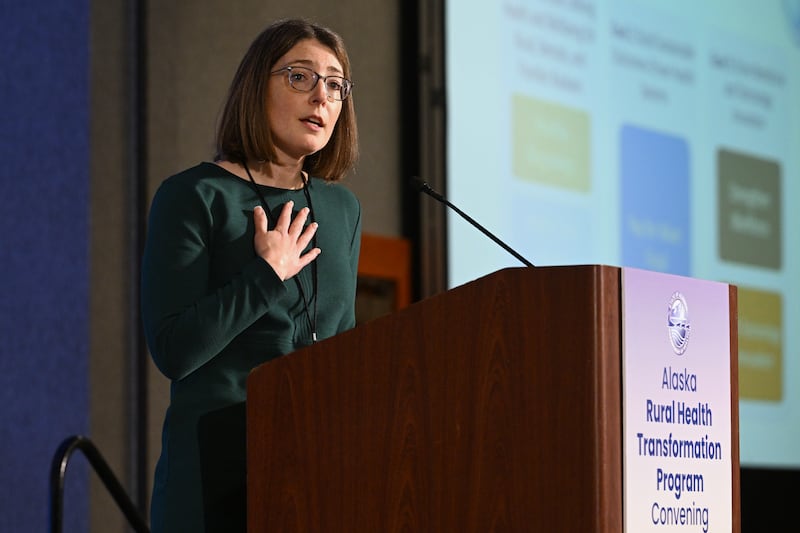
Ricci said Alaska’s health providers “tend to operate relatively independently compared to other states.”
“That means we don’t have some of the inherent systems to create more of that coordination and collaboration that I think can really benefit patient care and financial efficiency and sustainability,” Ricci said
Health officials said during the meeting that the advice they are getting from the Centers for Medicare and Medicaid Services is changing by the day, and the federal rules prohibit many of the types of expenditures that rural providers may seek, like for internet connectivity or new building construction
Nancy Merriman, chief executive of the Alaska Primary Care Association, said that applicants have found the process “substantially more complex and time-intensive than many anticipated.”
Monique Martin, vice president of the Alaska Native Tribal Health Consortium, said that the state’s application requirements have proven burdensome for providers in the most rural parts of the state
“ANTHC is a large organization and we’re struggling with how we keep up with this. So imagine if you’re serving a really rural population,” Martin said
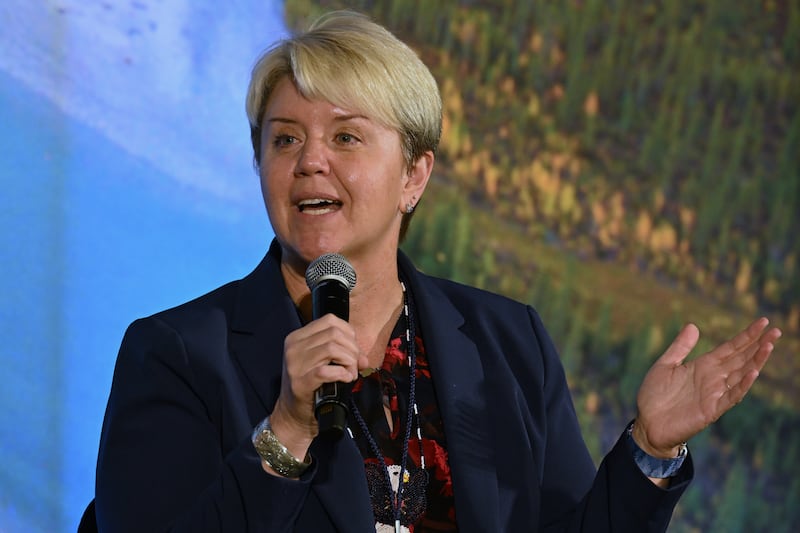
Martin said the awards thus far have befuddled some applicants in remote villages. For example, applicants in communities that lack running water and sanitation asked for funding to build or improve those basic services, but found that none of those proposals advanced
“A lot of people in rural and frontier communities really felt like, ‘Here’s our chance — we’re off the road system, we’re serving people,’” Martin said, adding that they were left confused by the funding decisions so far
Alaska health officials attributed their decisions to federal requirements and an evolving application process
The latest round of funding includes $5 million to the Norton South Health Corp. for high-speed routers; $1.1 million for Kotzebue-based Maniilaq to purchase new information technology systems; $1 million for Providence to establish a maternal telehealth program in Seward; $1 million for Mat-Su Health Services for a telehealth platform; $430,000 for Maniilaq to begin using artificial intelligence to process behavioral health paperwork; and $250,000 for the Tanana Chiefs Conference to develop drones that can deliver medications.
Leader of several organizations, all of whom had themselves applied for funding through the rural health program, praised the state Monday for its work so far processing funding applications but raised concerns about the program’s long-term sustainability — particularly as Alaska’s Department of Health prepares to implement new Medicaid work requirements that could cause thousands of Alaskans to lose access to care
“Even when there’s a smooth process, getting $270 million out the door is not going to be easy,” said Martin
