


POC Echocardiograms for Pregnant Patients with Hypertension
Search
AdvertisementAdvertisement
August 18, 2026/Ob/Gyn & Women’s Health
POC Echocardiograms for Pregnant Patients with Chronic Hypertension
Researchers compare two imagine modes in detecting left ventricular remodeling
Image content: This image is available to view online
View image online(https://assets.clevelandclinic.org/transform/a361d61b-b60d-4546-88e9-0574cb0d5755/echocardiogram-2246064324)
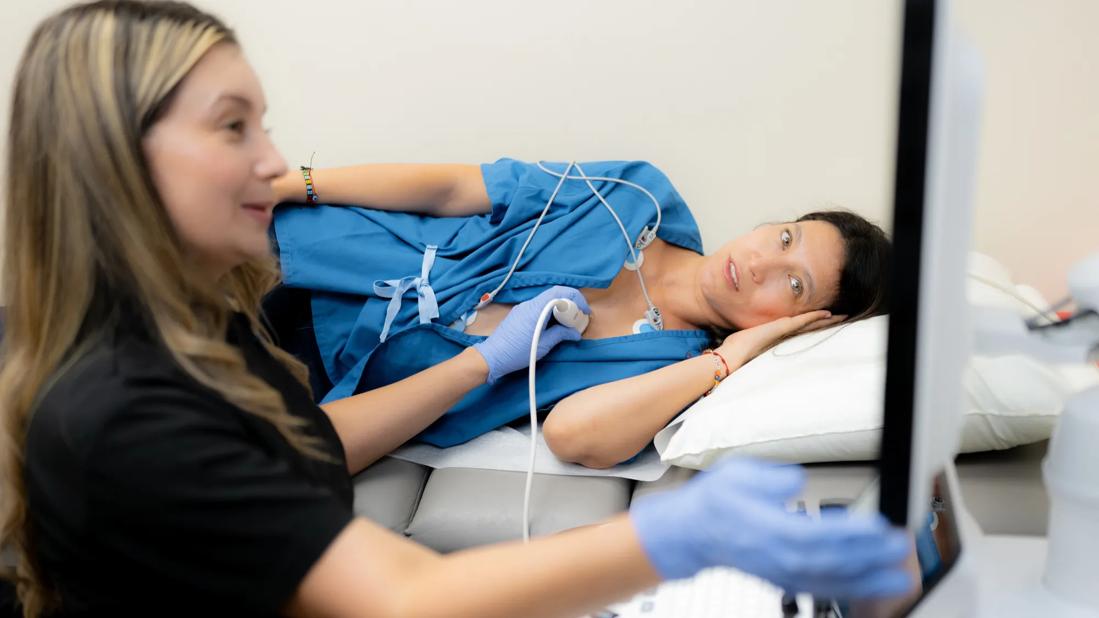
Technician doing echocardiagram on woman
The U.S. is one of only seven countries to report a significant increase in the proportion of pregnancies that result in death of the mother between 2000 and 2020, according to a report by the World Health Organization. The U.S. maternal mortality rate was 18.6 deaths per 100,000 live births in 2023, greater than in most other high-income countries
Cleveland Clinic is a non-profit academic medical center. Advertising on our site helps support our mission. We do not endorse non-Cleveland Clinic products or services.Policy
“We have an unacceptably high level of maternal morbidity and mortality in the United States,” says Jameson Mitchell, MD, a resident physician in Cleveland Clinic’s Obstetrics and Gynecology program. “And when you break it down, approximately 30% of those deaths are attributed to cardiovascular causes, including hypertensive disorders of pregnancy.”
Motivated to help patients and decrease these statistics, Dr. Mitchell designed a prospective cohort study to evaluate the diagnostic accuracy of point-of-care (POC) echocardiography compared to transthoracic echocardiography (TTE) in pregnant patients with stage 2 chronic hypertension (cHTN)
Obstetricians use POC ultrasound routinely to evaluate fetal well-being, estimate gestational age, check amniotic fluid levels, and perform other assessments
“We are very comfortable with an ultrasound probe in our hands,” says Dr. Mitchell. “Given that a large portion of the patients we see every day are dealing with cardiac disease in pregnancy, I wondered how we could better risk stratify these patients using point-of-care echocardiography as part of their prenatal care.”
Preventing adverse outcomes
Dr. Mitchell conducted the study, “POC Echocardiography for the Detection of Left Ventricular Remodeling in Pregnant Patients with cHTN,” with her research mentor, Justin Lappen, MD, Section Head of Maternal Fetal Medicine at Cleveland Clinic. They enrolled 83 pregnant patients ages 18 and 45 with non-anomalous singleton gestations from 12w0d to 20w0d and stage 2 cHTN (treated or untreated)
Advertisement
Previous work has shown that approximately half of pregnant patients with treated stage II cHTN have evidence of abnormal cardiac remodeling on echocardiograms. Pathologic left ventricular remodeling is associated with adverse perinatal outcomes, including preterm birth, superimposed preeclampsia, and NICU admission
“ICU and emergency medicine literature shows that POC echo is a feasible alternative when looking at certain qualitative outcomes,” says Dr. Mitchell. “Is there a way to bring that technology into obstetric outpatient care and better screen and identify patients earlier in pregnancy and ultimately reduce the rates of these adverse outcomes?”
Methods and analysis
After training with cardiology sonographers, Dr. Mitchell performed POC echocardiograms on participants at the time of enrollment during routine obstetric visits. She obtained standard measurements taken at end-diastole on a parasternal long axis view of the left ventricle. She measured dimensions of the cavity, septum and posterior wall to determine the presence of pathologic remodeling
Next, participants underwent formal TTE – the standard of care for risk stratification in patients with longstanding stage II cHTN. A cardiologist over-read all of the TTE studies and half of the POC echocardiograms to reduce interrater variability. The study utilized a Receiver Operating Characteristic curve analysis to compare test characteristics of the POC echocardiograms compared to formal TTE
Final analysis included 61 patients. Many of the enrolled patients who were not part of the final analysis were unable to undergo a transthoracic echocardiogram, pointing to the barriers of formal TTE – scheduling difficulties, delays, insurance coverage issues and limited access
Advertisement
Key findings
Results indicated that the prevalence of pathologic remodeling in patients with preserved ejection fraction aligns with prior studies. The analysis revealed that POC echocardiography as utilized in their study did reliably diagnose pathologic left ventricular remodeling in pregnant patients with cHTN when compared to TTE
Dr. Mitchell says that limited diagnostic accuracy was likely due, in part, to challenges in detecting nuanced structural heart changes using portable ultrasound. In addition, the median time elapsed between the POC and TTE studies was approximately four weeks
“We were measuring the same heart at two different time points using two different modalities,” she says. “A future study would ideally perform the POC at the same time as the formal echo to remove the variable of time and physiologic remodeling that happens during a pregnancy.”
Improving health outcomes
Dr. Mitchell remains committed to assessing and using tools that improve pregnancy outcomes for high-risk patients
“Pregnancy represents an opportune window to identify patients with underlying medical conditions and stratify risks,” she says. “We need to think about the lifespan of the pregnant patient and how we can use our screening tools not only to improve their pregnancy outcomes, but also their overall health outcomes.”
Advertisement
Advertisement
Related Articles

July 28, 2026/Ob/Gyn & Women’s Health/Obstetrics
Leveraging Group Learning to Teach Culinary Medicine During and After Pregnancy
https://consultqd.clevelandclinic.org/leveraging-group-learning-to-teach-culinary-medicine-during-and-after-pregnancy
Nutrition and cooking program supports maternal-infant health
June 26, 2026/Ob/Gyn & Women’s Health/News & Insight
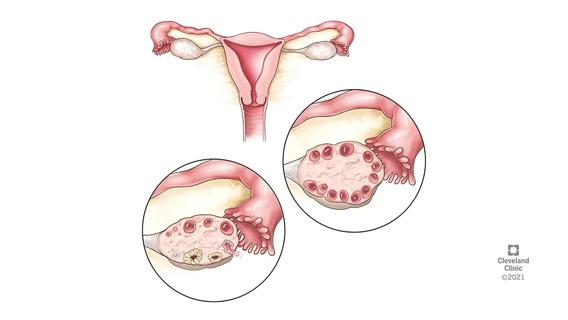
What the Renaming of PCOS Means in Practice
https://consultqd.clevelandclinic.org/what-the-renaming-of-pcos-means-in-practice
New moniker brings clarity to this complex condition

June 25, 2026/Ob/Gyn & Women’s Health/Urologic Gynecology
New Subcutaneous Neuromodulation for Urge Incontinence
https://consultqd.clevelandclinic.org/new-subcutaneous-neuromodulation-for-urge-incontinence
A device implanted at the ankle joins the lineup of third-line treatments

June 23, 2026/Ob/Gyn & Women’s Health/Gynecologic Oncology
New Guidance Supports Dual Assessment Methods for Postmenopausal Bleeding
https://consultqd.clevelandclinic.org/new-guidance-supports-dual-assessment-methods-for-postmenopausal-bleeding
Aiming for earlier detection of endometrial cancer in an era of increasing incidence

June 18, 2026/Ob/Gyn & Women’s Health/Minimally Invasive Gynecologic Surgery
Clarifying Factors That Inform MIGS Versus Open Procedure
https://consultqd.clevelandclinic.org/clarifying-factors-that-inform-migs-versus-open-procedure
Minimally invasive surgery is the preferred approach in many cases, but not all

June 8, 2026/Ob/Gyn & Women’s Health/Patient Care & Treatment
Collaborative Would Standardize Quality Endometriosis Care
https://consultqd.clevelandclinic.org/collaborative-would-standardize-quality-endometriosis-care
Patients deserve timely diagnosis and a multidisciplinary approach
April 30, 2026/Ob/Gyn & Women’s Health/Maternal-Fetal Medicine
Preconception GLP-1 Use Not Linked to Higher Pregnancy Risk
https://consultqd.clevelandclinic.org/preconception-glp-1-use-not-linked-to-higher-pregnancy-risk
Data point to potential for targeted preconception planning

April 20, 2026/Ob/Gyn & Women’s Health/Obstetrics
Psychoactive Drug Patterns Before, During and Just After Pregnancy
https://consultqd.clevelandclinic.org/psychoactive-drug-patterns-before-during-and-just-after-pregnancy
Reproductive psychiatry helps patients balance medication-related risks
Ad
Rendered: Tue Aug 18 2026 06:55:08 GMT+0000 (Coordinated Universal Time)
