


Key points
- The alpha male ideal offers a narrow and misleading model of what it means to be a man and a leader.
- Healthy masculinities are built on strength, empathy, cooperation and social connection.
- Manhood need not be proved through dominance; it can be expressed through trust, courage and care.
- Men can use their strength to protect and empower others without needing to dominate them.
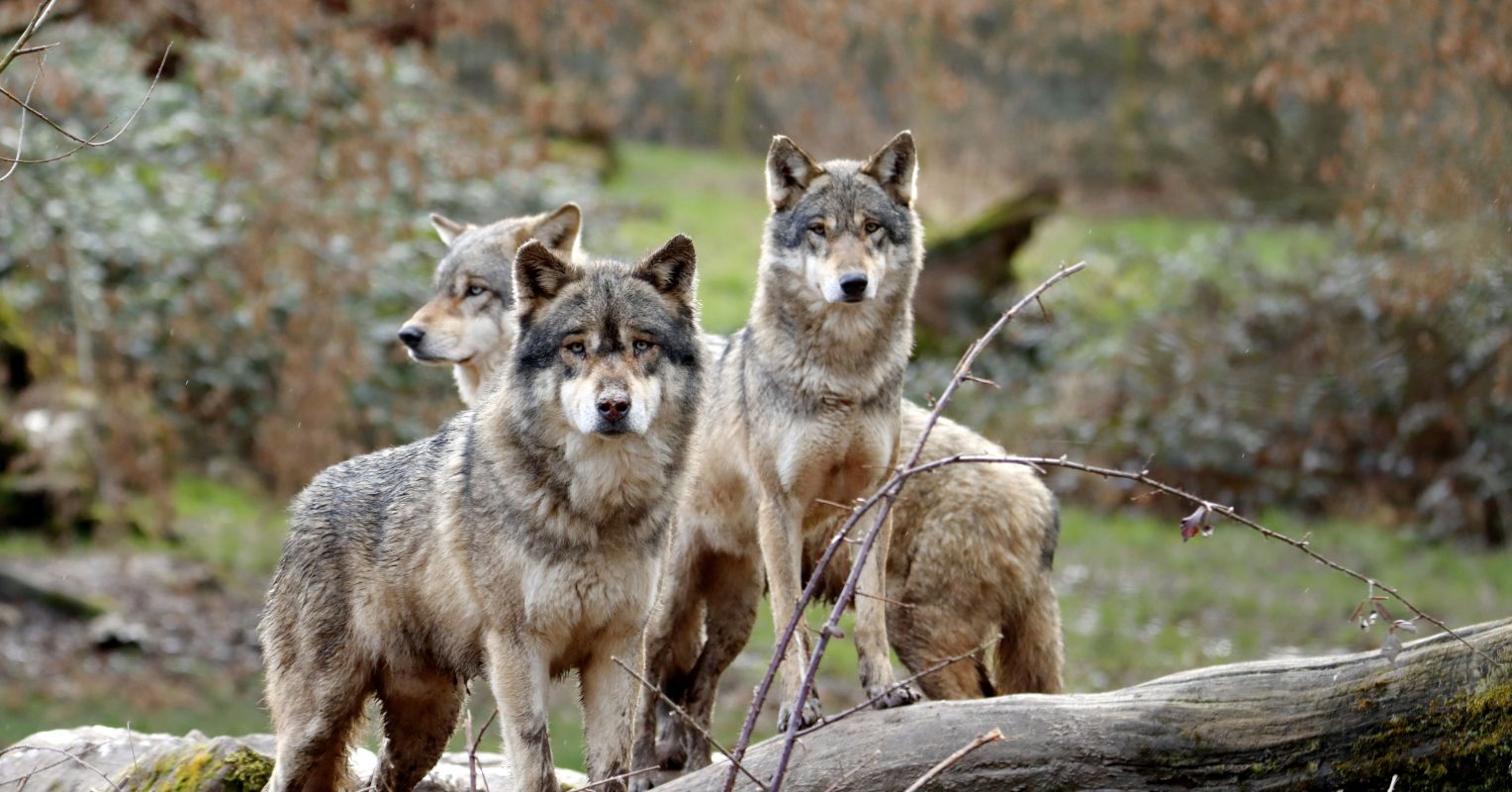
Some ideas cement themselves into popular culture—the American dream, the tortured genius, the midlife crisis… And then there’s the concept of the “alpha male”. Picture a wolf pack: one big, aggressive male at the top fighting off challengers and keeping everyone else in line. It makes for a neat story about power, hierarchy, and masculinity. There’s just one problem. It’s a poor description of how a wolf pack functions
The term “alpha male” was popularised by the biologist David Mech’s (1970) book The Wolf: The Ecology and Behaviour of an Endangered Species. The idea that a dominant and aggressive male leads the wolf pack is compelling. It’s also based on a misunderstanding
The research underpinning the alpha male theory was based largely on wolves held in captivity. In the wild, wolf packs are typically organised into family units led by the parents of pups. As the biologist Marc Bekoff (2024) stresses, leading wolf packs and other groups of canine species isn’t about being highly domineering, aggressive, or violent. To his credit, Mech (1999) acknowledged the limitations of the original model and warned others not to propagate the mistake
But the genie was out of the bottle
Between the start of the 1970s and the 2020s, the use of the term “alpha male” in written publications increased by more than 1,000 percent. In the 1980s, primatologist Frans de Waal used the term liberally in his book Chimpanzee Politics(de Waal, 1982). De Waal would later recall with regret that the success of his book catapulted the “alpha male” idea far beyond the field of biology
It was co-opted initially by Reagan-era Republican politicians in the US before catching the attention of thought leaders in the world of business. The intervening decades have seen a veritable library of books published offering to help the reader alpha-up. Take, for example, the Alpha Male Bible (Wayne, 2021) and its revised version, the Supreme Alpha Male Bible(Wayne, 2022). Yes, without a hint of irony, there’s a hierarchy when it comes to versions of books that promise to make you an alpha male. But the tools that men are being sold to resolve their problems are a destructive misdirection. It’s like offering a baseball bat to peel an orange: it feels powerful, but it creates a mess.
The problem with the “alpha male”
In a 2023 interview, de Waal debunked the idea that leaders of groups of primates are necessarily the strongest, meanest, and most intimidating. Instead, he noted that effective leaders protect the underdog, break up fights, and have a high level of empathy. He also stressed the importance of supporters and alliances: you can’t do it on your own. De Waal saw important parallels with human societies. Rather than relying on dominance, our leaders succeed through empathy, helping others, and forging alliances. This is a version of manhood that I describe as homo cooperans—being a co-creator, a contributor, and a champion of others.
True leadership, whether in the boardroom, locker room, or living room, isn’t about forcing compliance; it’s about fostering cooperation. It’s about running through walls with people rather than pressing their backs against them. And yet the alpha myth continues to exert a strong influence on our understanding of manhood
In a 2024 survey, 45% of men and 31% of women agreed: “You must be an ‘alpha male’ these days to get a partner” (Britto et al., 2024). The New Yorker recently described “alpha-ness” as the “official demeanour of American power” (Bethea, 2026). The article details the emergence of an industry promising to amplify men’s alpha credentials through demanding—and potentially degrading—retreats and residential courses. It’s emblematic of the confused messaging modern men face. Which brings us to an important question: what kind of man are we actually encouraging men to become?
Wolves or sheepdogs?
The 2025 post-apocalyptic horror movie 28 Years Later, directed by Danny Boyle, picked up where its predecessors 28 Days Later and 28 Weeks Later left off. Large swathes of the population of the UK continue to be infected with the Rage Virus. As its name suggests, the virus leads to the infected engaging in instant, extreme and uncontrollable violence against anyone who hasn’t yet been infected. But the new movie introduced a novel twist: enter the “alpha.”
It transpires that the seemingly frenzied activity of the infected can be coordinated by hulkingly big males. The “alphas,” as they are dubbed, represent the most dangerous and uncontrollable versions of the infected. One of them, Samson, is played by Chi Lewis-Parry, a 6’9″ mixed martial arts fighter. Whereas a well-placed arrow (more sophisticated weapons are in short supply!) can stop a standard infected, one of the movie’s leading characters notes that it would take half a dozen to stop an alpha. On learning that these leaders of the infected are called “alphas,” another character remarks: “You make them sound like stockbrokers… like Wall Street guys.” It’s clear that the alpha myth continues to exert a considerable influence on popular culture, including our imagining of a dystopian future. But there is another metaphor that offers men a very different choice.
Leadership Essential Reads

Ted Lasso Is Back: Why We Still Need to “Believe”

5 Reasons Exceptional Leaders Invest in Mental Health
Some ten years before the release of 28 Years Later, another movie entitled American Sniper was released. Directed by Clint Eastwood, it tells the story of Navy SEAL Chris Kyle, a decorated soldier who served several tours of duty during the Iraq War. In the movie, there is a scene that flashes back to Kyle’s upbringing and his father delivering what has become known as the “sheepdog speech” to him and his younger brother. The dialogue is intercut with images of Chris protecting his brother during a playground fight. Kyle’s father explains that there are three kinds of people: sheep, wolves, and sheepdogs. The sheep represent those who are more passive and unprepared for danger. Wolves exploit and harm others. Sheepdogs, however, are willing to use their strength and presence to protect the vulnerable.
The metaphor is imperfect, but it highlights an important point for boys and men: in everyday life, we face choices about how we act. We can choose to dominate others or to protect ourselves at the expense of others. We can also choose to use our strengths to support other people and contribute to something bigger than ourselves. The sheepdog doesn’t need to become a wolf to confront one
Strength without dominance
Rejecting the alpha myth does not mean rejecting strength, ambition, courage, or competitiveness. Men don’t need to become passive, agreeable, or endlessly accommodating. Strength can be a virtue. The question is what we do with it. A man can use physical strength to protect someone being bullied. He can use social influence to challenge harassment. He can use professional authority to create opportunities for others. He can use emotional strength to remain calm when everyone else is losing their heads. None of these require him to dominate the people around him. In fact, they require something considerably harder: self-control.
The alpha male promises men status through dominance. The sheepdog offers something more demanding: strength through responsibility. Perhaps this is the model of manhood we should be encouraging. Not men who need to be the biggest, loudest, or most intimidating person in the room. But men who are strong enough to protect without dominating, confident enough to collaborate, and secure enough to help others succeed. True leadership isn’t about standing above people. It is about standing with them. The goal isn’t to become the biggest wolf in the pack. It is to become the kind of man who can help others around them to feel seen, safe, and supported.
Bekoff, M. (5 July 2024). What Does Being Alpha Really Mean? Dogs and Wolves Tell Us. Psychology Today https://www.psychologytoday.com/gb/blog/animal-emotions/202407/what-does-being-alpha-really-mean-dogs-and-wolves-tell-us/amp
Bethea, C. (30 March 2026). The Camps Promising to Turn You—or Your Son—Into an Alpha Male. At the Men of War Crucible, you bear-crawl through rivers. At Warrior Week, you dig your own grave. At the Squire Program, your teen-ager can take part, too. The New Yorker. https://www.newyorker.com/magazine/2026/04/06/the-camps-promising-to-turn-you-or-your-son-into-an-alpha-male
Brito, P., Hayes, C., Lehrer, R., & Mahler, J., Salinas Groppo, J. (2024). The manosphere, rewired: Understanding masculinities online & pathways for healthy connection. Equimundo
de Waal, F. B. M. (1982). Chimpanzee politics: Power and sex among apes. Baltimore: The Johns Hopkins University Press
Mech, L. D. (1970). The Wolf: The Ecology and Behavior of an Endangered Species. Natural History Press
Mech, L. D. (1999). Alpha status, dominance, and division of labor in wolf packs. Canadian Journal of Zoology, 77(8), 1196-1203
Wayne, S. (2021). Alpha Male Bible: Charisma, Psychology of Attraction, Charm. Art of Confidence, Self-Hypnosis, Meditation. Art of Body Language, Eye Contact, Small Talk. Habits & Self-Discipline of a Real Alpha Man (Vol. 1). Sean Wayne;
Wayne, S. (2022). Supreme Alpha Male Bible: The 1ne: Empath & psychic abilities power, success mindset, psychology, confidence, win friends & influence people, hypnosis, body language, atomic habits, dating: The secret (New version). Sean Wayne
