


ByAnna Skinner
Newsweek is a Trust Project member
See more of our trusted coverage when you search.to see more of our trusted coverage when you search.
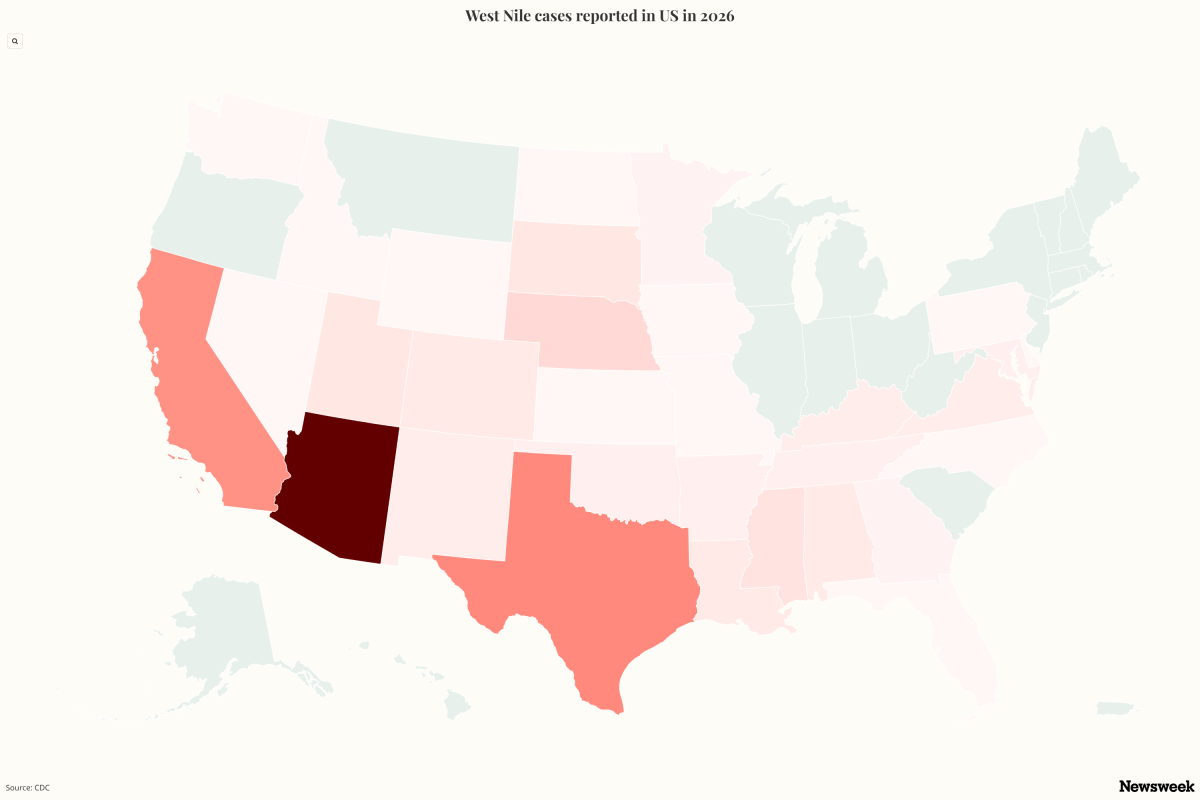
Cases of West Nile virus have been reported in 32 statesthis year as the mosquito-borne disease continues to infect people during the peak summer months, according to recent data from the U.S. Centers for Disease Control and Prevention (CDC)
As of August 18, the CDC’s ArboNET surveillance system had recorded 222 human West Nile virus disease cases nationwide, including 156 neuroinvasive cases, the most severe form of the illness that can affect the brain and nervous system. The CDC’s county-level map also shows widespread non-human activity, including infections detected in mosquitoes, birds and other animals, indicating that the virus is circulating well beyond areas where human cases have already been reported
The latest data comes as <a href="https://healthylife7.com/new-measles-case-confirmed-in-unvaccinated-metro-atlanta-resident-georgia-health-officials-say/" title="New measles case confirmed in unvaccinated metro Atlanta resident, Georgia health officials say”>health officials warn that West Nile virus activity typically peaks in late summer and early fall. While most infected people never develop symptoms, severe infections can lead to hospitalization and death. At least eight deaths have been reported so far this season. Five people died in Arizona and three died in California, The Independent reported
Newsweekreached out to the CDC by email for comment
…
Where West Nile Virus Is Being Reported
CDC data revealed Arizona as the state with the most reported cases of West Nile virus so far this year at 76, followed by Texas with 31 and California with 29. Of the 18 states that have no reported cases so far this year, many are concentrated in the Midwest, Mid-Atlantic, and Northeast. Alaska and Hawaii also have no reported cases
How to Protect Yourself From West Nile Virus
Because there is no vaccine available for the general public and no specific antiviral treatment for West Nile virus, prevention remains the primary defense against infection. The CDC recommends avoiding mosquito bites by using Environmental Protection Agency (EPA) registered insect repellents, wearing long-sleeved shirts and pants when mosquitoes are most active, and ensuring window and door screens are in good condition
Health officials also encourage people to eliminate standing water around homes, where mosquitoes can breed. Flower pots, buckets, bird baths, pet dishes and clogged gutters can all provide suitable habitat for mosquito larvae. Emptying or refreshing standing water regularly can help reduce mosquito populations
What Are the Symptoms?
Most West Nile virus infections never cause symptoms. The CDC estimates that roughly 80 percent of infected people remain without symptoms. About 20 percent develop a mild illness commonly known as West Nile fever. Symptoms can include fever,headache, body aches, joint pain, vomiting, diarrhea and rash
In a small percentage of cases, the virus can cause severe disease affecting the central nervous system. Symptoms may include high fever, severe headache, neck stiffness, confusion, tremors, muscle weakness, vision loss, numbness or paralysis. Less than 1 percent of infected people develop neuroinvasive disease, but those cases often require hospitalization and can have long-lasting health effects. According to the CDC, about 10 percent of people who develop severe neurologic disease die
Who Is Most at Risk?
Anyone who lives in or travels to an area where West Nile virus is circulating can become infected. Cases have been reported in every state in the contiguous United States since the virus was first detected in New York in 1999
However, the risk of severe illness is not evenly distributed across the population. Older adults face the highest risk of developing serious neurologic complications. The CDC notes that people aged 65 and older are significantly more likely to develop neuroinvasive disease than younger adults. Those with weakened immune systems or certain chronic medical conditions are also at elevated risk
Which States and Areas Are More Susceptible?
West Nile virus can occur virtually anywhere mosquitoes and susceptible bird populations are present, as mosquitoes become infected when they feed on infected birds, but some regions consistently report more activity than others
Scientists believe geography, climate and mosquito ecology play major roles in determining where outbreaks occur. West Nile virus is maintained in a transmission cycle between birds and mosquitoes, particularly species in the Culex genus. Warm temperatures can accelerate mosquito reproduction and viral replication, increasing transmission risk during the summer months. Areas with abundant mosquito habitat, favorable weather conditions and large bird populations often see more sustained activity.
The CDC cautions that the absence of reported human cases does not necessarily mean an area is risk-free. Human infections are often underreported, particularly mild cases, and surveillance of mosquitoes and animals varies by jurisdiction
How Is West Nile Virus Treated?
There is currently no specific treatment for West Nile virus infection. Patients with mild illness are generally advised to rest, stay hydrated and manage symptoms with supportive care
People who develop severe disease may require hospitalization for intravenous fluids, respiratory support or other treatments aimed at managing complications. Recovery from neuroinvasive disease can take weeks or months, and some patients experience lasting neurological problems
With mosquito season continuing through much of the country, health officials are urging residents to take precautions now as the virus remains active across dozens of states and county-level surveillance indicates conditions remain favorable for further spread
Request Reprint & Licensing
View Editorial & AI Guidelines
