


Ángela Rico
Oviedo – Aug 19, 2026 – 20:47CEST
Sometimes businesses are born not out of big ideas, but small disappointments. In Pelayo Pérez’s case, that disappointing moment came one morning in New York, in front of a coffee machine, a tray of uninspiring pastries and a carton of juice. It hardly seemed the best way to start the day. When he asked about alternatives, the receptionist at his hotel directed him to a small café tucked away down a nearby alley. There, he tasted homemade granola for the first time. Years later, that breakfast would acquire a name of its own:La Newyorkina.
Pérez came from a hospitality background and had spent years trying his hand at different ventures. He had experimented with cocktail bars, restaurants, juice businesses, craft beer and even a rural hotel in Somiedo Natural Park. “I started many projects. Some worked and others didn’t, but I’ve always been drawn to the world of hospitality, food and nutrition. That’s been my guiding thread,” he says
La Newyorkina was born a long way from New York. In fact, it was born in the heart of the old town of Oviedo, in Spain’s Asturias region. Pérez owns Per Sé, a café that turns into a cocktail bar at night. At the back is a small bakery where cakes and desserts are made. There are ovens, too, and for someone with an entrepreneurial streak, that proved hard to resist
“We had the ovens and I decided to do a small batch,” he says. “We gave away almost all of the first bags. We gave them to customers so they could tell us what they thought. People liked the product, but didn’t know what it was. They had never heard of granola.”
That was 10 years ago. Back then, granola was still virtually unknown in Spain. Pérez began researching the market. He visited supermarkets, studied the shelves, sampled different products and paid close attention to their packaging. “People who had lived abroad, Erasmus [foreign exchange] students or foreigners recognized it,” he says
It was 2016, and healthy eating was only just beginning to enter the mainstream conversation. Although breakfast in Spain still revolved around coffee, biscuits, sugary cereals or toast, consumers were increasingly looking for products with less sugar and more fibre. They wanted healthier options that didn’t feel like a sacrifice. Brunch culture and specialty coffee were also beginning to gain a foothold
“Healthy eating and fitness were just a fad for a few crazy people,” Pérez says. “In other countries, it was very common, but in Spain, no one knew what we were talking about.”
He needed a name. La Newyorkina evoked travel, big-city life and breakfasts spoken in another language. The brand was born in Oviedo, built around a recipe made with oats, Asturian honey and extra virgin olive oil. That blend of aspiration and local roots spoke to the personality of this granola
The next step was designing the packaging, and Pérez made a decision: if he wanted to compete, the product had to look the part. “We spent a lot of money on it, but we came up with really attractive packaging. In those early years, when we were still producing only small batches, people thought it was a much bigger project.” He continues: “Then we developed the website, social media and started selling in small shops. Also in some stores in Madrid and Barcelona that contacted us, but the first years were very slow.”
The turning point came when he set his sights on getting the product into the Spanish supermarket Hipercor. For a small brand that was still difficult to categorize, the retailer seemed more open than most to speciality products. He had no idea how to make it happen, so he started digging until he found the company’s headquarters
“I wanted to present a food product. They kept transferring my calls, but nobody ever picked up. They gave me an email address and nobody replied. When I checked my phone, I realized all the calls had been logged. There were 92 of them. I called that switchboard 92 times!” he recalls with a laugh
Eventually, someone answered. Pérez explained that he was calling from Asturias, and it turned out that the buyer had recently spent a few days there on holiday. That seemed to open a small window of opportunity
“He told me it would be difficult to place us in the cereal aisle because we were such a small brand. But he said I’d called at just the right moment because they were about to launch a food promotion called Sabores del Mundo [Flavors of the World] and we might fit in.”
The granola was a success and became one of the best-selling products in the promotion. Even so, the buyer still did not see a place for the brand on the cereal shelves. Instead, he steered it towards El Corte Inglés Gourmet, the upscale food halls operated by Spain’s El Corte Inglés department stores
“It wasn’t a huge jump in volume, but it gave us visibility. Being there meant that other gourmet stores across Spain started calling us. That was the real before-and-after moment,” he says
Meanwhile, the bakery was becoming too small, and La Newyorkina needed a place of its own. “I rented a warehouse, bought ovens and hired a couple of people. La Newyorkina was still small, but it was no longer an experiment.”
Then, in 2020, just as the business seemed to be gaining momentum, the COVID-19 pandemic brought everything to a sudden halt. Food production was allowed to continue, however. The bakery had the necessary licence; employees could come to work with permits, masks, and staggered shifts; online sales took off; social media gained importance, and people began paying closer attention to what they were eating
For Pérez, the pandemic was a contradiction: “While part of my business was frozen and employees were on furlough, the bakery kept running and La Newyorkina continued to grow.”
After being born in a small bakery and earning a place in gourmet food shops, La Newyorkina set its sights on supermarket shelves. The brand had moved from being an aspirational specialty product to becoming part of everyday grocery shopping, securing listings with the supermarkets Carrefour and Alimerka before reaching agreements with Alcampo and Family Cash in 2022
“I decided to take the next step. I found a bigger facility and hired more staff because we wanted to do something genuinely authentic. We wanted to make everything ourselves from the very beginning,” Pérez says
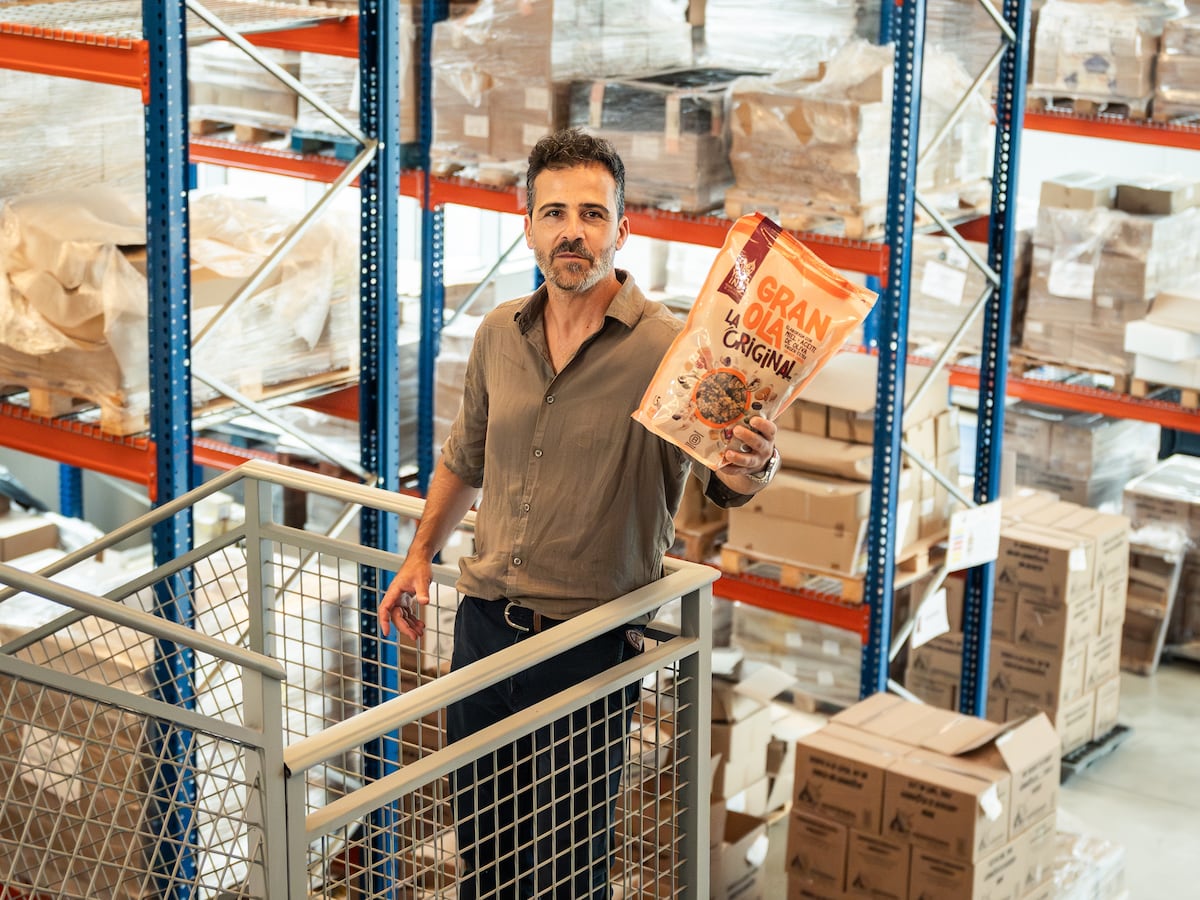
Today, the company employs <a href="https://healthylife7.com/a-focus-on-more-than-fitness-axon-performance-opens-its-doors/" title="A Focus on More than Fitness: Axon Performance opens its doors”>more than 30 people and produces three tonnes of granola a day. It offers 13 varieties, sells in more than 20 countries and has become one of Spain’s most recognizable brands in a category that barely existed in the country a decade ago. La Original, the first recipe, remains its best-seller, but the range has expanded to include newer flavors such as chocolate and pistachio, organic varieties and collaborations with content creators that have helped introduce granola to new audiences.
La Newyorkina is not just the story of a company built from scratch. It is also the story of the transformation of breakfast itself. Of how consumers began reading labels more carefully and looking for foods that were healthier, more filling and less processedwithout sacrificing enjoyment
Asked about his ideal breakfast, Pérez mentions Greek yoghurt, banana, blueberries and granola. Something simple and satisfying, packed with fruit and nuts. Perhaps that best explains the brand: not as a product for special occasions, but as a way of improving the first meal of the day
Years later, Pérez returned to New York and tried to find the café where he had first tasted homemade granola. He never found it. Perhaps it had closed, or perhaps he had remembered the address incorrectly. By then, it no longer mattered. In his case, that chance breakfast had grown into a company with annual revenues of €3.5 million ($4 million). It had also become a word that, a decade later, no longer needed much explanation: granola
