


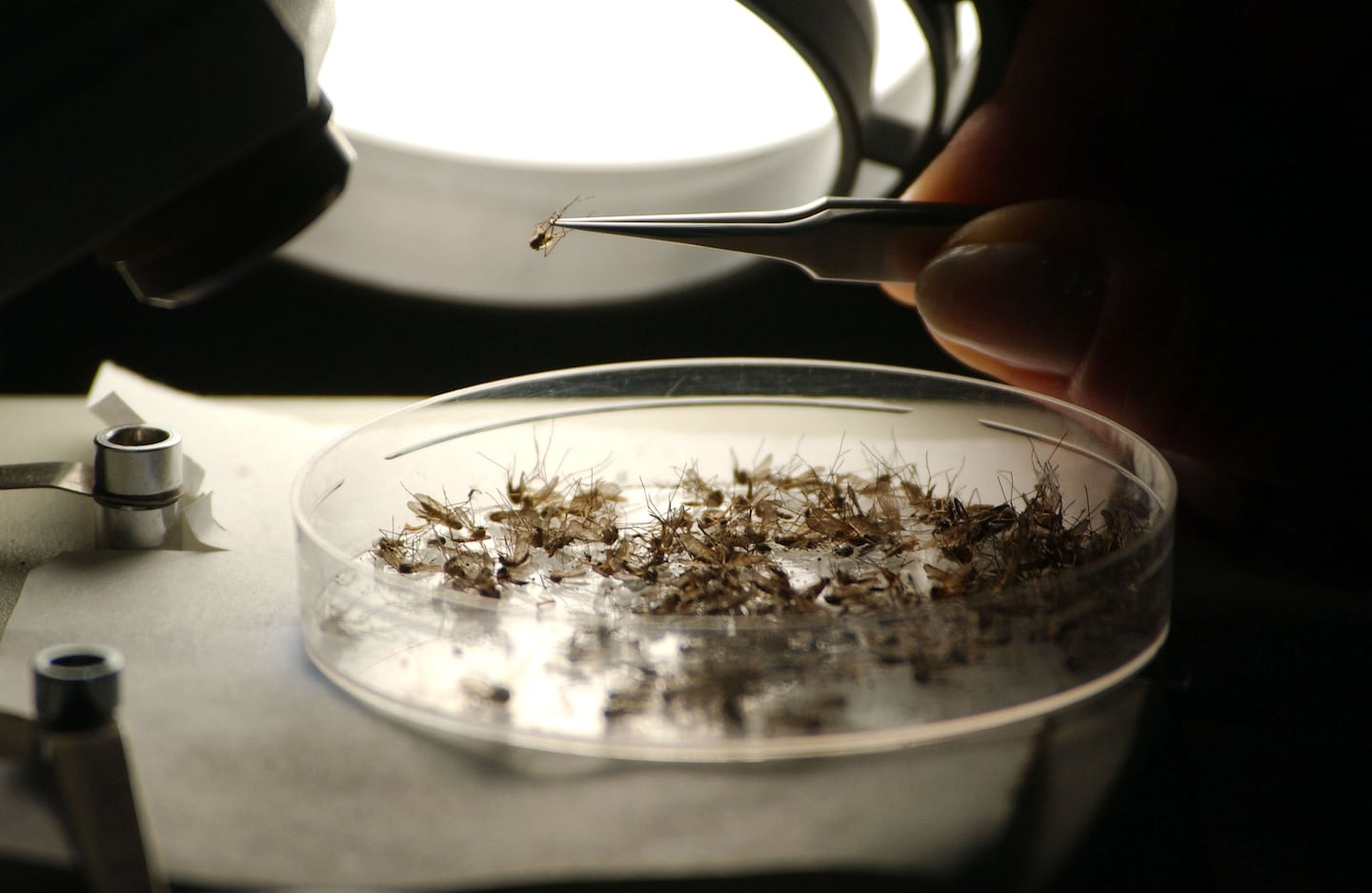
A mosquito sample collected in Kingston has tested positive for Eastern equine encephalitis virus (EEE), the state’s first detection of the virus this summer, public health officials said Wednesday
There are no confirmed human or animal cases, the Department of Public Health said. The risk of EEE is now moderate in the Plymouth County communities of Carver, Halifax, Kingston and Plympton
“While this is late in the season for the first detection of EEE in mosquitoes, when combined with all the evidence of West Nile virus in mosquitoes in Massachusetts, we are asking everyone in Massachusetts to take the necessary precautions to prevent mosquito bites,” Robbie Goldstein, the state’s Public Health Commissioner, said in a statement
The last state outbreak of EEE was in 2024, Goldstein said. There were four human cases, and one death, and no human cases have been reported since
Mosquitos can carry EEE and spread the disease to humans through bites. While EEE is rare, it is potentially fatal, and may cause illnesses like fever, to diseases like encephalitis or meningitis, according to the state Bureau of Infectious Disease and Laboratory Sciences
There is no specific treatment for EEE infection aside from rest and supportive care, and fatality rates are between 30 to 50 percent, according to health officials
The Department of Public Health said the best way to prevent EEE infection is by preventing mosquito bites. Residents are urged to use EPA-approved insect repellent containing DEET or lemon eucalyptus oil when outdoors
Health officials also advised residents to be aware of peak mosquito hours from dusk to dawn, particularly evenings and early mornings, and to wear long sleeves, pants and socks when outdoors
Residents can help limit mosquito breeding by regularly draining gutters, flower pots, kiddie pools, birdbaths, and any other containers that could collect standing water, according to the DPH
“EEE activity in Massachusetts tends to occur in outbreak cycles,” Dr. Catherine Brown, the state’s epidemiologist, said in a statement. “When EEE is found in mosquitoes later in the season like this, there is less opportunity for the risk to increase to very high levels. But anytime EEE virus is in mosquitoes, it can be spread to people.”
Madyline Swearing can be reached at madyline.swearing@globe.com
