


Here at the United Way office, the quiet but productive streak has stayed in place. We’ve had some exciting moments though: A light fixture fire was an eventful start to the day last week. Yes, an actual fire with red flames and smoke. We’re thankful for the quick response of Albert Lea Fire Rescue, and thankful that no damage was done. A new light fixture is being installed by our landlords, and all is well
New faces are around as well. Connected Community of Freeborn County moved into their office space with us in June, and this month, they welcomed their new home health director, Nichol, this month. There’s a cute video on social media of her being greeted by walking into an ocean of bubbles to celebrate her first day. She’s been settling in, getting to know all the new faces. Albert Lea Area Schools started this week, and we have returning and new students that are volunteering through the 18-21 Program. We launched off with some new experiences and training, and have some new opportunities planned for them as well. I’m not sure our regular volunteers are entirely happy with the change in school, as that means our students that were volunteering on their own through the summer aren’t here at the same times they are. Those students are sure popular around here.
A regular volunteer asked me about my food access support position. I let her know that I hadn’t had any further applications. She told me she read the position description and thought it was detailed and informative. She felt that the compensation should be higher though, which was a nice change to hear instead of an assumption that people just don’t want to work. I told her that I absolutely agreed with that, but unfortunately, that’s where we’re at financially. We talked a little bit about what we can provide differently than other organizations that may pay more — and that’s in the intangible benefits. Options in scheduling, ability for remote work, environmental aspects and more. There are people looking to step away from traditional offerings to find something that works for them and their families. The trick is finding those people.
The conversation was quick, but it got me thinking. I realized that I need to invest some time in truly defining what our company culture is. I have topics, and I have talked about many of them. I need to take those topics and consolidate them into a true vision. Much like we have our principles for how we run our programs and treat the clients that walk through our doors — I need to specify those principles for the human re
One area I’ve talked about before is burnout. It’s a dangerous thing in nonprofit work. People respond to it in different ways. In my position, I see burnout at all different levels in our community organizations, including our government entities. It’s discussed frequently, it’s a buzz word and it’s difficult to implement. Because at the end of the day, a pizza party and snacks aren’t going to take care of burnout. Additionally, at most places, companies aren’t set up in a way that promotes balance, preventing burnout. They’re set up to reward the people who can survive that.
Don’t miss the news!Sign up so you never miss a headline.
Most leaders would agree that wellness and burnout prevention is a good thing — on the surface. There’s a mindset though — a “pull up by the bootstraps” kind of mentality that can hinder truly embracing the type of company culture change that truly changes things. It’s difficult to truly embrace the mindset that investing in employee wellness isn’t just good for people, it’s good for business. Instead, you hear comments such as, “People just need to push through.” “If they can’t keep up with the position, we’ll hire someone who can.”
Ouch. It’s a fine line to walk. We need people who can keep up with the pace and do the job they were hired to do. It’s also important to be realistic about what’s achievable and realistic about what we’re asking for in exchange for the compensation they receive. Within our team, we’ve had a lot of conversations about boundaries. Those boundaries are both professional and personal, and we visit that conversation nearly every week. When we set healthy boundaries for ourselves and our work, we build up resilience. Community resiliency is one of the impact areas for United Way, and in my opinion, that resilience needs to start with our staff — or to put it another way — start “at home.”
When we build up resilience to stress, when we enact healthy boundaries, we create a company culture that has principles for how their employees feel about their workplace. Ultimately, I know that my goals are not only for the wellbeing of our employees. It’s also the wellbeing for our organization, because these concepts of principles are what lead to sustainable performance. Not only do we want to perform well, but we want to be a cornerstone of our community, and that takes sustainability. Sure, we can push through long work weeks, tight deadlines, expanding capacity: but for how long? Eventually, an unrealistic pace and unrealistic expectations lead to burnout — and then we have concerns about sustainability of our programs.
Positions are still open, and there’s another one in the works for seasonal support. If you know someone who wants to return to the workforce, or someone who needs to step back, but would like to have a different kind of environment, pass along our info! Our website, Unitedwayfc.org/employment is where you’ll find job descriptions and how to apply. Our pay may not be as competitive, but I can assure you, we put the well-being of employees first
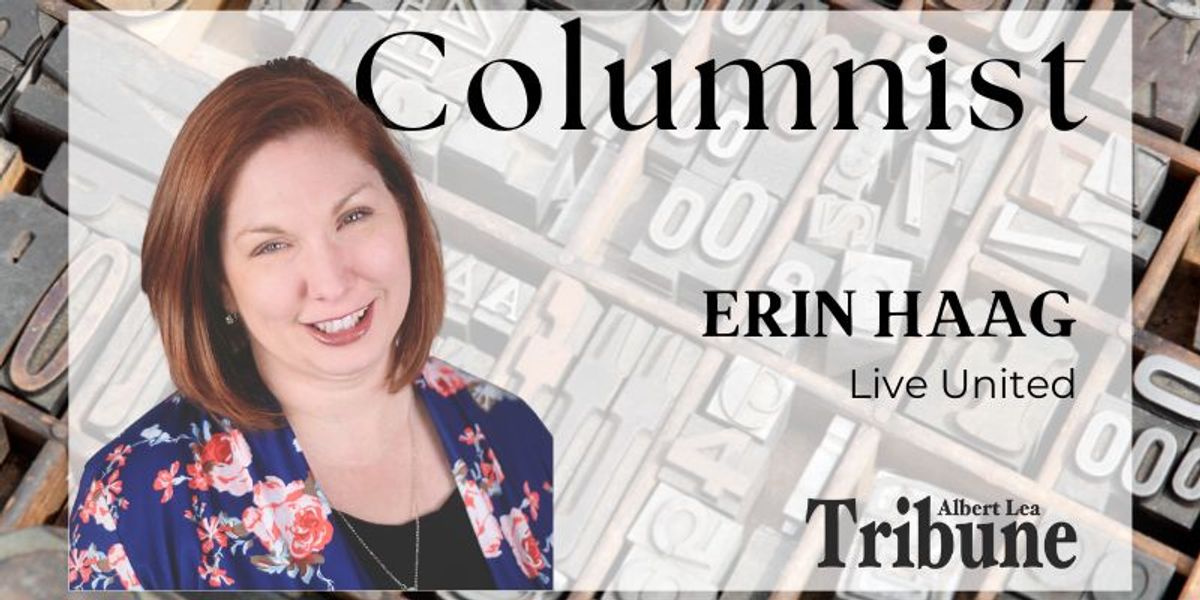
Erin Haag is the executive director of the United Way of Freeborn County
Story Tags
