


Brownsville to participate in Great Health for America federal pilot program – Rio Grande Guardian
Skip to main content



1Healthcare
Brownsville to participate in Great Health for America federal pilot program
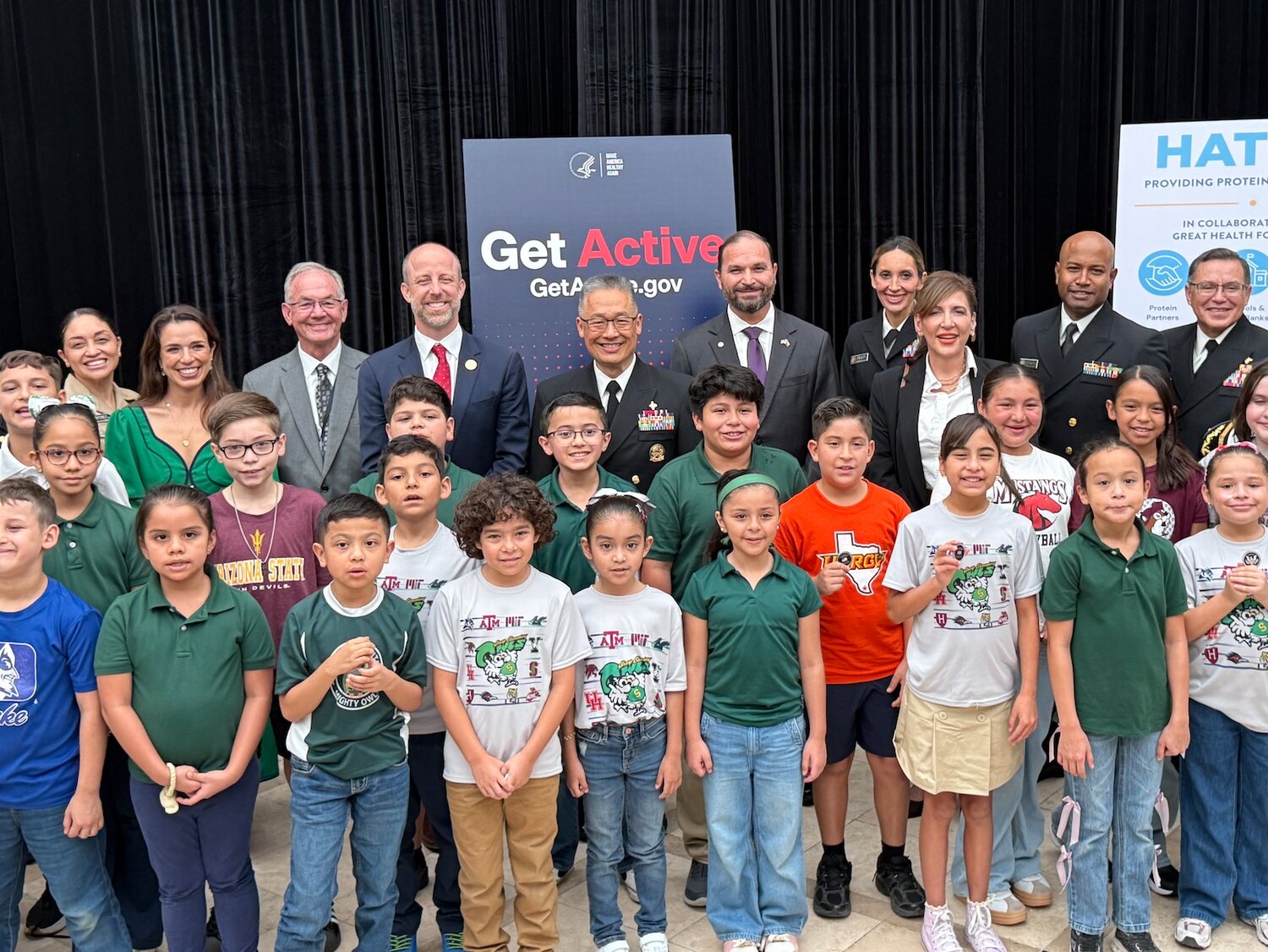
VIPs joined Brownsville ISD students for the launch of the “Great Health for America” pilot program. (Photo: RGG/Steve Taylor)
Posted
Saturday,August 22, 202610:36 am
By Dayna Reyes, Reporter
BROWNSVILLE, Texas — The U.S. Department of Health and Human Services (HHS) has selected Brownsville as one of four national sites for “Great Health for America,” a two-year, $32 million federal pilot program aimed at improving child nutrition and combating pediatric chronic disease
The announcement was made during a press conference held at the Mitte Cultural District, bringing together federal officials, municipal leaders, and local education authorities to outline how federal re border region
Through a Centers for Disease Control and Prevention (CDC) cooperative agreement, the designated local grantee in Brownsville will receive $4 million per year over the next two years. The initiative will deploy two commissioned U.S. Public Health Service (USPHS) officers to serve on the ground in Brownsville, collaborating with local schools, health care providers, and community organizations to optimize nutrition and monitor child health outcomes in real time
Rear Admiral Paul Jung, M.D., Deputy Surgeon General, emphasized that the program is designed to supercharge efforts already underway in South Texas rather than impose a top-down solution
“Public Health Service officers will be there to listen, build relationships and work shoulder to shoulder with the people who know these communities best,” Jung said. “Our officers bring public health expertise, but local residents bring something just as important: an understanding of what their communities need. Bringing those strengths together is how we build solutions that can last.”
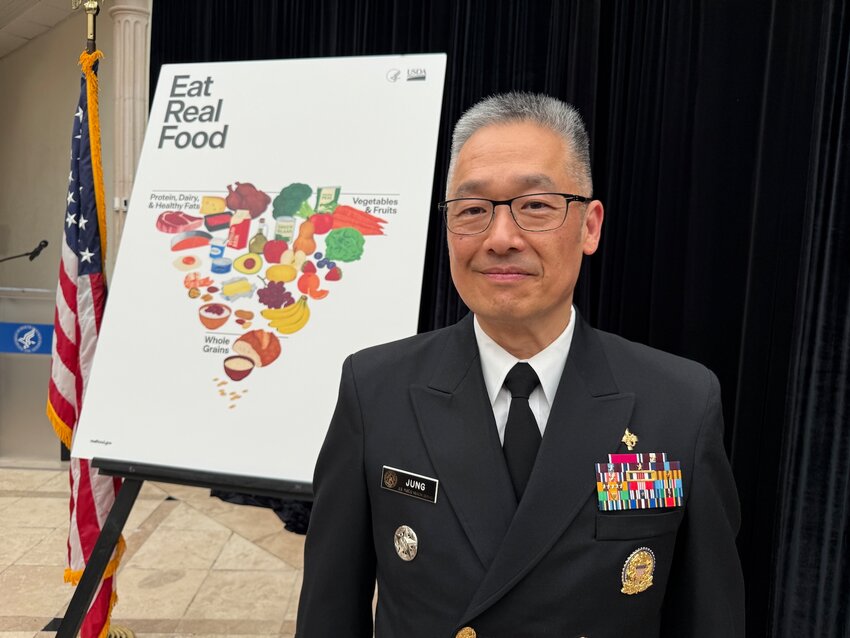 Rear Admiral Paul Jung, M.D., U.S. Deputy Surgeon General. (Photo: RGG/Steve Taylor)
Jung added that Brownsville was chosen both for its historical challenges with chronic disease and for its active commitment to overcoming them. “Brownsville was selected because, unfortunately, it has a high rate of chronic disease, but also, more importantly, it has a community that’s willing to step in and try to address the problems,” Jung noted
Brownsville Mayor John Cowen, Jr., hailed the federal selection as a major milestone for the city’s health trajectory, noting that the multi-million-dollar commitment provides the practical support necessary to yield measurable long-term results
“In Brownsville, we’ve had a history of high levels of diabetes and obesity,” Cowen said. “While we’ve improved our metrics, they want to come help accelerate that improvement and really focus on improving the diet of our kids in parts of our community. This is really a pilot program to demonstrate to the United States that this works and works really well.”
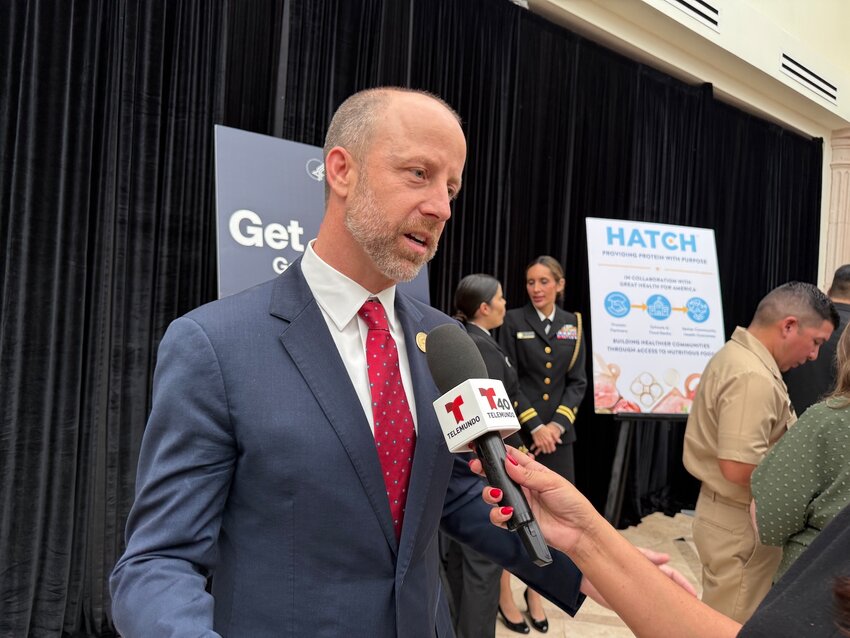 Brownsville Mayor John Cowen, Jr. (Photo: RGG/Steve Taylor)
Cowen stressed that the initiative goes beyond public awareness messaging. Federal funding will support dynamic analysis of school diets, expanding access to fresh foods and high-quality protein while tracking cohorts of students and their surrounding neighborhoods over time
“This is real money that’s going to produce real results,” Cowen said. “It’s logical—we need to give our kids healthier food, and that will produce healthier kids and adults.”
A primary component of the Great Health for America initiative involves direct nutritional interventions in participating schools. Organizations such as HATCH for Hunger and A Longer Table will work alongside local education leaders to increase access to nutrient-dense options, including eggs, 2 percent and whole milk, poultry, and other animal proteins in school meal programs and local pantries
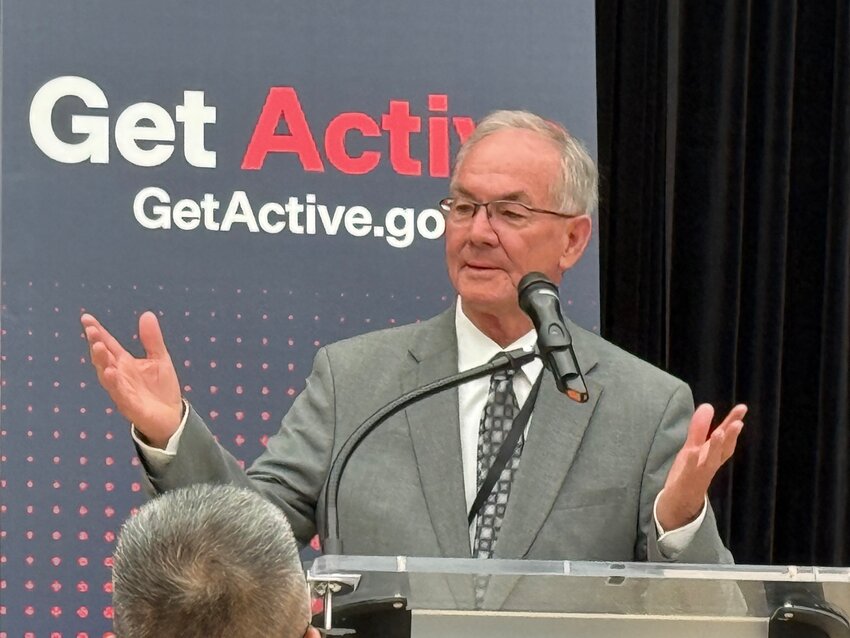 Dr. Timothy E. Cuff, superintendent of Brownsville ISD. (Photo: RGG/Steve Taylor)
Dr. Timothy E. Cuff, who took over as superintendent of the Brownsville Independent School District on July 17, expressed strong support for the partnership and highlighted the role students will play in bringing healthy habits home
“We’re laying the foundation in our schools,” Cuff said, noting that BISD serves approximately 33,000 students. “I think the kids are going to be the great conduit in letting the parents know, ‘Mom, that’s not healthy what you’re feeding me, we need to get healthy foods.’ Our students are going to be the great communicators to our parents, and that’s what it’s all about.”
Cuff noted that while BISD’s Food and Nutrition Service department already adheres strictly to state and federal nutritional standards, the federal pilot will provide additional restrict
Carlos Elizondo, President of the BISD Board of Trustees, highlighted the broader regional significance of serving as a national model for pediatric health intervention
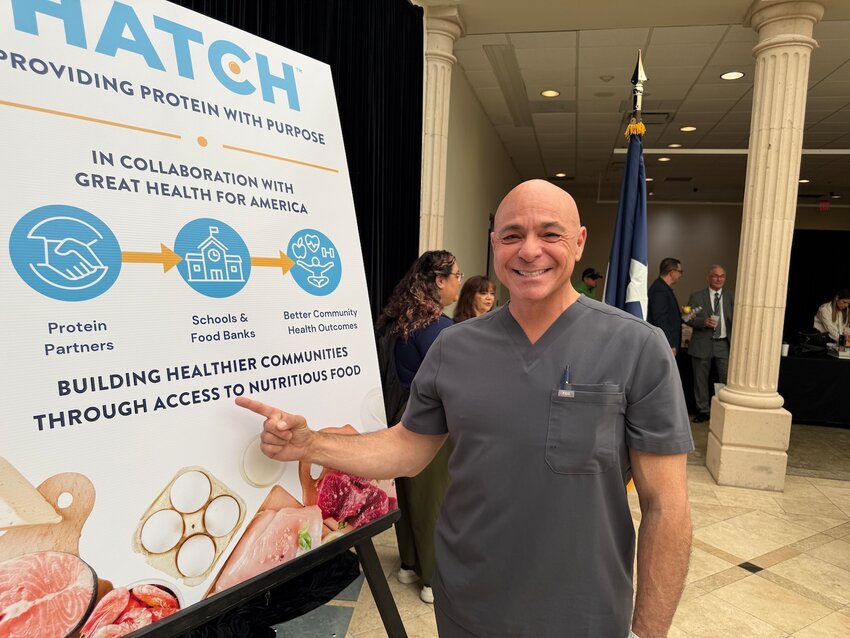 Carlos Elizondo, president of the Brownsville ISD Board of Trustees. (Photo: RGG/Steve Taylor)
“We have no issues being the beacon, the light in the dark room, because it will show that what we’re doing here works and helps our most vulnerable, our kids,” Elizondo said. “This is something that can curtail, improve, and then be used around the whole United States, maybe even the world.”
Elizondo added that addressing pediatric diabetes and childhood nutrition requires a whole-community approach, calling on local businesses and fast-food establishments to support healthier choices
“This is a community effort—not just the school district, not just the city, but everybody else that lives and works here,” Elizondo said. “A lifetime consumer is a healthy consumer. Doing away with childhood diabetes is a lofty goal, but it’s a goal we’re ready to fight for.”
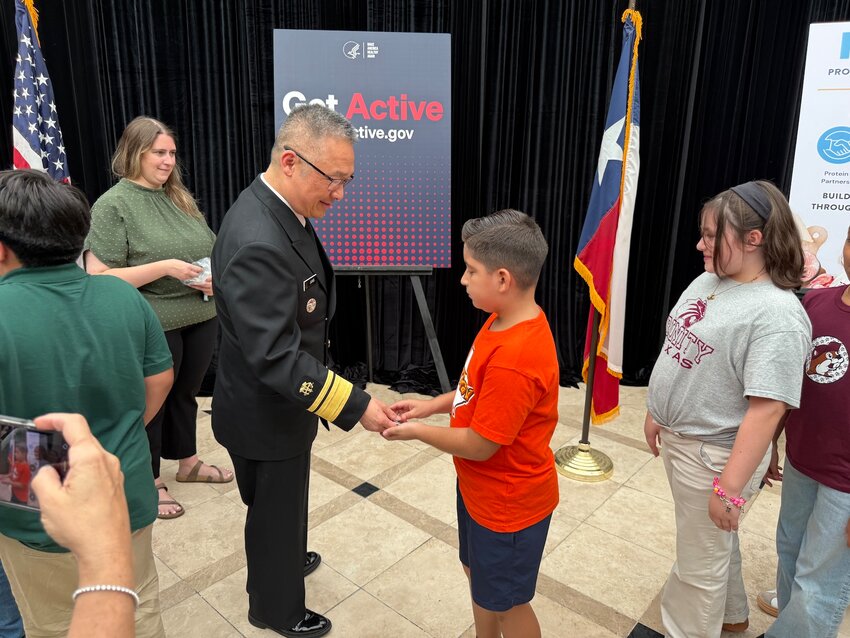 Rear Admiral Paul Jung, M.D., U.S. Deputy Surgeon General, meets Brownsville ISD students. (Photo: RGG/Steve Taylor)
The pilot program will operate in Brownsville alongside three other nationwide locations: Lake County, Indiana; the Sandusky and Toledo metro areas in Ohio; and Petersburg, Virginia. Throughout the two-year initiative, live neighborhood-level data will track pediatric health indicators and healthcare costs to ensure adaptive improvements and yield evidence-based strategies for potential national expansion
