


Article
Protecting great apes from Ebola
Published on 24 August 2026
As the Democratic Republic of the Congo (DRC) continues to respond to an Ebola Virus Disease outbreak caused by the Bundibugyo virus, with linked cases reported in Uganda, the world’s attention is understandably focused on saving human lives. According to the latest World Health Organisation (WHO) information to date, the DRC has recorded more than 4500 confirmed cases and over 2000 deaths, making the current outbreak the deadliest Ebola outbreak in the country’s history. The scale and speed of the epidemic have renewed global attention on a disease that has repeatedly crossed boundaries between humans and great apes. Yet another battle is unfolding away from treatment centres, in the forests of Central Africa, where Ebola has devastated populations of great apes. For a disease that epitomises the One Health concept, protecting wildlife is not incompatible with protecting people. Ebola virus disease is synonymous with human epidemics. Images of healthcare workers in protective equipment, safe burials and emergency treatment centres dominate public attention whenever the virus resurfaces. However, decades of research have shown that humans are only one part of a much larger ecological story involving wildlife, ecosystems and the complex interfaces where diseases emerge.
The next Ebola outbreak is not only a public health challenge, but also a wildlife health challenge. Understanding what happens in wildlife is essential if we want to prevent future epidemics
Alexandre Fediaevsky, Head of Emergency Preparedness and Resilience Department at the World Organisation for Animal Health.
The forgotten victims of Ebola
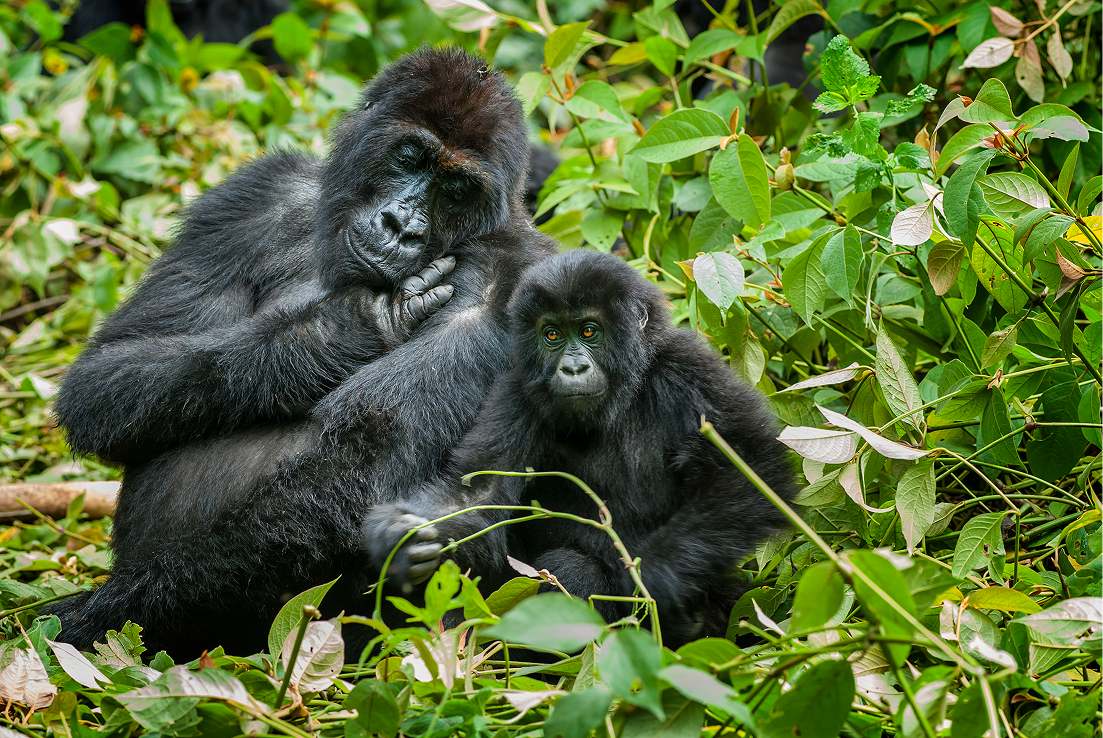
Long before Ebola became a global health concern recognised by the WHO, it had already been affecting wildlife. One of the most dramatic examples came in the early 2000s, when outbreaks in the Republic of the Congo caused catastrophic mortality among western lowland gorillas. A landmark study published in Science estimated that more than 5,000 gorillas died in a single region, with local populations declining by as much as 90-95%. Those findings transformed scientific understanding of Ebola, revealing that the virus was not only a human health threat but also one of the greatest infectious dangers facing Africa’s great apes. Subsequent studies confirmed that Ebola, together with poaching and habitat loss, has contributed to severe declines in gorilla and chimpanzee populations across Central Africa.
Not the reservoir, but highly vulnerable
Certain fruit bat species are often considered as the most likely reservoir hosts; however, evidence is still to be confirmed. These animals can carry viruses without showing severe disease, allowing the virus to persist in nature. Occasionally, the virus spills over into other wildlife including gorillas, chimpanzees, duiker, and, under certain circumstances, into humans. This process, known as spillover, is at the heart of Ebola emergence.Human infections may occur through contact with infected animal fluids, after which human-to-human transmission sustains outbreaks. Understanding these ecological pathways is critical. Every outbreak offers an opportunity to improve knowledge of reservoir species and how environmental changes, wildlife species assemblage, density and movements as well as human activities interact to create conditions favourable for disease emergence.
A two-way health interface
Ebola is typically described as a zoonotic disease, one that passes from animals to humans. But the relationship between people and wildlife is increasingly recognised as bidirectional. While there is currently limited evidence of ‘reverse zoonosis’ (that humans transmit Ebola back to wild great ape populations), scientists have documented the transmission of several other pathogens, including respiratory viruses, from humans to gorillas and chimpanzees. These findings reinforce the importance of minimising unnecessary human-wildlife contact during disease outbreaks and highlight the need for integrated surveillance at the wildlife-human interface.
Healthy wildlife populations contribute to healthy ecosystems, and healthy ecosystems ultimately support healthier human communities, that is precisely why surveillance must extend to animals and go beyond hospitals and clinics
Sophie Muset, Wildlife Health Programme Manager and ZOOSURSY Project Manager.
From reacting to preventing
Scientific efforts have increasingly shifted from documenting wildlife mortality to preventing future outbreaks. Researchers now combine ecological surveillance, wildlife health monitoring, epidemiological modelling and genomic analyses to better understand where Ebola is most likely to emerge. A recent modelling study published in Scientific Reports projected that an Ebola outbreak in the endangered mountain gorilla population of the Virunga Massif could spread rapidly through social groups if no intervention occurred. The authors found that emergency vaccination of at least half of habituated gorillas could dramatically improve survival, illustrating how proactive conservation measures may reduce the impact of future outbreaks. At the same time, predictive models are helping identify high-risk landscapes where surveillance efforts can be prioritised before outbreaks occur.
Why wildlife surveillance matters
The current Ebola Bundibugyo virus outbreak in the DRC demonstrates once again that surveillance need to go beyond human cases. Monitoring wildlife health, strengthening laboratory networks, improving field diagnostics and sharing data across sectors all contribute to earlier detection and a better understanding of disease dynamics. Wildlife monitoring can provide valuable epidemiological signals while also informing conservation responses for endangered species. Trans-sectoral information sharing can be done through WildEpi, the new reporting mechanism proposed by WOAH for information sharing on wildlife health issues and diseases that are not listed by WOAH. Integrated surveillance benefits both biodiversity conservation and public health by improving preparedness before pathogens cross species barriers. That is why WOAH highlights the critical role of wildlife surveillance, early detection and prevention in reducing the risk of zoonotic spillover and strengthening preparedness.
Strengthening surveillance where it matters most
This is precisely the ambition of the ZOOSURSY project. Working across 17 African countries, ZOOSURSY strengthens surveillance systems for zoonotic diseases at the human-animal-environment interface. By supporting laboratory capacity, field investigations, wildlife health monitoring and collaboration between veterinary, public health and environmental sectors, the project contributes to earlier detection of emerging and reemerging zoonotic disease including Ebola. Rather than responding only after outbreaks occur, integrated surveillance helps countries better understand pathogen circulation in wildlife, identify risks at their source and strengthen preparedness before the next emergency unfolds. As Ebola continues to challenge communities in Central Africa, one lesson remains clear: protecting human and wildlife health are inseparable goals. People and great apes share the same habitats and can be exposed to the same pathogens, making wildlife health an important part of public health. Because preventing the next Ebola outbreak begins long before the first human case is detected.
