Aug 24, 2026
Fewer employers are covering GLP-1 drugs for weight loss. Should they?
Only about one-third of employers cover GLP-1s to treat obesity, leaving many patients facing prohibitively high drug costs on their own
Healthcareby Mitchell Hartman
Download
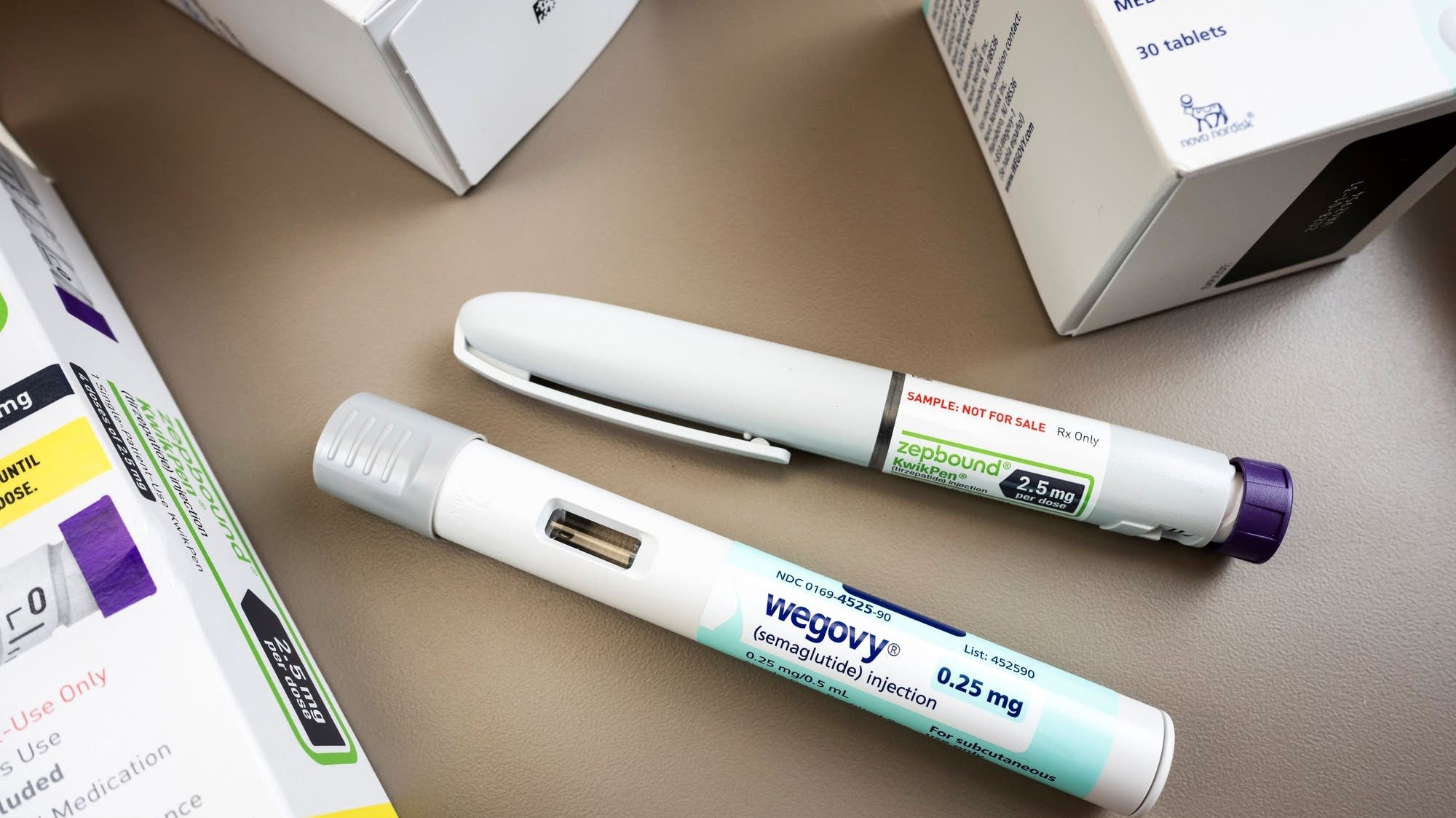
Two recent news items reveal countervailing trends in employer health insurance coverage for GLP-1 drugs, the highly effective and highly expensive medications for treating diabetes and obesity
The insurer Cigna reported a pullback in coverage of GLP-1 drugs for weight loss.Six percent of large employers dropped coverage in 2026
Meanwhile, Bank of America is doubling down. It’s continuing to cover GLP-1s for weight loss (in addition to covering them to treat diabetes), while also providing healthcare and lifestyle coaching for those on the drugs — at a cost of $250 million a year. That now represents 13% of the company’s total healthcare spending
Kristi Turner knows what it’s like to deal with changing policies around GLP-1 coverage. She is 48, lives in Indiana, is self-employed, and has been struggling with obesity since she was a teenager
“I have lost 50 to 100 pounds probably five to ten times in my life, but there’s just been nothing that works for me long-term,” she said. That is, until recently. “I started on Zepbound back in May of 2024. Since then I’ve lost 203 pounds, I still have about 45 to go. I’m still working on it.”
Turner’s husband is a teacher, and initially, her Zepbound was covered by his insurance for just $25 per month out-of-pocket
But in January 2025, with costs rising, the insurance plan’s pharmacy benefit manager terminated GLP-1 coverage for weight loss
“I politely raised hell for about three or four months,” said Turner. “But I didn’t win.”
Turner now buys her Zepbound directly from the manufacturer, Eli Lilly, for $449 a month. It could cost twice that if she bought it at a pharmacy without insurance coverage
Turner’s experience is common, said Paul Fronstin, director of health benefits research at the Employee Benefit Research Institute
“Most employers are covering it, but not for weight loss,” he said
According to the International Foundation of Employee Benefit Plans’ 2026 employer survey, more than 90% of employers cover GLP-1s for diabetes. But only 36% also cover them to treat obesity
Fronstin views this mainly as a business decision for employers
“8% of the population with employment-based coverage has diabetes, whereas half the population would be eligible for a weight-loss drug,” he said. “Employers are saying, ‘Can we really afford to cover this, when so many people are eligible or would benefit from it?’”
“One of the things employers wrestle with is: ‘how long are my employees going to be with me and when am I going to see a return on this investment,’” Fronstin continued. “Bank of America said, ‘short-run it’s going to hit us financially, long run we expect it to benefit us.’”
But the economic research so far seems to point in the opposite direction a health economics professor at Rice University. Ho cited a recent National Bureau of Economic Research working paper, “Do GLP-1 Medications Pay for Themselves?”
“Even though there are health benefits,” Ho said, “these medications are not cost-saving for the employer. They yield value for the employee, but it’s not as if employers are going to save money. And of course, they’re struggling to cover their health insurance premiums as it is.”
Ho said there may well be some economic benefits to a company that covers GLP-1s for weight loss, even if these don’t offset the soaring costs of the drugs
“Employers are happy to pay for things that improve the productivity of their workers which are related to an illness,” she said, “and there may be productivity gains because of weight loss. But it’s a slippery slope — particularly because these medications are so expensive.”
Companies may well never recoup the current high cost of covering GLP-1s for weight loss, said Ellen Magenheim, a health economics professor at Swarthmore College — in terms of achieving better health outcomes for workers, or higher productivity. She said so far, research on the question isn’t encouraging
But she still doesn’t believe that justifies companies’ decision to not extend coverage
“This distinction between your insurance will pay for it if you’re diagnosed with diabetes, but not if you have obesity — I don’t fully understand,” Magenheim said. “Clearly, they’re very effective, important drugs that we would want people to take.”
Magenheim argues that the current system benefits the most privileged members of society — those with gold-standard health plans, or enough wealth to afford GLP-1s on their own. She pointed out that the vast majority of patients on Medicaid — the federal health insurance program for low-income people — can’t get coverage for GLP-1s to treat obesity
“Some private insurers cover it, some don’t,” said Magenheim. “Some are cutting back because it’s very expensive. The cost seems prohibitive for anybody but those with high income or assets to be able to pay for it out-of-pocket.”
The current high cost structure and the patchwork of insurance coverage for GLP-1 drugs to treat obesity leads to inequitable outcomes emeritus professor of bioethics at New York University
“The U.S. has long denied rationing in its healthcare system,” said Caplan. “But we do ration — by coverage, are you insured. It’s not medical necessity, and it’s not even diagnosis, it really is affordability for the third-party payer that’s driving access. And in my view, that’s wrong, that’s unjust. There are people who need these drugs who aren’t getting them.”
Health consultant and obesity coach Amanda Bonello, who founded the nonprofit GLP-1 Collective to advocate for more broad and affordable access to the drugs, said the lack of widespread insurance coverage raises patients’ level of risk
“Because so many people can’t get access through their employer or through their insurance, many, many people have gone online and taken their health into their own hands,” she said
Bonello said obtaining cheaper GLP-1s on the unregulated grey market, sometimes from overseas. She said there are safer ways of accessing GLP-1s at somewhat of a discount from the manufacturer’s list price —s, or through direct purchase from the manufacturer, as Turner does
Turner said in one way, her family is lucky. Her husband is now on another expensive GLP-1: Mounjaro
“He just got into the diabetic range, and I was just under the diabetic range,” she said. “He gets his for $25 a month through the employer, and I don’t.”
She said she almost wishes she had tipped over into diabetes, so she could better afford the drug that maintains her weight loss and improves her overall health

Health plans will cost more in 2027, for employers and workers
Healthcare
Why pharmaceutical companies are interested in psychedelics
Culture
Roughly 200 people in Nebraska lost Medicaid on Aug. 1
Healthcare