


Community ImpactResearch & Discovery
UConn Shrestha Lab pioneers digital care solutions for mental health, substance use, and HIV prevention
Asked about the driving force for his lab’s work, associate professor Roman Shrestha says it all comes down to “really making a difference for the vulnerable populations we work with.”
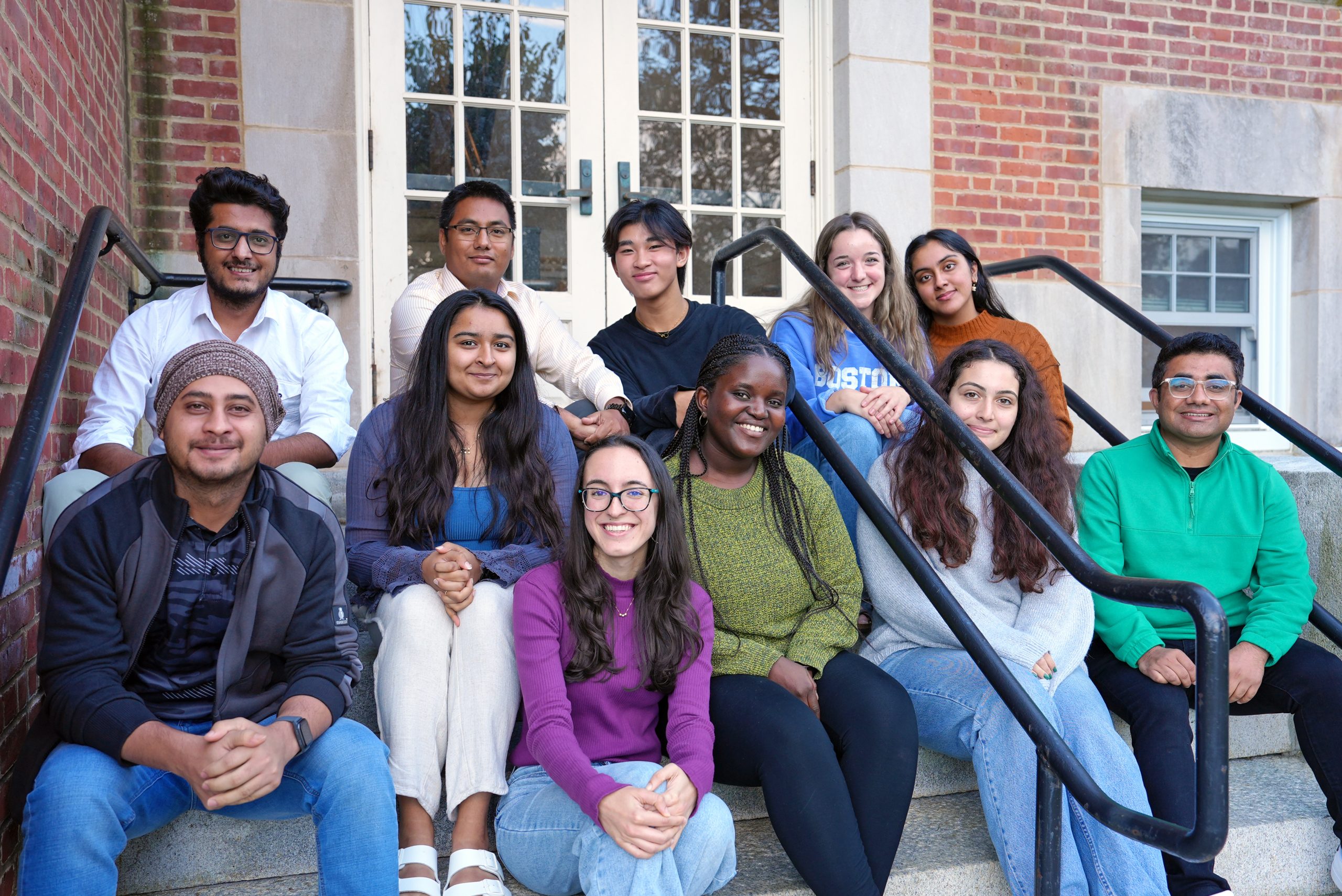
TheShrestha Labis a group of interdisciplinary researchers dedicated to improving health outcomes and quality of life for people across the globe, especially those who face barriers to accessing the traditional healthcare system. They focus on developing solutions that can easily plug into existing needs, including innovative new service programs and digital health initiatives like apps and wearable devices.
The lab has a strong international focus, with specific projects focused on supporting mental health, substance use, and HIV prevention among sexual minority populations in Malaysia and Nepal. But they also work with communities closer to home.
Researchers at the Shrestha Lab have a longtime partnership with the New Haven Syringe Services Program, hosted by the Yale Community Healthcare Van in New Haven. Through this partnership, they work to support the mental and physical health of people who inject drugs (PWID) here in Connecticut, while also laying the groundwork for interventions that can be adopted anywhere.
Suicide Prevention with SAFE-SSP
One of these interventions,Suicide Assessment and Facilitated Engagement in Syringe Services Programs (SAFE-SSP),recently received seed fundingfromthe UConn Institute for Collaboration on Health, Intervention, and Policy (InCHIP) and UConn Health Disparities Institute (HDI).
It aims to understand how mental health and suicide prevention efforts can be better integrated into existing harm reduction services
“Syringe services programs and other community-based harm reduction programs are very trusted, low-barrier spaces that reach people who may not regularly use the traditional healthcare system,” says Shrestha Lab manager and assistant research professor Kamal Gautam. This makes them ideal sites for health outreach efforts
These programs excel at treating physical health – they provideclean needles, and they also often provide wound care and medication to treat opioid use disorder like suboxone. But they may not always have the re
As a result, many participants’ significant mental health needs are going unmet. According to the lab’srecently published studyamong New Haven syringe services program participants, over one-third reported suicidal ideation within the past two weeks, and nearly 85% reported experiencing at least one barrier to accessing mental health services.
Recognizing this need, Shrestha Lab researchers are working to develop a suicide screening tool and referral pathway that could be used in harm reduction settings.
Most existing tools were created for very different contexts – usually in emergency care settings, where they can only be used by physicians or psychiatrists. That doesn’t match the reality of syringe services program participants, who are more likely to engage with healthcare providers and staff at the syringe services programs.
The researchers realized that this group needed a unique screening tool which would meet the needs of both patients and providers.Its use should be as seamless as possible and allow the participants to either receive mental health care onsite or receive a warm hand-off to appropriate services.
“Throughout this project, what we want to learn is how suicide risk can be discussed without increasing stigma or discouraging service use,” Gautam says.
He explains that the team is particularly interested in making sure the screening tool is something that benefits both the clients and staff
“[Health researchers] always try to think from the patients’ perspective, but we sometimes miss the people who are actually delivering the intervention – the staff or the healthcare providers,” Gautam says. “With this project, we wanted to make sure we were exploring that piece – are they [the providers] comfortable delivering the intervention? Do they have what they need? And at the same time, we don’t want to overburden them.”
At the conclusion of this pilot project, the team will have the “preliminary evidence needed to develop and test more comprehensive suicide prevention intervention across syringe services programs and other community-based harm reduction settings,” says Gautam
Nurse Practitioner–Led PrEP
Another recent initiative from the Shrestha Lab is apublicationin the Journal of the Association of Nurses in AIDS Care (JANAC),first-authored by Gautam.
The article is based on findings from another pilot project in New Haven, focused on decreasing barriers to accessing pre-exposure prophylaxis (PrEP). PrEP is an umbrella term for medications that are incredibly effective at preventing HIV – providing up to 99% HIV protection from sex and up to 74% effective HIV protection from injection drug use, when taken as prescribed.
Still, as with mental health care, it can be challenging for people who inject drugs to access these treatments. Time, money, and logistics all pose hurdles.
For people who use substances, the care can be so fragmented
“Typically, while trying to get on PrEP, you have to go to a clinic, be seen by a doctor, and then the doctor will have to evaluate your labs before they can prescribe the medication,” says Shrestha. “This is a huge issue for people who inject drugs, because they have different socioeconomic conditions that will prevent them from getting back to the clinic – whether it’s transportation, unstable housing, or even lack of a cell phone to get appointment and pickup reminders.”
Through a pilot program callediRaPID (Integrated Rapid Access to HIV Prevention for People Who Inject Drugs), the researchers launched a new approach to PrEP prescription. This method eliminated the barrier of visiting a separate HIV clinic and waiting to receive a prescription – instead, nurse practitioners at the syringe services program could prescribe PrEP on the very first visit.
“For people who use substances, the care can be so fragmented,” says Shrestha. “If you want to get HIV prevention or treatment services, you go to one place; if you need medication to treat addiction, you have to go to another place.”
Funded by the National Institute on Drug Abuse (NIDA), the iRaPID program sought to instead create more of a “one-stop shop,” using the touchpoint of syringe services.
The researchers found that this type of nurse practitioner–led, same-day model was acceptable to both clinical staff and patients alike
“We saw some very positive outcomes in terms of improving access and uptake of PrEP services within the existing harm reduction settings,” says Shrestha.
This study lays the groundwork for future, larger-scale studies to determine the feasibility of implementing this model in more contexts.

Going Global
In countries across the world, Shrestha Lab researchers are working to reduce barriers to mental and physical healthcare; support harm reduction; and prevent suicide among underserved communities.
This expansive focus is why thelab’s websitedescribes their work as sitting “at the intersection of HIV prevention and treatment, substance use, harm reduction, mental health, smoking cessation, sexual and gender minority health, and global health equity.”
It’s a complex intersection. But Gautam says that a few key principles lie at the heart of all these initiatives.
“All of our work is grounded in dignity, non-judgmentality, equity — and community partnership,” he says.
Recently funded projects within the Shrestha Lab includea new R01 award to reduce HIV-related stigma in Vietnam(a collaboration with researchers at the University of Pittsburgh) and ajust-in-time adaptive interventionfor suicide prevention among men who have sex with men in Nepal. Both initiatives received funding from the National Institutes of Health (NIH).
Follow updates from the Shrestha Lab on theirwebsite,LinkedIn, andInstagram.
Follow UConn Research onLinkedInandInstagram.
