


UW struggles to see medical research through as Trump administration guts funding
KUOW |
By
Stephen Howie
Published August 26, 2026 at 11:38 AM PDT
Lindsey Wasson
/
AP
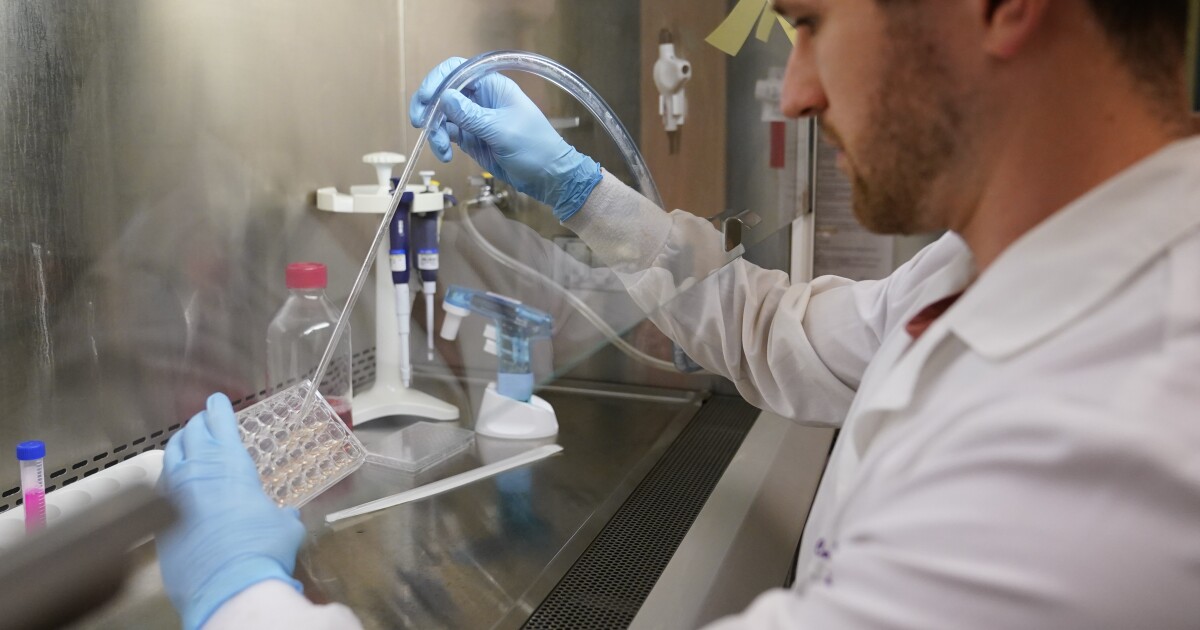
Dr. Sebastian Tong was halfway into a four-year project to help rural communities improve medical treatment of patients suffering from addiction when he got word that his federal grant had been terminated
Tong, a practicing family physician and associate professor at University of Washington School of Medicine, had a $2.5 million grant from the Agency for Healthcare Research and Quality, part of the U.S. Department of Health and Human Services. In July, his grant was one of dozens that were discontinued because the agency said they no longer matched the federal government’s priorities
“This research, especially around substance use, is really important because we see a lot of underrepresented and marginalized populations really suffer from high rates of mortality,” he said
The news came at a critical moment for Tong and those in his study. He had tested addiction treatments at about a dozen practices, but he had yet to apply what his team had learned on a larger scale, results he believes could help primary care doctors better treat thousands of people suffering from substance use disorder
“We have medications that work. We have screening tools that work. We have psychosocial interventions that work,” he said. “And people aren’t getting them.”
Economy
What does UW’s disappearing research money mean for Seattle’s innovation economy?
Joshua McNichols
The unexpected discontinuation of Tong’s grant is part of a pattern of unpredictability under the second Trump administration that has researchers and administrators scrambling for alternate fundinghether they’ve made a terrible mistake
AcademyHealth, a health services research company, has a running list of 117 grants cancelled by the Agency for Healthcare Research and Quality during the latest round of cuts. The total value of the cancelled grants is more than $264 million. It includes money for 63 research projects, 17 research centers, 16 training programs, and 20 early-career awards
From July 2025 to June 2026, federal funding at UW Medicine decreased by almost 20%, according to Shelly Sakiyama-Elbert, the school’s executive vice dean for Research and Graduate Education
The University of Washington receives more federal support than any other public institution in the country. In 2025, that amounted to almost $1.4 billion, about 80% of the university’s total research funding
In addition to federal funding cuts, the Trump administration is pushing for more political oversight of federal grants and has proposed limiting international graduate students to four years in the U.S. before their visa status is reviewed
The reduction in funds and increased red tape is impacting the UW’s ability to attract and retain the world’s top graduate students, according to Sakiyama-Elbert. For the second consecutive year, UW Medicine has admitted about a third fewer students to Ph.D. programs
Sakiyama-Elbert said the reduction is the result of students not knowing whether they’ll be able to finish what is normally a five-year process and researchers who are less certain about long-term funding. That’s led to shrinking research staff as labs struggle to fill vacancies

Government
How far could Trump’s NIH funding cuts set medical innovation back? By decades, UW researchers warn
Stephen Howie
In July, University of Washington Provost Tricia Serio sent a 10-page letter to the Office of Management and Budget objecting to proposed changes in the way federal grants are reviewed. Among other things, the Trump administration has said it wants to:
- Add a review of proposals by political appointees.
- Allow agencies to consider the “memberships and affiliations” of researchers as risk factors.
- Accept international collaborations only when they are in the “national interest of the United States.”
- Allow for discretionary termination of grants if it “serves the national interest as they exist at the time of termination.”
In her appeal, Serio said the changes threaten what she called “a revered pillar of American greatness; our scientific enterprise.”
“Our nation has benefited enormously from a research funding system grounded in scientific excellence, peer review, and long-term investment. It has allowed us to be the world’s economic driver for generations,” Serio said. “These changes will only undermine our leadership.”
The U.S. Senate delayed implementation ofthe proposed changes until Dec. 11. The resolution would have to be passed by the U.S. House and signed into law by President Donald Trump before it would take effect
Meanwhile, a coalition of groups filed a federal lawsuit on Aug. 18 challenging theDepartment of Homeland Security’s proposal to limit the “Duration of Status” of international students to four years. That limitation is scheduled to go into effect on Sept. 15
“Ending Duration of Status and imposing new limits on academic decision-making is a solution in search of a problem,” said Fanta Aw, director and CEO of the nonprofit NAFSA: Association of International Educators, in a prepared statement. “The rule will severely undermine the contributions international students make to U.S. campuses, economies, and national security.”
While those legal and regulatory processes continue to play out, Sakiyama-Elbert is searching for alternate fundingresearch. She said support from companies, philanthropic groups, and foundations has made up for about 12% of the most recent federal funding cuts
“We’re down about 7% for the fiscal year,” she said. “That doesn’t sound bad, but we run a pretty lean operation.”
Sakiyama-Elbert said she worries about the long-term impact of the administration’s dismantling of scientific research
“What’s the ripple effect of this downstream?” she said. “If we lose the discovery now, what patients will we not be able to help five or 10 years down the road?”
Government
Washington scientists say ‘brain drain’ has begun as researchers consider moving abroad amid Trump cuts
Stephen Howie
While UW officials lament the federal changes, the Trump administration calls them a necessary course correction
In an email response to KUOW’s questions, Emily Hilliard, senior press secretary for the U.S. Department of Health and Human Services, said changes at the Agency for Healthcare Research and Quality represent a return to “its statutory mission of improving the quality, appropriateness, and effectiveness of health care for the American people.”
“During the previous administration, AHRQ drifted from that mission, diverting red duplicative programs and ideology-driven priorities,” Hilliard said. “AHRQ is now focused on putting patients first while responsibly stewarding taxpayer dollars.”
For his part, Dr. Tong has a unique perspective on the agency that cut his funding. Before he started at the University of Washington, he worked there
While the National Institutes of Health focuses on scientific discoveries, Tong said the Agency for Healthcare Research and Quality bridges the gap between research and practice. He said the agency’s cutbacks will impact the very people the Trump administration claims to be putting first, especially those in rural communities
“We had practices we were working with in Montana, Idaho, and Wyoming that were serving really remote populations that were really excited to be working on this,” Tong said. “We just don’t have the funds to continue supporting those clinics.”
Several participants in Tong’s research offered to keep doing the work for free. But without funding, the project could not continue, Tong said, at least for the time-being
“We’re taking a look at other federal agencies,” he added. “We’re taking a look at nonprofits and foundations, just to see if we can continue some of this work.”
