


Content note: this essay discusses suicide, grief, disordered eating, and childhood trauma
I hate being fat. I hate most things about it, that is. It works for me in some ways. It helps me feel just a bit protected in the world. It has helped me connect to others who have struggled with this burden, too, and the suffering it brought into my life has given me an even greater sense of empathy for all living beings.
I don’t want the looks of pity I get from people who assume a big person has a small life. Being fat has taken a lot from me, but it has never stopped me from living my life to the fullest. I’ve been to dozens of countries and six continents as a fat person, and I’ve earned three degrees in writing. Since writing is my all-encompassion passion in life, I aim to get my Ph.D. in writing next. I strive to improve as a writer every single day. I am a professional journalist and author which was my dream from the time I wrote my first novel at seven years old.
Advertisement
Life is mostly good. It’s just that I’ve recently learned that I have to lose weight to reverse a health crisis. I have a cruel disease that I apparently cannot send into remission any other way
My first diet started at 11 and never really ended

I first gained weight when I started crash dieting as a child. I was 11 when I started starvation diets. My dad died by suicide the year before, and I was living with complex-PTSD and didn’t know it.
As I started dieting, I never had breakfast and skipped lunch. In fifth grade I hid in the bathroom all through lunch period, partly because I felt like an outcast and nobody seemed to want me to sit with them. The main reason, though, was that I was on a starvation diet, and I wasn’t going to eat anything. When I did walk by the cafeteria, the hunger pains and emotional torment felt unbearable, and just getting through the day meant intense emotional pain and physical hunger.
After three days of this torment, I broke free of it by binging on any snacks I could find at home. I binged as I watched television, and I felt a soul-deep comfort that I didn’t yet perceive was a sort of high. I was a “good girl” who had never heard the term “process addiction”, but that’s where my serious issues with eating began.
Advertisement
I would restrict for as long as I could stand it, then I would binge. That’s the loop I was stuck in for years that became decades. I’d restrict food until I couldn’t take the torment, collapse emotionally, gain weight, hate myself, and start over again by restricting harder. I got very good at the collapse part and even better at the hating myself part. However, I never once got good at the thin part
For a long time I thought that was a personal failure. People acted like it was a flaw in my character that showed up on my body where everyone could see it. I was more disgusted by myself than the little boy in eight great seemed to be when he told me I couldn’t sit in the desk next to him because “ew”.
For decades after my dieting spiral started, I would spend nearly every morning of my life starting a new diet. Some diets were so restrictive that they were basically fasting, and some days I did complete fasts with no food at all. On other days, I’d try to follow more reasonable diets. I’ve joined all the commercial diet companies that offer vegan plans at some point.
Somewhere along the way, I discovered feminism and woke up to the realities of diet culture, and I came to hate it with a passion. I stopped dieting for a long time.
Advertisement
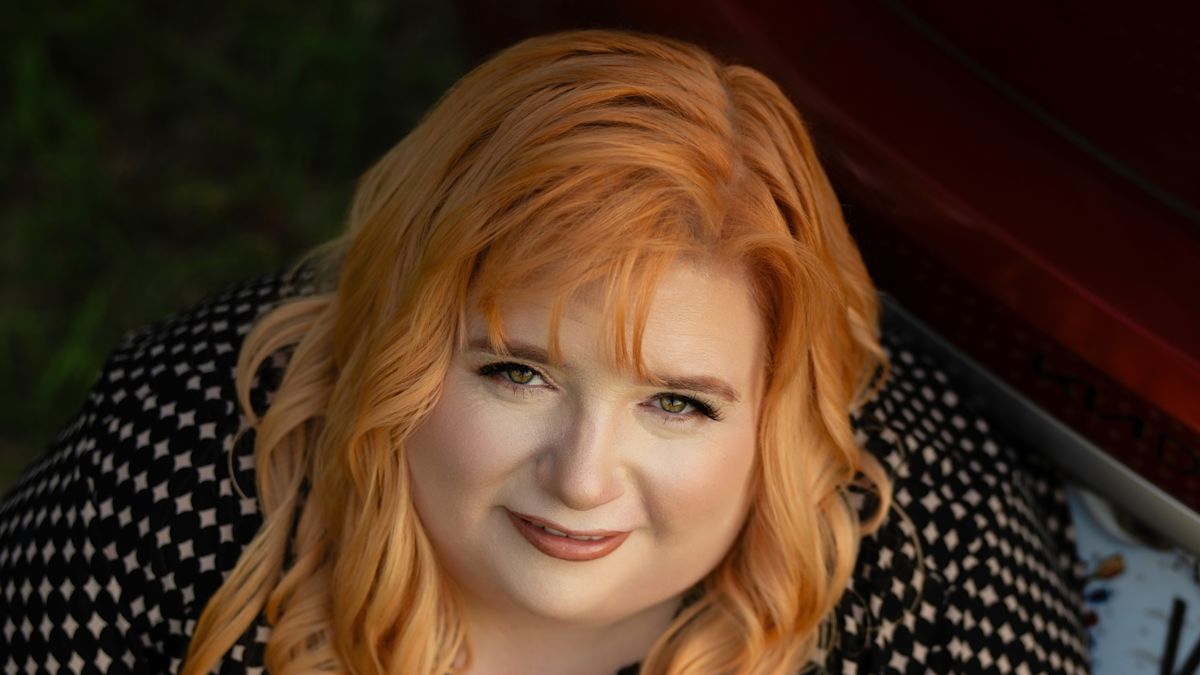
I still completely and totally hate diet culture with the white hot intensity of 1,000 bursting suns, to borrow a phrase from Diane Chambers in Cheers. I hate it so much that my freckled face turns red at the thought of it.
However, I am embarking on a serious, well-planned, and healthy diet now after a health diagnosis that makes it necessary for the moment. I have Type 2 Diabetes, and I would very much like for it to be in remission. Although it’s incurable, with the situation I’m in, I am told I can kick it into remission if I lose a percentage of my body fat. So I’m determined to do that, but I feel guilty because, as I said, I abhor diet culture.
What the research actually says about dieting as a kid
I’m not the only one this happened to, and it isn’t a story I invented to feel better. Researchers at the University of Minnesota have followed thousands of young people for years through a study called Project EAT, and what they found runs directly against my dieting behaviors at 11. Their work reports that “dieting and unhealthy weight control behaviors were associated with poorer dietary intake, decreased physical activity, higher body mass index, and increased risk for binge eating.”
The same body of research found that those behaviors “were also related to poor emotional well-being, including increased risk for depression and suicidal behaviors and ideation.” I struggled with all that through my pre-teen and teen years and then into early adulthood.
Advertisement
There’s a second layer to it too. The psychologist A. Janet Tomiyama has spent years studying what shame does to bodies, and her review of the evidence argues that “weight stigma begets weight gain through increased eating and other biobehavioral mechanisms.” Her model traces how chronic stress raises cortisol, and she writes that “elevated cortisol causes weight gain” and that “cortisol also drives food consumption.”
So the treatment made me fatter, and then people’s contempt for the fatness made me fatter. The pain-drenched spiral continued
The years when my body was the least of my problems
Dieting was never the only problem. Thanks to a lot of extreme trauma that involved my dad threatening to kill me in my sleep for months in fourth grade. He died while I was home on my first day of summer vacation. Those are just a few of the traumas I lived with every day.
So I was starving myself as I had no coping mechanisms from the complex PTSD I was also battling The World Health Organization formally recognized complex-PTSD in the ICD-11 and which the UK Trauma Council describes as sharing “the same core symptoms of (ICD-11) PTSD” while adding three more clusters on top: trouble regulating emotions, a self-concept soaked in shame and guilt, and real difficulty staying close to people
Advertisement
At 11, I felt lower than worthless. I felt like a burden to the world and the world was a worse off place because I existed. The shame was real.
There was a deep depression that sat on my chest for months at a stretch. There were intrusive thoughts through my childhood, my teenage years, and well into my twenties. I told myself things I’d never say to another living person. There was social anxiety that made a simple phone call feel like a mountain I couldn’t climb
All of this braided together with the food. Because when you’re 11 and starved and ashamed, the problem feels like you, and when I was eating, nothing mattered
None of that is unusual, as it turns out. That’s the part that still makes me angry. Research published in PLOS Global Public Health found that people with an ACE score of 4 or higher “had a significantly greater risk of developing T2DM,” and that roughly two thirds of the type 2 diabetes patients in the study reported multiple childhood adversities. The American Diabetes Association puts the depression connection this way: “Diabetes and depression have a bidirectional relationship, such that a preexisting history of depression increases the risk of type 2 diabetes, and a diagnosis of type 1 or type 2 diabetes increases the risk of depression.”
Advertisement
I have been told by multiple people either outright or through implication that I’m fat because I’m lazy. That’s not true, and I didn’t get diabetes because I’m lazy. I got it at the end of a long chain of things that started when I was a child and had very little to do with willpower
What a type 2 diabetes diagnosis actually felt like
I got my diabetes diagnosis over the phone when a nurse let it slip. I was calling to ask a question, and she casually mentioned I had diabetes before my doctor had told me the results of recent tests of my yearly exam. I was the day before Christmas Eve, and I was at the beach because my mom and I didn’t want to be home for our first holiday without my sister who had died months earlier from what was, in part, complications from diabetes.
As you can imagine, the diagnosis nearly knocked me over. I didn’t want to make Christmas even harder so I kept the diagnosis to myself for a few days, and it felt like life as I thought it would be was spiraling even further from my grasp. Had I just been given a death sentence? It felt that way.
I’m not a rare disease, though, and I was far from the only one who was diagnosed in late 2025. According to the CDC, “the prevalence of total diabetes was 15.8%, diagnosed diabetes was 11.3%, and undiagnosed diabetes was 4.5%” among US adults between August 2021 and August 2023. That’s roughly one in six of us. Somewhere around one in twenty adults is walking around with it right now and doesn’t know
Advertisement
Statistics don’t do anything for you in a rented bedroom all by yourself as you try to cope with the fears you’ve had all your life about a disease that is pretty prevalent on both sides of your family. What I felt was a very old, very familiar voice saying, “See, they were right about you all along. You are lower than worthless.”
I’ve had to work hard to understand that the voice is a symptom and not a
Can type 2 diabetes go into remission? What the evidence shows
Remission is a real clinical outcome for Type 2 Diabetes with a real definition, not a wellness industry promise. The consensus standard used in the research, as described in Diabetes Care, is “HbA1c <6.5% [48 mmol/mol] and at least 3 months off glucose-lowering medications.”
The best known evidence comes from the DiRECT trial in the UK. As 46% of participants were in remission at one year and 36% at two years. At five years the number dropped substantially, to 10% overall and 13% among those who kept receiving support from their GP
Advertisement
So that is a lot to take in. Most people in that trial were not in remission after five years. Professor Roy Taylor of Newcastle University framed the finding carefully, saying that “long-term remission from type 2 diabetes is possible if sufficient weight loss is achieved and maintained.” It’s possible, but there are no guarantees.
Dr Elizabeth Robertson, Director of Research at Diabetes UK, described what’s at stake by saying that “remission from type 2 diabetes lifts the burden of 24/7 diabetes management and can transform health and wellbeing.”
That’s what I’m reaching for, and I’m ready to do whatever it takes to give myself the best possible odds. There’s a possibility with decent odds, yet there’s also a real chance of failure. I’m an eternal optimist, and I’m going to work towards the best possible health outcomes with the help of my doctors.
Why I still hate diet culture, even while I’m dieting

Let me define the term “diet culture”, because it gets thrown around a lot. People hear interpret it differently
Advertisement
When I say diet culture, I don’t mean I’m against striving for better nutrition, and I don’t mean one shouldn’t seek medical care. I mean the belief system that treats thinness as evidence of virtue and hunger as evidence of discipline. The one that is so prevalent in society where young girls and women are constantly given the message that being thinner means they would be better
I still hate diet culture. I hate it more now, not less, because it has caused me a lot of suffering and has now had a significant impact on my help. Am I blaming others? No. I take responsibility for all my choices as an adult, but it’s also true that the odds were stacked against me with the many concurrent battles I was fighting every day.
If I’m fully honest like I aim to be, some part of me still wants what diet culture is selling. I’d be lying if I said this was purely about my A1c and nothing to do with wanting to walk into a room and be looked at differently. However, I truly think I’m mostly over that
I’m also aware of who I might be letting down. There are people in the fat liberation and Health at Every Size communities who I adore and who I completely agree with on so many levels. I’m not renouncing any of that. I believe with every fiber of my being that all bodies are deserving of respect, and nobody should ever judge anyone else over their body. All bodies are acceptable. That shouldn’t need to be said, but it does
I’m doing a medical thing with a doctor, and I have to continue down this new, yet familiar, path
How I’m trying to do this without going back to starving
I’m doing this with an actual physician and a nutritionist. I’m doing everything I can to set myself up for success. I plan to go to a support group, too, and I have a therapist. I am being very careful about how I embark on this new plan.
This matters more than people realize, and the risk isn’t reserved for thin people. NEDA notes that “individuals with atypical anorexia are less likely to be diagnosed and receive eating disorder treatment than those with anorexia due to weight bias among providers,” and that “people living in larger bodies are more likely to be referred to ‘weight management’ clinics than eating disorder care.” A person my size can be starving in plain sight and get congratulated for it
So now I am starting a diet with a plan for success. I have back-up plans for what to do when I struggle.
Meanwhile, I love myself just as I am, and I feel proud of the full life I’m living. I did not put my life on hold. I have friends and family I cherish and work I adore. I love who I am now, although self-love can be a little fluid. For the most part, I love me, and that’s my main motivation. I want to protect myself and do what I can for my health.
Whatever happens with my blood sugar, I still have so much in my life . There is no version of this where a smaller me turns out to have been the real one all along. I’m the same person, small or big
What I won’t promise you

I’m at the beginning of this. I won’t be posting a typical before and after. I’m sharing how I am now, and I may share how I am along the way. I’m not going to tell you this is easy or that I’ve made peace with the contradiction, because I haven’t. I’m doing a thing I believe hurt me, for reasons I believe are now sound, and both of those remain true at the same time.
When I got my diagnosis, I had a “friend” tell me it was my fault. I don’t think that’s true. That’s another thing some may see as a contradiction. The Centers for Disease Control and Prevention agrees with me, though. It says Type 2 Diabetes is not the fault of the person who has it. The CDC says, “You’ve been diagnosed with type 2 diabetes because your body doesn’t use insulin well. Because of that, it can’t keep your blood sugar at normal levels.”
Some of the factors that go into getting this disease are ones nobody chooses. The CDC lists age, race and ethnicity, and having “a parent or sibling with type 2 diabetes” among them. Sleep matters too, more than most people realize. Sleep researcher Eve Van Cauter of the University of Chicago told NIDDK that “sleep disturbances, such as insufficient sleep or difficulty falling asleep or staying asleep, have an impact on diabetes risk similar to that of having a family history of type 2 diabetes.” So does whether you can reliably afford food. The CDC reports that “adults who experience food insecurity are 2 to 3 times more likely to have type 2 diabetes.”
I take full responsibility for every choice I make today, but it doesn’t mean that I asked for a diagnosis that could destroy my body. Things are so much more complex than that. If you have Type 2 Diabetes, don’t let anyone heap shame on you. It’s not your fault.
What I can tell you is that I’m going into this with my eyes open this time. I’m doing the best I can to be well, manage the health issues I face, savor the moments I have on earth while doing what I can to make them meaningful and fun, cherish the people who accept me just as I am, and continue living my big, beautiful life.
If you or someone you know is struggling or in crisis, help is available. Call or text 988 to reach the 988 Suicide & Crisis Lifeline, or chat online at 988lifeline.org
Also, please note: I’m writing this from the beginning, not the end. I don’t know how it turns out, and I’m not suggesting anyone else do what I’m doing. This is my experience in my body, with my own doctor, and it isn’t medical advice. Decisions about diabetes, weight, or mental health should be made with a qualified professional who can actually examine you. If you’re struggling with food, your body, or your mental health, please talk to your doctor or reach out to a trained professional.The National Alliance for Eating Disordersoperates a helpline staffed by licensed clinicians.
Thank you for reading. I invite you to follow me on Yahoo for more about health and wellness
Robin Raven Creator
Robin Raven is a journalist who covers travel, entertainment, health, wellness and more. You can often find her writing songs, flying somewhere she’s never been, reading and listening to Taylor Swift.
Creators are not employed by Yahoo. Views expressed by creators do not reflect the opinions and position of Yahoo.Learn how to become a creator.
