


Benchmarks
Nifty24,185.05-22.71
FEATURED FUNDS★★★★★
Motilal Oswal Midcap Fund Direct-Growth
5Y Return
23.94 %
Invest Now
Enter search text:
The Economic Times daily newspaper is available online now.
Read Today’s Paper
Psychology explains why people pair emojis with text – And what it reveals about their personality
Psychology explains why people pair emojis with text – And what it reveals about their personality
By Mukesh Thapliyal
, Global DeskLast Updated: Aug 27, 2026, 10:01:00 AM IST
Synopsis
Psychology of pairing emojis with text: Incorporating emojis into text can compensate for the lack of visual expressions, adding emotional depth to digital conversations. Research indicates that a person’s use of emojis may mirror their personality traits and social behaviors. These little icons foster a more inviting tone in messaging; however, they shouldn’t be misconstrued as definitive markers of personality, as context and individual styles play a significant role in how they are interpreted.
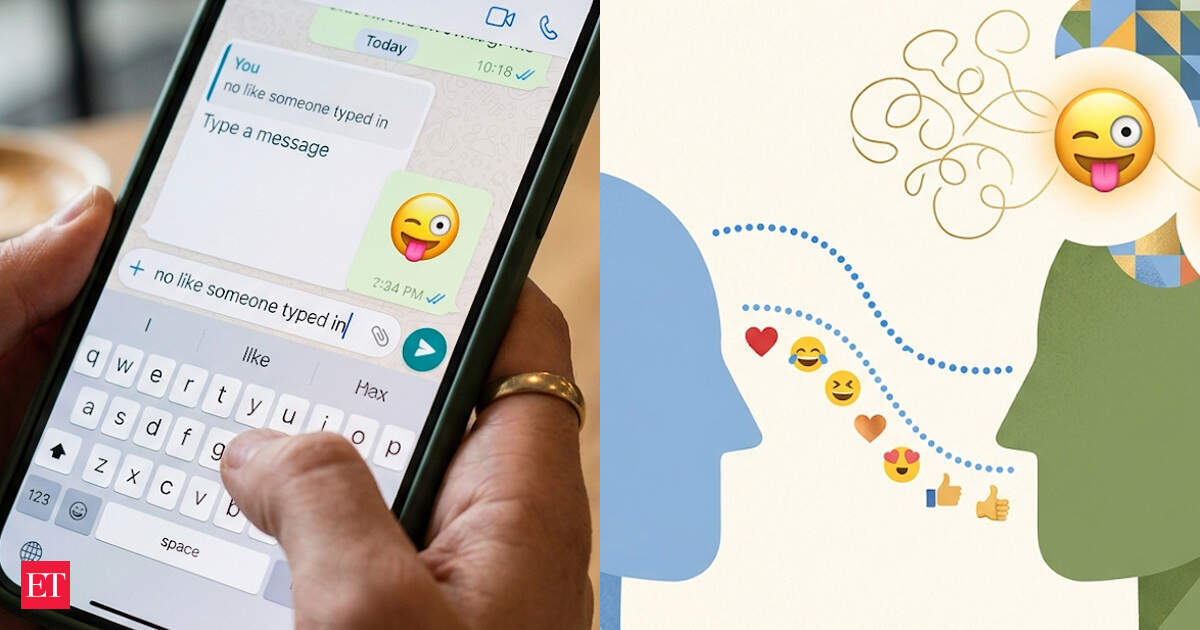
Emojis have become a natural part of everyday texting. A simple smile, heart or laughing face can change the tone of an otherwise ordinary sentence, helping people communicate feelings that words alone may not capture. But why do some people add emojis to nearly every message while others rarely use them? Psychology research suggests the habit can reflect how people express emotions, manage relationships and adapt their communication to different social situations. Studies also show that emojis can influence how warm, responsive or emotionally expressive a person appears. Still, emoji use cannot provide a definitive personality test. Instead, researchers see it as one small clue about communication style and social behavior.EMOJIS HELP REPLACE MISSING FACIAL EXPRESSIONSText messages lack many of the signals people rely on during face-to-face conversations, including facial expressions, tone of voice and gestures. Emojis can partly fill that gap by giving readers an emotional cue. Research by Isabelle Boutet, Megan LeBlanc, Justin A. Chamberland and Charles A. Collin found that emojis can affect how people interpret emotions and perceive the sender. Their 2021 study, published in Computers in Human Behavior, found that positive emojis could make a sender appear warmer, while emojis that matched the meaning of the words could improve understanding. That helps explain why someone might write, ‘That sounds great – followed by an emoji’ instead of simply saying, ‘That sounds great’. The emoji adds emotional context.EMOJI USE CAN REFLECT PERSONALITY TRAITSResearchers have also explored whether emoji habits are connected to personality. A 2025 study by Janine Carroll involving 222 participants examined relationships among emoji use, personality, prosocial behavior and mental health. Researchers found that agreeableness was associated with emoji frequency, while prosocial behavior was linked to several aspects of emoji use and positive emoji preferences. Another study by Renji Sun and colleagues examined 312 participants and found connections between emoji and sticker habits and traits including shyness, neuroticism, extraversion and agreeableness. The researchers also found that some people changed how frequently they used emojis depending on who they were talking to or whether they were in a private or group conversation. In other words, emoji use may say as much about someone’s social approach as it does about their personality.EMOJIS CAN MAKE MESSAGES FEEL MORE PERSONALAdding an emoji can also be a way of showing emotional effort. Monica A Riordan, in research on emojis as tools for ’emotion work’, found that emojis could communicate positive feelings and potentially help maintain social relationships. More recent research by Eun Huh similarly found that messages containing emojis were perceived as more responsive than text-only messages. In a study involving 260 participants, perceived responsiveness was associated with greater feelings of closeness and relationship satisfaction. This suggests that an emoji can function as a small social signal: ‘I understand you’, ‘I’m happy for you’, or ‘I’m engaging with what you said’.YOUR EMOJI HABITS ARE NOT A PERSONALITY TESTWhile research points to meaningful associations, it would be a mistake to label someone based solely on their emoji habits. People use emojis differently because of age, culture, relationships, communication habits and personal preferences. A 2024 study published in ‘Frontiers in Psychology’ by Shelia M Kennison and colleagues examined emoji use on X and found that frequent emoji use was associated with lower openness to experience in two samples, but it was not related to the other personality traits they measured. That is an important distinction. Emoji use can offer clues, but it cannot tell the whole story.Psychology suggests that emojis are much more than decorative additions to text messages. They can help replace facial expressions, clarify emotional meaning and make digital conversations feel warmer and more responsive. Research has also found links between emoji habits and certain personality traits, social behavior and communication patterns. However, those connections are not strong enough to turn emoji use into a personality test. The meaning behind an emoji depends heavily on context, the relationship between the people texting and the individual’s communication style. Ultimately, whether someone uses emojis constantly or rarely, those tiny symbols can reveal something about how they express emotion and connect with others.Add 
as a Reliable and Trusted News Source

Add Now!
Read More News on
Psychology of pairing emojis with text:emojis psychologyemoji communicationsocial behavior and emojisemoji use surveyemotional expressions in textingemojis and emotionspersonalityemoji
Read More News on
Psychology of pairing emojis with text:emojis psychologyemoji communicationsocial behavior and emojisemoji use surveyemotional expressions in textingemojis and emotionspersonalityemoji
Stories you might be interested in
