


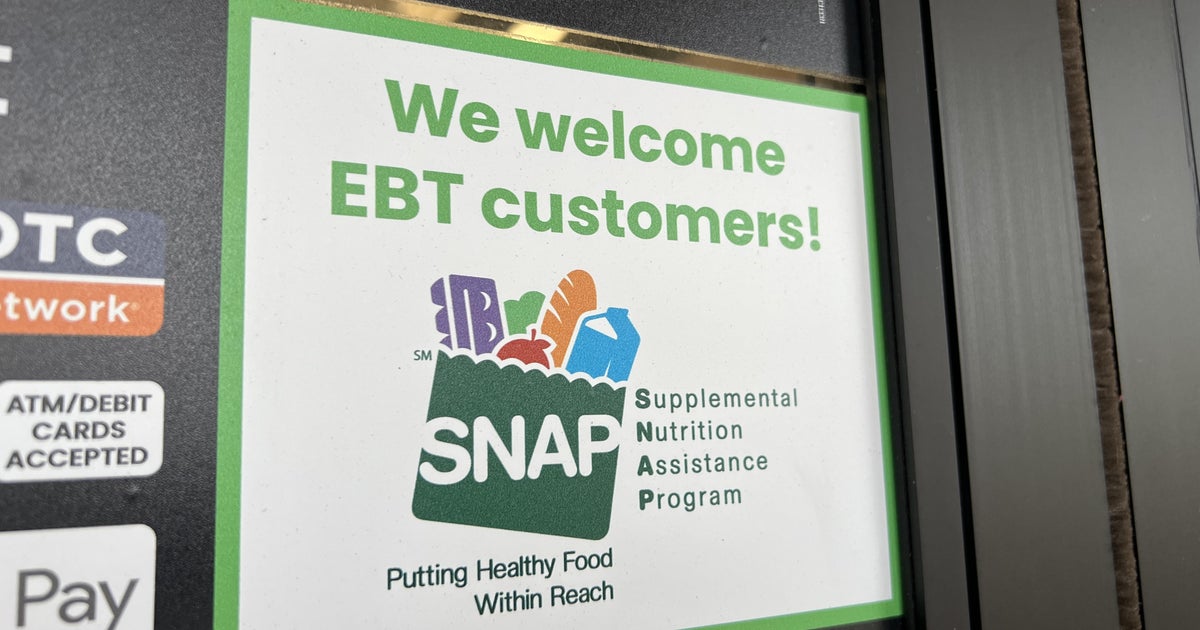
A Trump administration effort aimed at discouraging Americans on food stamps from using the government nutritional aid to buy soda is having an impact, a new study shows.
Recipients of Supplemental Nutrition Assistance Program benefits cut their sugary drink purchases by more than 12% from January to June of this year after new state-level restrictions on what people can buy with food stamps took effect, according to a working paper released this week by economic and public health experts at the University of Chicago, MIT and Stanford University.
That reduction in purchases is equivalent to a person buying 34 fewer 12-ounce cans a year, the study notes.
The findings could help shape the often contentious public debate over whether SNAP recipients should be allowed to use food stamps to pay for soda, candy and other unhealthy foods. Reducing Americans’ consumption of sugary drinks has become a priority under Health and Human Services Secretary Robert F. Kennedy Jr., leader of the Trump administration’s “Make America Healthy Again,” or MAHA, movement.
As of May, nearly 37 million Americans received food stamps, according to the Department of Agriculture. Participation in SNAP has fluctuated over the years, driven by both economic conditions and eligibility rules, according to the Pew Research Center. In the years following the 2008-09 housing crash, for example, the share of Americans on food stamps surged to nearly 19%
According to the nonpartisan Center on Budget and Policy Priorities, SNAP recipients in 2026 received an average of $188 per month in food stamps, or $6.17 per day
More state bans
In March, Kennedy said during an event in West Virginia that the federal government would end “taxpayer-subsidized soda assistance” for SNAP recipients. Two months later, the Agriculture Department started issuing waivers to states, allowing them to redefine which foods are SNAP-eligible.
The Trump administration has since issued waivers to 23 states, eight of which implemented bans on using food stamps to buy unhealthy items like soda and candy. Another 10 states are in the process of implementing the restrictions, while five had bans blocked by a judge’s ruling in June.
The exact restrictions vary by state, but generally bar SNAP recipients from using their benefits to buy processed foods and certain soft drinks, candy and desserts
Based on economic modeling, the researchers estimate that a nationwide ban on SNAP sugary drink purchases would generate net benefits of $1.2 billion per year, with the bulk of gains coming from reduced healthcare costs from treating obesity and type 2 diabetes.
The Trump administration argues that the restrictions on using SNAP to buy sugary foods are an effort to improve public health. But anti-hunger groups say the bans can lead to stigma and aren’t likely to improve health. The new study provides some of the first insights into how the restrictions are affecting purchasing behavior among SNAP recipients
Larger impact than expected
Economists have long debated whether SNAP bans would have much impact, given that food-stamp recipients could switch to paying for soda with their own money. But the researchers’ findings challenge that framing.
“A 12.4% decrease is larger than most researchers had predicted, and indeed larger than I had predicted,” Hunt Allcott, a Stanford University economist and a co-author of the study, told CBS News
The researchers tracked sugary drink purchases made by 15,000 households on SNAP, using data from market research firm Numerator.
They then compared changes in sugary drink purchases in states that adopted the restrictions with those in states that did not adopt them. (The results are based on restrictions issued in the first 10 states during the first half of 2026.)
Another recent study by economic and policy experts at the University of Iowa and the University of Georgia, which also explored the impact of state bans on SNAP recipients’ sugary drink purchases, found that the rules led to a 13% decrease in soda purchases.
“In our paper, we show that the effects are sustained over six months,” Allcott added. “I think it’s likely that the effects will be sustained over an even longer time, but it’s possible that the effects will decrease.”
Results across states were mixed, with researchers finding that reductions in soda purchases were less pronounced in places that only partially banned people on food stamps from using the benefits to buy sugary drinks. SNAP recipients in those states were more likely to substitute purchases by, for instance, purchasing energy drinks instead of soda
“From a health perspective, all sugary drinks are bad, right?” Allcott said. “And so, excluding only some sugary drinks from SNAP is probably not a good idea. The substitution effect undoes some of the potential health gains.”
“Stigma hurts health”
Despite the potential advantages the research points to, such restrictions could have downsides for SNAP recipients, the study found. A survey the researchers fielded in July found that the restrictions heightened SNAP recipients’ sense of stigmatization, with more reporting “feeling judged” while shopping with food stamps than before the state policies were introduced.
“Stigma hurts health, so that may offset some of the calculated benefits of reduced soda intake,” Kate Bauer, a nutrition science expert at the University of Michigan, told CBS News in an email
Gina Plata-Nino, SNAP director at the nonprofit Food Research & Action Center, said the study’s survey results should “concern anyone interested in improving health,” noting that stigma can discourage people from seeking food assistance
“Our country already has a SNAP gap: People who would be eligible for SNAP, but because of stigma and other administrative barriers, don’t feel safe applying for benefits,” she said in an email. “Hunger itself is a serious threat to health. Policies that may make people feel judged or ashamed to use SNAP, therefore, cannot be evaluated solely by whether purchases of one particular product decline.”
Plata-Nino also questioned whether reducing SNAP recipients’ soda purchases would lead to reduced consumption and the reliance on data from a small subset of SNAP households.
“Translating a change in purchases of a particular beverage into sweeping claims about future health outcomes or billions of dollars in health-care savings requires assumptions that should be treated as projections — not established real-world outcomes,” she said
