


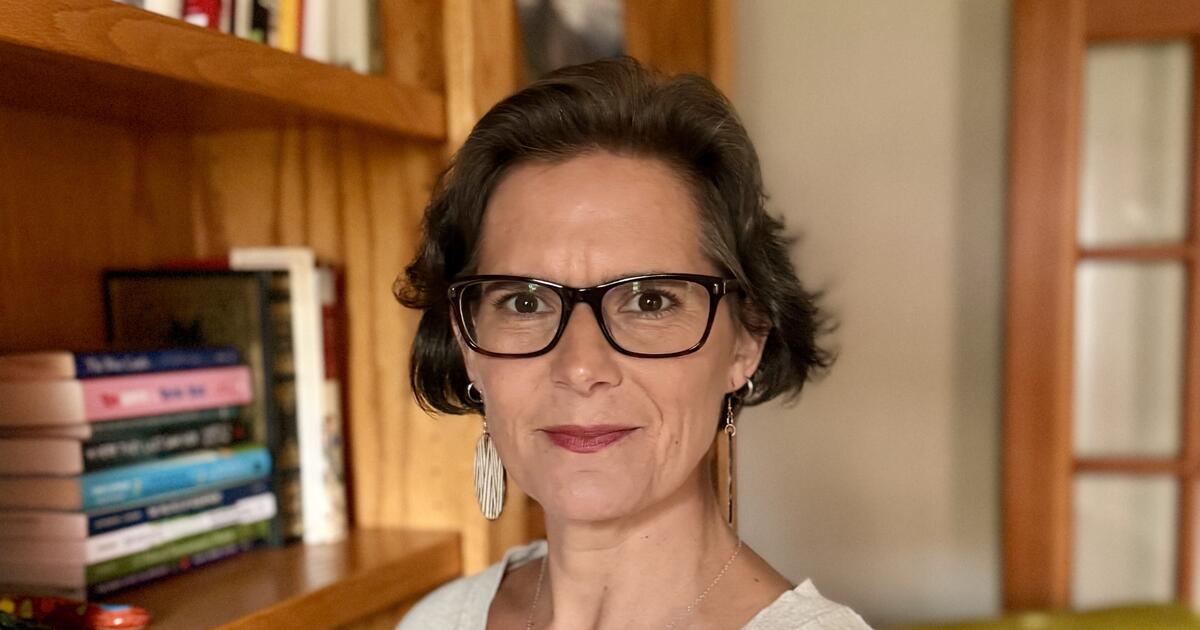
A lifelong public health researcher will be joining the University of Calgary as the Eddie Goldenberg Research Chairof Canada in Maternal and Child Health Policy. Dr. Katy Backes Kozhimannil, PhD, comes to UCalgary following years of research into maternal health-care inequities in the U.S. The Chair is part of a new Government of Canada initiative to recruit world-leading researchers to Canada
“We are thrilled that Dr. Katy Backes Kozhimannil will be joining our Institute. Her work has transformed rural maternal care policy in the United States, and we are so excited for her to bring that same rigour and impact to Canada,” says Dr. Kirsten Fiest, BSc’08, PhD’14, director of the O’Brien Institute for Public Health. “Recruiting someone of her calibre to the University of Calgary is a tremendous opportunity for our Institution, for Alberta, and for the patients and communities whose health outcomes will ultimately be shaped by her work.”
Kozhimannil’s recruitment builds on UCalgary’s strengths in maternal and child health, including the One Child Every Child research initiative.
“Dr. Kozhimannil joining UCalgary creates an opportunity to connect and leverage the substantial work already underway in maternal and child health,” says Dr. Francois Bernier, MD, director at the Alberta Children’s Hospital Institute and One Child Every Child. “Her focus on research translation into policy will strengthen our ability to understand how systems can better serve rural, underserved and marginalized communities.”
Findings helped change health-care policies in the U.S
Five grandmothers in a Black community in rural Alabama started asking questions when they noticed local hospitals had closed their obstetric units. Their daughters were pregnant and the grandmothers wondered how far they would have to travel to give birth. They wanted to know what the closures meant for the health of their daughters and grandchildren. The grandmothers took their concerns to Congresswoman Terri Sewell, who worked with federal health officials to connect with a leading researcher who could explore the issue.
Their questions launched a decade-long research endeavour led by Kozhimannil, who has built a team that documents and examines maternal health-care inequities for people living in rural areas of the United States. Her findings have helped change state and federal policy to redirect re
“The grandmas were worried and faced trade-offs, staying home to take care of their grandbabies while their daughters went far away to give birth. They wondered, is this only happening here, or is it happening in other communities, too? They wondered about the consequences of local closures,” says Kozhimannil.
“The honour of my career has been answering important questions that rural people ask. I’ve observed how deeply they care about the health and well-being of their loved ones and their communities. Grandparents, community elders, are well aware of the harms and hurts that are preventable, and when their wise questions guide my professional efforts, my research — in combination with building open, healthy relationships with policy decision makers — can translate into real change in their communities.”
Kozhimannil is a public health researcher whose lifelong work focuses on policy change to improve maternal and child health, reduce maternal mortality rates, and improve health equity, starting at birth. She does this by focusing specifically in rural areas, low-income communities and with women of colour.
“I believe how people give birth and how babies come into the world is fundamentally important to each of us. For the person who’s giving birth, for their baby, and for families and communities, that moment means a lot. And making it the best it can be is a part of what motivates me,” says Kozhimannil.
“The second motivation that guides my work is educating policymakers about the consequences of their decisions. Policymakers, the people who make the rules that we all live by, are generally doing their very best to make good decisions for the people they represent. And, a lot of the time, they don’t have all the information they need. That is, we don’t do research in a way that gives them information on everybody. I focus on communities that are often not at the table when decisions are being made, including residents of rural and remote communities, women and infants, childbearing people, and other under-represented groups.”
Canadian context and policy
Kozhimannil is currently a professor at the University of Minnesota School of Public Health. Her work has been published in some of the most prestigious medical journals including the New England Journal of Medicine, and her policy work has been featured in the New York Times, Washington Post and Wall Street Journal.
Kozhimannil, who grew up in rural Minnesota and North Dakota, has spent most of her career working in the United States. However, she says that, despite the differences in how health care is financed and organized in Canada and the U.S., rural communities in both countries face many of the same challenges.
“I grew up in rural areas, and many of my family members live in rural and remote places. I have seen over and over again in health-care systems the most well-meaning, evidence-based policies fail rural people and communities,” she says. “I think that’s because many of the people that make the highest-level decisions about resources, whether that’s in policy, or in business, or in health-care systems, many of them spend their adult lives in urban areas. Many of them are trained in urban areas. Most of the research that we have coming out of universities and medical schools and systems comes from urban areas. We need rural voices and rural perspectives informing the questions we ask and the data we collect, so that our policies reflect rural realities.”
In addition to her research work, Kozhimannil says mentorship, teaching, and academic advising of students, staff and junior faculty have long been a top priority for her, and she will continue this work at UCalgary. “Many of the faculty, staff and students I have mentored are under-represented in academia,” she says. “As a mentor and teacher, it is my goal to build relationships and earn the trust of scholars who come from backgrounds that are different from my own. Diverse perspectives strengthen scholarship, and we all benefit when folks with a wide range of experiences contribute to the creation of evidence and the sharing of knowledge.”
Kozhimannil begins her role as a professor in the Department of Community Health Sciences at the Cumming School of Medicine in Summer 2027. She will also be a member of the University’s O’Brien Institute for Public Health, Alberta Children’s Hospital Research Institute, the One Child Every Child Research Initiative, and the Centre for Health Policy
Her position was funded by the Eddie Goldenberg Research Chairs of Canada, with startup funds supported by the Alberta Children’s Hospital Foundation
