


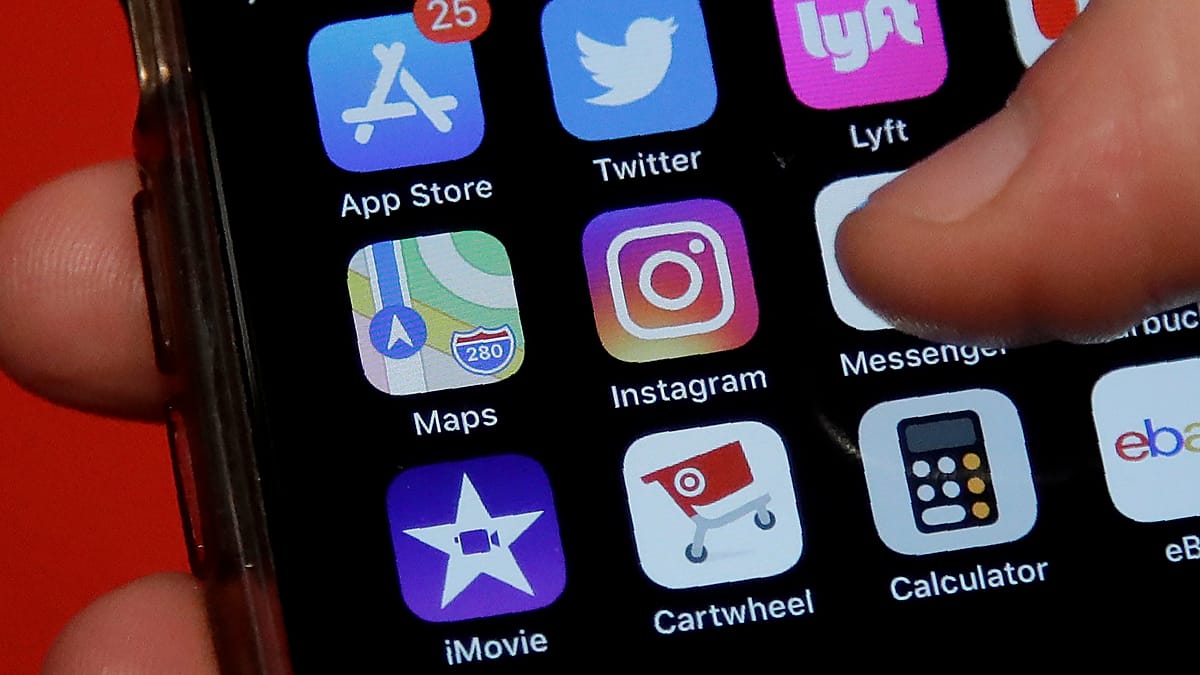
Doomscrolling, nomophobia, FOMO and social media addiction: the new digital disorders, what they mean and when smartphones become a problem
Can you not go five minutes without checking your phone? Do you open Instagram “just for a second” and find that half an hour later you are still there? Do you wake up during the night and the first thing you do is check your notifications? Or do you keep scrolling through bad news even though you know perfectly well it is making you anxious?
ADVERTISEMENT
ADVERTISEMENT
Welcome to the age of new digital addictions
Experts stress that the point is not to demonise smartphones, social networks or video games. The digital world is now part of our lives and can bring huge benefits. The problem begins when use becomes hard to control and starts to crowd out sleep, work, study, relationships or physical activity
And research is starting to put a name to many of these behaviours
The first real diagnosis: gaming disorder
One distinction is crucial. Not everything that gets called “smartphone addiction” is officially a disease
The World Health Organization has, however, recognised in the International Classification of Diseases, ICD-11, gaming disorder
That does not mean that playing a lot is automatically an illness. The disorder is about a loss of control over gaming, a growing priority given to play over other activities and continuing the behaviour despite negative consequences. To reach a diagnosis, there has to be a significant impact on personal, family, social, school or work life, generally for at least 12 months
And it affects a minority of players, not everyone who spends a few hours in front of a console
Social media addicts: when endless scrolling is the problem
Here the picture becomes more blurred
Social media addiction, often referred to in research as problematic social media use or social media use disorder, is not currently an independent ICD-11 diagnosis like gaming disorder
But the phenomenon has now been widely studied
The signs are fairly intuitive: wanting to stop and being unable to, spending more time online than planned, feeling a strong need to check social media, neglecting other activities, becoming irritable when you cannot access platforms, or continuing to use them despite the problems they cause
The American Psychological Association urges people to pay attention to exactly these behaviours, especially among teenagers
And the figures are striking. According to the latest major Health Behaviour in School-aged Children (HBSC) survey by the World Health Organization in Europe, carried out among almost 280,000 young people aged 11, 13 and 15 in 44 countries and regions, 11% of adolescents show signs of problematic social media use, compared with 7% in 2018. The share rises to 13% among girls and falls to 9% among boys
FOMO: the fear of being the only one who does not know
One of social media’s most powerful traps now has an extremely familiar name: FOMO, Fear Of Missing Out
It is that feeling that makes you think: “What if something has happened in the meantime?”
So we check WhatsApp, Instagram, TikTok, the news and chats even when we have no real reason to do so
FOMO is not a psychiatric diagnosis. It is, however, a psychological phenomenon studied in relation to problematic use of the internet and social media. A study published in 2024 looked precisely at the link between FOMO, problematic social media use and doomscrolling, and found that emotion regulation mechanisms play an important role
In other words: the more we feel we need digital tools to manage anxiety, boredom or unpleasant emotions, the more we risk being drawn into a vicious circle
Doomscrolling: why we keep reading bad news
It is probably one of the most characteristic phenomena of the smartphone era
Doomscrolling is the compulsive consumption of negative news: wars, disasters, crises, accidents, illnesses, scandals. One story leads to another and your finger keeps scrolling
The paradox is obvious: we look for information to feel better prepared and often end up feeling even more anxious
Doomscrolling is not an independent medical diagnosis either, but it has become a focus of research into problematic online behaviour. Studies have linked it to FOMO and difficulties in regulating emotions
And it can turn into another trap: the more worried we are, the more information we seek; the more negative information we consume, the more our worry grows
Nomophobia: when the phone is gone, the anxiety arrives
“Nomophobia” is a word coined from no mobile phone phobia
It does not simply mean “I am annoyed that I left my phone at home”. It is the term used to describe the discomfort or anxiety linked to the absence of a smartphone, loss of connection, or the inability to access information and one’s digital relationships
Again, it is worth being careful with words: it is not an official standalone diagnosis
But it is a studied phenomenon, increasingly entangled with other problematic behaviours. A study published in 2026 analysed nomophobia, social media addiction and FOMO together, identifying the fear of missing information as one of the most important bridges between these phenomena and symptoms of anxiety and depression
The phone, in short, can become a kind of “safety object”: if we have it, everything is fine. If it disappears, even just for a few minutes, something feels wrong
Phantom vibration: the phone that vibrates even when it does not
Have you ever been certain that your phone was vibrating in your pocket, only to take it out and realise that no notification had arrived?
This is called phantom vibration syndrome, or the phantom vibration syndrome
It is not a recognised disease, but a studied perceptual phenomenon: the brain can interpret tiny physical stimuli as a phone vibration, especially when we are used to constantly expecting notifications
It is almost the digital version of “I hear someone calling me” when nobody has called
And then there is smartphone-induced insomnia
The issue is not only how much time we spend online. It is when we do it
Scrolling in bed seems harmless: “I will just watch two videos and then sleep”. The problem is that those two videos can turn into twenty minutes, an hour or much more
The APA notes that using technology close to bedtime, and social media in particular, is linked to sleep disturbances in adolescents
And a longitudinal study published in 2025 found an association between problematic social media use and later depressive and anxious symptoms, with sleep problems apparently playing a partial role in the connection. The authors themselves stress, however, that the relationship is complex and should not automatically be read as cause and effect
The practical takeaway is easy to grasp: if the phone steals our sleep, the problem is no longer just the time spent in front of the screen
Social media and the body: the physical impact
The digital revolution is not only about the brain
Hours spent in front of a screen can mean less movement, more sedentary behaviour, eye strain and musculoskeletal problems linked to maintaining the same posture for long periods
The so-called tech neck, the “smartphone neck”, is now a common expression for the pain and tension associated with the posture of tilting your head towards your device. It is not a new medical diagnosis, but it describes a very concrete problem: we are spending more and more time with our neck bent over a screen
The WHO, when discussing the effects linked to problematic use of technology and gaming, also highlights sedentary behaviour, musculoskeletal problems, sleep disturbances and eyesight issues
The brain is not “ill”: it is the behaviour that becomes problematic
And this is perhaps the most important distinction
We should not turn every digital habit into a diagnosis
Watching TikTok for an hour, playing a video game at the weekend, checking Instagram or reading the news does not necessarily mean being addicted. Quantity alone is not enough
What really makes the difference is control and the impact on daily life. The question to ask is therefore not just: “How many hours do I spend on my phone?” It is rather: “Can I stop when I want to? And what am I sacrificing to carry on?”
If the phone starts eating into sleep, work, study, relationships, sport or real life, then the warning bell becomes much more serious
The new frontier: a possible “social media addiction”?
Research is pushing further
In 2025, a group of researchers proposed criteria for a possible classification of Social Media Use Disorder, identifying loss of control and a deterioration in everyday functioning as central elements. Among the possible criteria, they also discuss a preference for online interactions and FOMO
But we are still in the realm of research, not facing a new official diagnosis
And this is exactly where the future battle lies: understanding when a technology designed to capture our attention stops being a useful tool and starts to turn into a behaviour that is hard to control
Because the real problem may not be the smartphone itself
It may be the fact that we have built a digital world that is able to tell us, every few seconds: “Hey, look at me. You have missed something”
Go to accessibility shortcuts
